An epoxy floor feels rough or sandy for one of five reasons: texture that was specified on purpose, or one of four surface defects that were not. Intentional texture comes from broadcast aggregate or a non-skid additive and feels evenly gritty across the whole floor. Defects feel uneven, greasy, chalky or sharp in patches, and they come from amine blush, contamination in the wet film, moisture bloom or a starved top coat. Most of them can be diagnosed in ten minutes with a damp cloth and a flashlight, and our epoxy floor repair page explains how a correction is carried out once you know which one you have.
Quick answer: intentional texture against four defects that feel similar
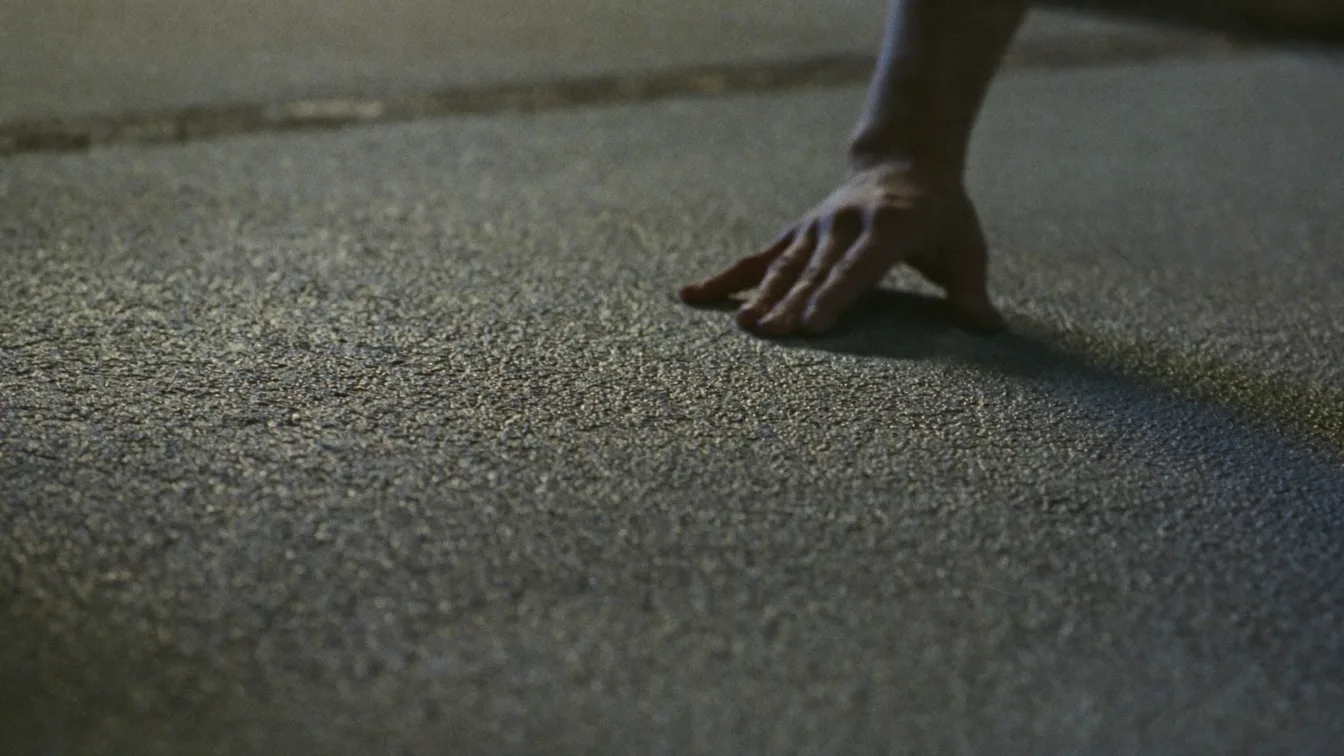
Run your bare hand flat across the floor, then drag a fingertip across it slowly. Specified texture feels the same everywhere, like fine sandpaper or a pebbled sidewalk, and the pattern repeats across the room. A defect feels different from place to place: slick and waxy here, gritty there, sharp along a few edges. That difference in uniformity is the fastest way to tell the two apart.
Use this short sorting test before reading further:
- Look at your quote or contract. If it names an anti-slip aggregate, a grit additive or a "textured" finish, the roughness is probably the product working as written.
- Wipe a small area with a damp white cloth. A waxy or soapy film that smears, or a cloth that comes away with a tint, points to amine blush.
- Skim a flashlight across the surface. Isolated bumps with tiny debris in them point to contamination, and a cloudy or blotchy haze points to moisture bloom.
- Feel along the flake edges. Sharp flake tips poking through the clear coat point to a starved top coat.
This guide is about telling intended texture from a defect. How anti-slip aggregates are rated and chosen is covered in our post on epoxy floor slip resistance, so we will not repeat that here. If you suspect the whole job was done badly rather than the surface alone, our checklist on how to tell if your epoxy floor was installed badly covers lap lines, pinholes, bubbles and tacky spots.
Texture that is supposed to be there: broadcast aggregate and non-skid additives
Texture is intentional when an installer adds aggregate or a grit additive to give shoes and tires something to grip. It is a feature of garages, wash bays, ramps, loading docks and any floor that gets wet, and a floor with no texture at all would be noticeably more slippery in the same spots.
There are three common ways texture gets into a system:
- Broadcast aggregate. Fine quartz, aluminum oxide or polymer grains are scattered into the wet coat and locked in with a top coat. The result is the most pronounced texture and the longest lasting.
- Additive in the top coat. Fine grit is mixed into the final clear coat, which gives a lighter, more even grip that feels like a sandpaper sheet.
- Flake with a textured top coat. Vinyl chips give a naturally varied surface, and a thin top coat leaves the flake profile partly visible and palpable.
The texture should feel even, and it should not shed grains onto your shoes or a damp cloth. If loose grit rubs off, that is a different problem, which we cover below under the starved top coat. If you ordered a smooth finish and the floor feels like sandpaper, ask for the system data sheet and the job ticket, because it may simply have been specified wrongly rather than applied wrongly.
The type of top coat also shapes how texture feels. A thicker, glossier film smooths out fine grit, while a thin satin film shows every grain. Our guide to epoxy top coat options compares clear epoxy, polyurethane and polyaspartic layers and how each carries traction additives.
Amine blush: the greasy, gritty film and how to remove it
Amine blush is a waxy, sticky or gritty film that forms on the surface of curing epoxy when the curing agent reacts with moisture and carbon dioxide in the air. It shows up as a slick or greasy feel, a dull or cloudy look, or tiny white crystals that make the floor feel dusty and sandy.
Blush is a surface problem, not a bonding problem inside the film, but it matters because anything applied over it will not stick. A top coat or second coat laid over unwashed blush is a common cause of later peeling, which is a topic we cover in our post on why epoxy floors peel.
What causes it:
- High humidity. Mornings in San Antonio often start humid, and a coat that cures overnight can pick up moisture before it hardens.
- Cool surfaces. The standard rule is to keep the slab at least 5 degrees F above the dew point during application and cure, because condensation on the film encourages blush.
- Poor ventilation. A closed garage with stagnant air holds moisture and carbon dioxide against the wet film.
- Certain curing agents. Some amine hardeners blush more readily than others, and low-temperature formulations are sensitive to damp air.
How to confirm and treat it:
- Wipe a small test patch with a damp white cloth. A greasy residue or a visible film means blush.
- Wash the entire floor with warm water and a mild detergent, scrubbing with a stiff nylon brush or a white scrub pad. Rinse with clean water and let it dry.
- Repeat until the cloth test comes up clean. Blush is water-soluble in most cases, so washing normally removes it.
- Abrade the surface lightly with a screen or a maroon pad to create a bond profile, then recoat according to the manufacturer's window.
If the film is thick or stubborn, a professional installer may abrade it mechanically with a buffer and a fine screen before recoating. Do not skip the abrasion step, because a washed surface can still be too glassy for a fresh coat to grip.
Contamination: dust, dirt and insects in the wet film
Contamination is anything that lands in the coating while it is still wet and cures into it as a bump, a speck or a grain. It makes a floor feel gritty in scattered spots rather than evenly, and under a raking light each particle sits in its own tiny crater.
The usual culprits are airborne dust from grinding that was not fully vacuumed, debris blown in through an open door, hair, leaf fragments and flying insects. Garages are especially exposed because the door is often open during installation. San Antonio pollen and windblown dust in spring and fall make this worse.
Signs that point to contamination rather than aggregate:
- The grit is irregular in size, and some particles are dark or fibrous.
- The roughness is concentrated near the door, along one wall or in the direction of airflow.
- You can see the particles sitting under or on the surface with a flashlight.
Cured contamination cannot be washed off because it is part of the film. The remedy is to sand the affected area flat with a fine abrasive, clean it thoroughly, and apply a fresh clear coat to restore the finish. Light contamination is a cosmetic issue, and heavy contamination across a whole floor may justify abrading and recoating the entire surface. An experienced crew reduces the risk with a clean sweep and vacuum before coating, closed doors during application and a tack cloth before the final coat.
Moisture bloom and surface carbonation
Moisture bloom is a hazy, blotchy or milky patch that appears when water reaches uncured epoxy, either from the air or from vapor moving up through the slab. It can leave a rough, tacky or slightly crystalline feel and often follows a pattern that matches damp areas of the concrete.
Related to bloom is surface carbonation, a whitish, chalky film that forms when carbon dioxide reacts with the curing agent at the surface. It is most common when unvented fuel-burning heaters are used in a cold garage, because they release large amounts of carbon dioxide and water vapor into the air around a curing coat.
What distinguishes these from blush:
- Blush is usually uniform across the whole floor and washes off with water. Bloom and carbonation are often patchy and may not wash off cleanly.
- Bloom tracks moisture sources such as a garage door threshold, a slab edge or a floor drain.
- Carbonation tracks heater location and appears white or pale.
The fix depends on how deep the problem goes. A surface bloom can sometimes be washed and abraded like blush. If vapor is coming through the slab, the cause has to be addressed first or the problem will return, usually with a moisture mitigation primer. Our guide to vapor barrier primer options explains when a slab needs one, and our article on concrete surface profile and coating match shows how the grind pattern affects adhesion afterward.
Under-rolled or starved top coat leaving exposed flake edges
A starved top coat is a final clear layer applied too thinly or rolled out too far, so it does not fully cover the flake or aggregate beneath it. The surface feels sharp or sandy because tiny flake edges and loose grains stick up through the film.
Signs of a starved top coat:
- Flake tips or grains you can feel and sometimes see, especially under a raking light.
- Loose chips or aggregate that come off on a cloth or on your shoes.
- A dull, uneven sheen, with shiny patches where the coat was heavier.
- Tire marks or scuffs that show up unusually fast.
On a flake floor, the number of coats matters. A full broadcast of flake generally needs a build coat and one or two clear top coats to bury the chips. Thin coverage is a common way to shave time and material on a job, and it leaves a floor that feels rough and wears out quickly. Our article on epoxy flake chip size and color blends explains how chip size changes how much clear coat is needed to smooth the surface.
The correction is usually straightforward: lightly abrade or de-nib the surface, clean it, then roll on one or two additional top coats at the correct spread rate. Sanding the sharp edges before recoating improves both the feel and the adhesion.
Diagnosis table: symptom against cause, test and remedy
| What you feel or see | Likely cause | Quick test | Typical remedy |
|---|---|---|---|
| Even, uniform grit across the whole floor | Specified aggregate or additive | Check the quote and data sheet | None needed, or add a smoother top coat if unwanted |
| Greasy, waxy or soapy film, cloudy look | Amine blush | Damp white cloth leaves a residue | Wash with warm water and detergent, scuff, recoat |
| Scattered specks, fibers or dark bumps | Airborne contamination | Flashlight shows particles in the film | Sand flat, clean, apply a fresh clear coat |
| Hazy, blotchy or chalky patches, often near doors or drains | Moisture bloom or carbonation | Patchy, may not wash off; check slab moisture | Abrade; fix moisture source or prime before recoating |
| Sharp flake tips or loose grains, uneven sheen | Starved top coat | Fingertip catches flake edges | De-nib and add one or two top coats |
Treat the table as a starting point. Some floors have two causes at once, such as blush under a thin top coat, and the order of the repair matters. Wash first, abrade second and coat last.
What can be buffed and recoated, and what cannot
Most roughness in the top layer can be fixed without removing the floor, because the problem sits in the last coat and not in the bond to the concrete. The test is whether the defect is confined to the surface film or runs through the body of the system.
What can usually be corrected in place:
- Amine blush. Wash, abrade and recoat.
- Light contamination. Sand the specks flat and apply a clear coat.
- A starved top coat. De-nib and add coats at the right spread rate.
- Surface bloom without active moisture. Abrade and recoat once the cause is removed.
What is much harder to fix:
- Aggregate broadcast through the body coat. If grains are embedded throughout the system, smoothing the floor means grinding it down or building a thick leveling coat over the texture.
- Active moisture vapor from the slab. No coating stays clear until the moisture source is handled.
- Heavy contamination or blush that was coated over. A top coat that has already failed to bond may need to be removed to sound material before a new system goes down.
Whether a floor can be recoated or has to be removed depends on how well the existing layer is bonded. Our guide to epoxy floor repair and resurfacing walks through the patch, resurface and replace decision, including when recoating over an existing epoxy is acceptable. If the surface is peeling in addition to feeling rough, treat that as an adhesion failure and have it assessed before any new coat goes on.
For an honest answer, have a technician look at the floor in person, because the same rough feel can come from very different causes. A written assessment that names the cause, the test used to confirm it and the correction is what you should expect. For prevention on a new install, ask your contractor to confirm temperature and dew point readings, how the slab was vacuumed and sealed from dust, and how many top coats will be applied over any flake or aggregate.
Frequently asked questions
Why does my new epoxy floor feel rough?
Either it was specified with anti-slip aggregate, or something went wrong in the final coat. Amine blush, airborne contamination and a starved top coat all produce a gritty surface that was not intended.
Is a sandy epoxy floor a defect?
Not necessarily. If anti-slip aggregate was specified, the texture is the product working as intended. If no texture was specified and the floor still feels sandy, it is worth diagnosing.
What is amine blush on an epoxy floor?
A waxy or gritty film that forms when an epoxy cures in humid or cool conditions, as curing agent reacts with moisture and carbon dioxide at the surface. It can usually be washed and abraded off before recoating.
Can a rough epoxy floor be made smooth?
Often yes. If the roughness is in the top layer it can be abraded and a fresh top coat applied. If aggregate was broadcast through the body coat, smoothing it means significantly more work.
Should a garage floor be smooth or textured?
A light texture is usually the better choice in a garage, where wet tires and foot traffic combine. A full gloss smooth finish looks striking and is noticeably more slippery when wet.
If your floor feels rougher than it should, call (830) 355-3303 for a free on-site measure and written quote. We test the surface, tell you in writing whether the texture is intended or a defect, and explain what a correction involves.