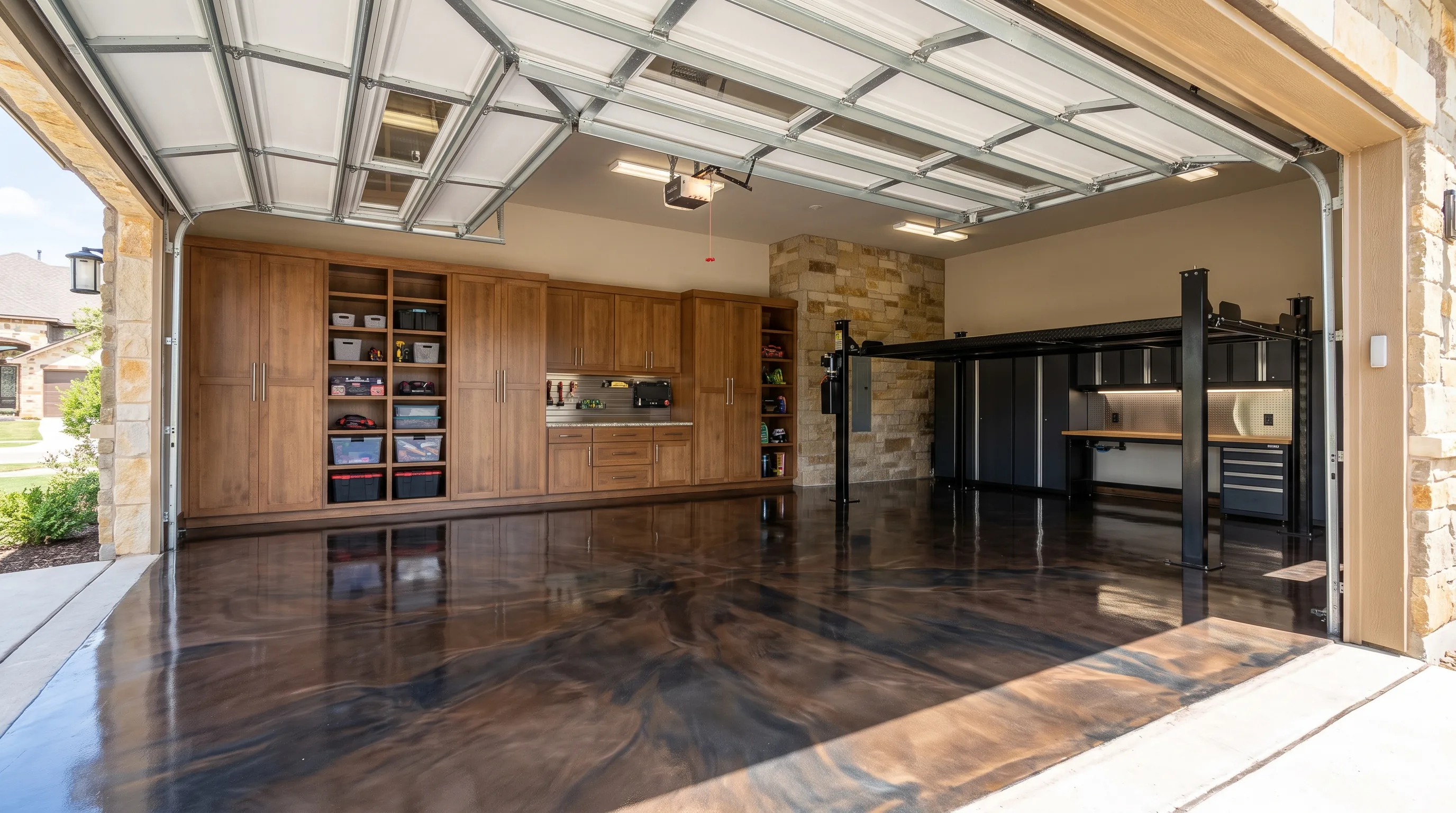
Stone Oak homes tend to have larger garages, finished basements, and the kind of custom builds where a plain gray slab looks out of place next to everything else in the house. Epoxy flooring has become the default upgrade for homeowners in the area - not just for durability, but because the finish options now match the quality level of the rest of a Stone Oak build. Here's what's actually available, what it costs, and what to expect from install to finish.
Why Stone Oak Homeowners Choose Epoxy
Stone Oak sits on the north side of San Antonio, with a mix of custom and semi-custom homes where garages often double as workshops, gyms, or extra storage - not just a place to park. That usage pattern is exactly where epoxy earns its cost:
- Handles hot-tire pickup from Texas summer pavement without the peeling that plain sealed concrete develops within a few years.
- Resists oil, brake fluid, and tool drops in workshop-style garages.
- Cleans with a mop instead of a pressure washer and degreaser.
- Matches the finish level of a custom home better than bare concrete or painted floor coatings that chip within a season.
Garage Floor Options for Stone Oak Homes
Three finish categories cover most Stone Oak garage projects:
- Solid color epoxy: Clean, single-tone finish. Budget-friendly, works well in workshop garages where the priority is durability over showroom looks.
- Flake epoxy: Colored vinyl flake broadcast into the base coat for texture, slip resistance, and a finish that hides tire marks and minor debris better than solid color.
- Metallic epoxy: A pigmented, three-dimensional marbled effect that reads as a genuine upgrade - the option most Stone Oak homeowners choose when the garage functions as an extension of the home's finish level rather than pure storage.
Basement Flooring for Stone Oak Homes
Finished and semi-finished basements in Stone Oak deal with a different set of concerns than garages - primarily moisture from the region's clay-heavy soil and seasonal humidity swings. A moisture-tested, vapor-barrier-rated epoxy system is the correct spec here, not a cosmetic topical coating. Skipping the moisture test is the single most common reason basement epoxy installs fail within the first year.
Planning a Garage or Basement Project in Stone Oak?
We handle moisture testing, surface prep, and finish selection for Stone Oak homes - from workshop-grade garages to showroom metallic finishes.
Get a Free QuoteWhat to Expect During Installation
- Surface prep: Diamond grinding opens the concrete pore structure for proper bonding - this step determines whether the coating lasts 10+ years or peels within two.
- Moisture testing: Especially critical for basements, this determines whether a standard system works or a vapor-barrier-rated product is required.
- Base coat application: The primary epoxy layer is rolled or troweled onto the prepped slab.
- Flake or metallic layer: If selected, the decorative layer is applied while the base coat is still workable.
- Topcoat and cure: A polyurethane or polyaspartic topcoat seals the finish and adds UV and abrasion resistance. Most residential installs allow foot traffic within 24 hours and full cure within a week.
Custom Finish Options
Beyond the standard three categories, Stone Oak homeowners with higher-end builds often request custom color blending, logo or pattern inlays, or two-tone designs with a contrasting border - all achievable with the same epoxy system, just with additional design and labor time factored into the quote.