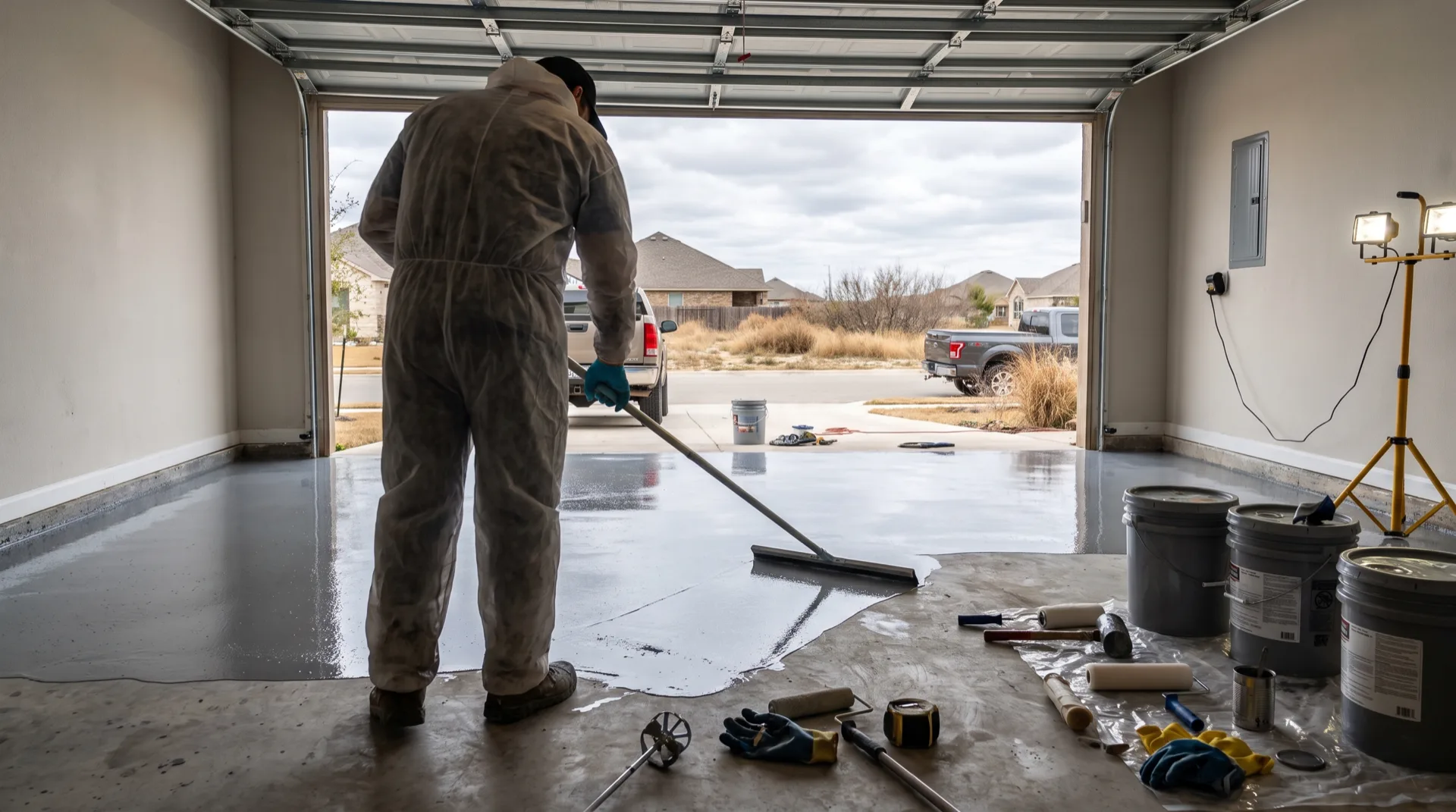
An epoxy floor coating in San Antonio should be installed when surface and air temperatures fall roughly between 50 F and 90 F with moderate humidity - a window that's easiest to hit in late fall through early spring, since summer heat shortens working time and occasional winter cold snaps can slow the cure below standard epoxy's comfort zone.
Why Temperature Controls the Install Timeline
Epoxy cures through a chemical reaction between its resin and hardener components, and that reaction's speed is directly tied to temperature. Too hot, and the reaction accelerates so much that installers lose their working time before the product can be properly spread and leveled, risking visible lap lines or an uneven finish. Too cold, and the reaction slows dramatically or can stall out entirely, leaving a soft, under-cured floor that never reaches full hardness even after the expected cure window passes. Getting the timing right isn't just about installer convenience - it directly determines whether the finished floor performs the way it's supposed to.
San Antonio's Climate Challenges for Epoxy Installers
San Antonio's long, intense summer regularly pushes garage and warehouse slab temperatures well above epoxy's ideal range by midday, particularly on a sun-exposed driveway-facing garage floor. Winter is comparatively mild here but still brings occasional overnight temperatures near freezing, which can catch an install off guard if it's scheduled without checking the forecast closely. For homeowners specifically weighing epoxy against polyaspartic - which tolerates a noticeably wider temperature range - our guide on epoxy vs. polyaspartic cure time covers how that difference plays out for a garage floor project scheduled during a particularly hot or cold stretch.
Seasonal Temperature Windows for San Antonio Installs
| Season | Typical Slab Temp | Install Difficulty | Notes |
|---|---|---|---|
| Winter | 45-65 F | Low-moderate | Watch for occasional cold snaps |
| Spring | 60-80 F | Low | Generally the most reliable window |
| Summer | 85-110 F+ | High | Requires early/late scheduling |
| Fall | 65-85 F | Low | Second most reliable window |
Slab surface temperature, not air temperature, is what matters most: a concrete floor in direct sun can run 20-30 degrees hotter than the surrounding air, so a reliable installer measures the actual slab with an infrared thermometer rather than going off the day's forecast high.
How Humidity Interacts With Temperature During Cure
Temperature doesn't act alone - San Antonio's humid subtropical climate means moisture in the air also affects the install. High humidity combined with a cooling slab in the evening, as temperatures drop after a hot day, can cause condensation to form on the concrete surface, sometimes called "blushing," which interferes with proper epoxy adhesion if application happens right as this transition occurs. Experienced installers check dew point conditions alongside temperature, particularly for an install scheduled in the evening specifically to avoid daytime heat, since avoiding one problem (excess heat) can inadvertently create another (condensation) if humidity isn't also accounted for.
Scheduling Around Summer Heat
During peak summer, experienced crews shift install times to early morning or evening when both air and slab temperatures are meaningfully lower than midday peaks, and mix smaller batches more frequently to stay ahead of the accelerated cure reaction. Rushing a large batch in extreme heat is one of the most common causes of a visibly uneven or lap-marked epoxy finish, since the product can begin thickening before an installer has fully spread and leveled it across the section they're working on. Homeowners scheduling a summer install should expect their contractor to propose an early or evening start time rather than a standard midday appointment, which is a good sign of experience with local conditions rather than an inconvenience.
Real-World Scenario: A Rescheduled Install
A homeowner in the Stone Oak area had an epoxy garage floor install originally scheduled for a mid-August afternoon, but the crew arrived, measured the slab surface at nearly 108 F in direct sun through the open garage door, and proposed rescheduling to a 6 AM start the following day instead of proceeding as planned. The homeowner was initially frustrated by the delay, but the early-morning install went smoothly, with the crew reporting a clean, even finish and no signs of the rushed working-time problems that a midday summer application would have risked. This kind of proactive rescheduling, while inconvenient in the moment, is generally a sign of a contractor prioritizing a correctly cured floor over meeting an arbitrary appointment time.
Winter Considerations, Though Less Common Here
While San Antonio winters are mild by national standards, an unheated garage or warehouse can still dip below epoxy's minimum install temperature during an overnight cold snap, particularly in the early morning hours before a scheduled install. For a winter job, bringing the space to a stable temperature with portable heaters for several hours beforehand - checking the actual slab surface, not just the ambient air - helps ensure a full, proper cure even when outdoor conditions are borderline. Our related guide on epoxy garage floors and San Antonio's freeze-thaw swings covers how the finished floor performs through these same seasonal temperature swings after installation, which is a useful companion consideration to the install-day planning covered here.
What to Ask a Contractor About Weather Planning
Homeowners scheduling an install during a particularly hot or cold stretch should ask a prospective contractor directly how they plan to handle conditions on install day - whether that means an early-morning start, portable heating equipment for a cold job, or a clear willingness to reschedule if readings fall outside the product's rated range. A contractor who proactively raises weather planning without being asked, and who talks about measuring actual slab surface temperature rather than just checking a forecast app, is generally more experienced with the practical realities of installing coatings in San Antonio's variable climate. Reviewing the full range of options on our epoxy floor coating service page is a good starting point for understanding what a properly planned, weather-appropriate install looks like from quote through completion.
Batch Sizing and Crew Adjustments for Extreme Conditions
Beyond simply choosing a better time of day, experienced crews adjust their actual application approach based on conditions. In peak summer heat, that often means mixing smaller batches more frequently with a larger crew working in parallel across sections of the floor, so each batch gets applied and leveled within its shortened working time before the next is mixed. In milder spring or fall conditions, crews can work with larger batches and a steadier pace, giving more room for careful leveling and detail work around edges and transitions. A contractor's willingness to adjust batch size and staffing to match the day's actual conditions, rather than using a fixed approach regardless of weather, is a good practical indicator of real experience with temperature-sensitive coating systems.
Schedule Your Install Around the Right Conditions
We plan every epoxy floor coating install around actual slab temperature and humidity for a clean, fully cured finish.
Request a Free QuoteWhy a Reputable Installer Will Reschedule Rather Than Rush
Installing outside the manufacturer's rated temperature and humidity range to meet a deadline or accommodate a homeowner's preferred date risks problems that often don't show up immediately - a soft cure that seems fine to the touch initially but never reaches full hardness, or adhesion issues that surface weeks or months later as peeling or delamination in isolated spots. A contractor willing to push back an install date based on conditions, rather than proceeding regardless of temperature and humidity readings, is prioritizing the floor's long-term performance over short-term convenience, and that willingness is worth asking about directly when getting quotes from different installers.
Choosing the Best Time of Year for Your Project
For homeowners with flexibility on timing, late fall through early spring remains the most reliable window for a standard epoxy install in San Antonio, minimizing the scheduling gymnastics that summer heat or the rare winter cold snap can require. Our broader guide on the best time of year for an epoxy garage floor goes further into how seasonal demand and contractor availability factor into timing alongside the weather considerations covered here, which is useful for homeowners planning several months ahead rather than needing an install on short notice.