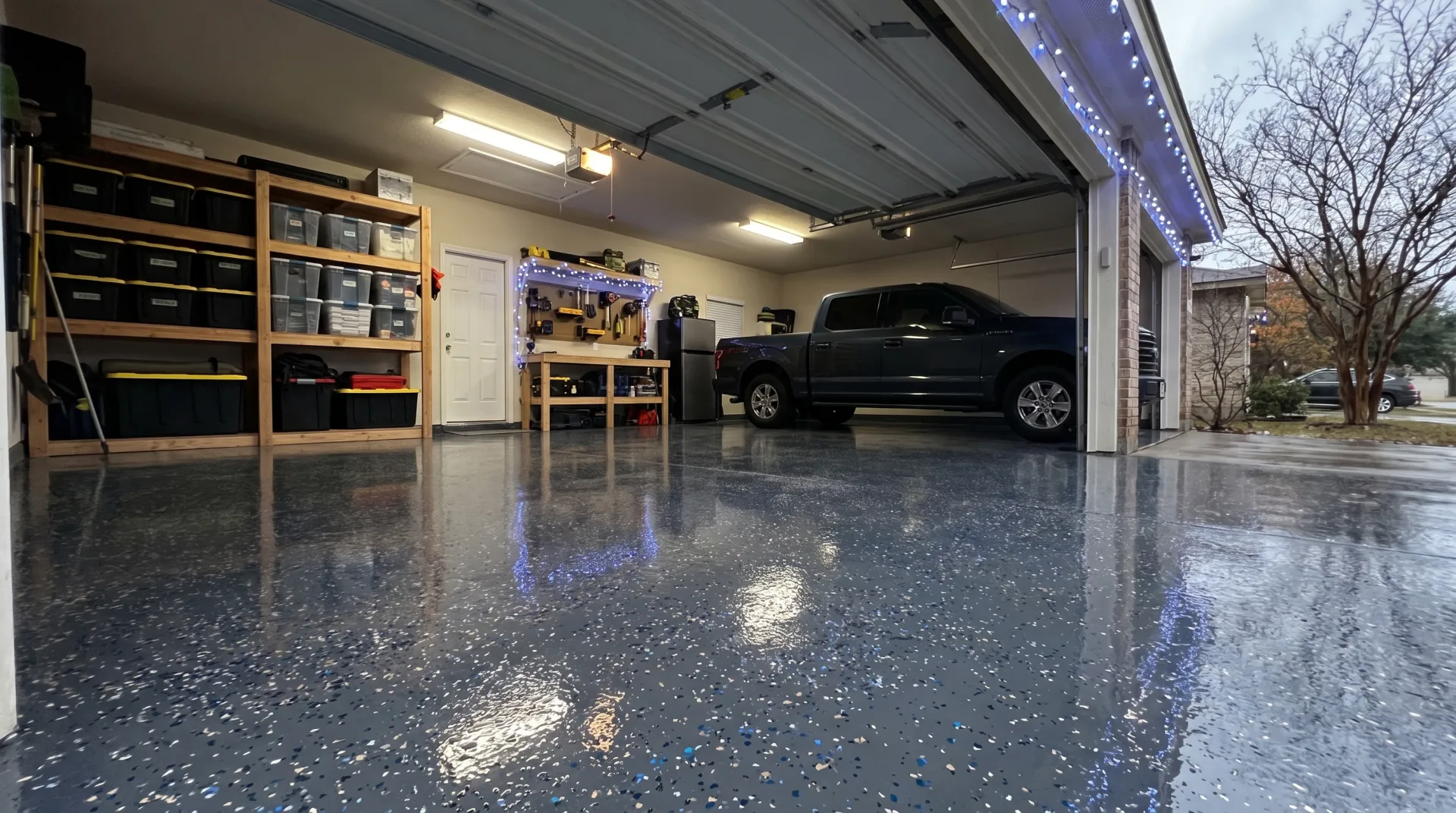
Fall and spring are the best times to epoxy a garage floor in San Antonio, when daytime temperatures typically sit in the 65-85°F range without the extreme heat or occasional cold snaps that complicate application. Epoxy can be installed successfully year-round with the right crew and scheduling, but these two windows give the most forgiving conditions for a smooth, long-lasting finish.
Why Temperature and Humidity Matter So Much
Epoxy is a chemical reaction, not a paint that simply dries - the resin and hardener cure through a temperature-sensitive process that speeds up in heat and slows down in cold. Get the timing wrong and you risk a compressed working window on the hot end, or a sluggish, incomplete cure on the cold end. Humidity adds a second variable: excess moisture in the air can interfere with adhesion and cause a hazy "amine blush" on the cured surface.
Season-by-Season Breakdown
| Season | Typical Conditions | Installation Rating |
|---|---|---|
| Spring (Mar-Apr) | 65-80°F, moderate humidity | Ideal |
| Summer (Jun-Aug) | 90-100°F+, high humidity | Challenging |
| Fall (Oct-Nov) | 65-85°F, lower humidity | Ideal |
| Winter (Dec-Feb) | 40-65°F, occasional cold snaps | Workable |
Why fall and spring win: San Antonio's shoulder seasons deliver the steadiest stretch of moderate temperatures and manageable humidity, giving installers a full, predictable working window without racing the clock against heat or fighting a cold slab.
Installing in San Antonio Summer
Summer installation is common and entirely doable, but it demands more careful scheduling. Crews typically start very early in the morning to apply epoxy before slab temperatures climb past 90°F, since higher heat can shrink the workable pot life to under 10 minutes on the worst days. For homeowners who need a summer install for scheduling reasons, an experienced crew that plans around the heat is essential - our guide on epoxy flooring in Texas heat and summer installation covers the specific techniques crews use to manage this.
Installing in San Antonio Winter
Winter is generally workable in San Antonio's mild climate, but the occasional cold snap can drop temperatures below epoxy's minimum cure threshold - usually around 50-55°F. A cold slab cures more slowly and can affect final finish quality if the installer doesn't account for it. Scheduling around a forecasted warm stretch, rather than committing to a fixed date regardless of weather, is the key to a good winter install.
Planning Your Installation Timeline
- Book 2-4 weeks ahead during peak fall and spring demand, when many homeowners are trying to schedule in the same ideal windows
- Ask your contractor about slab temperature monitoring, not just ambient air temperature, since the concrete itself can run hotter or colder than the surrounding air
- Build in flexibility for a summer or winter install date in case weather forces a short delay
Ready to Schedule Your Garage Floor?
We plan every install around real-time weather and slab conditions - not just a date on the calendar. For how many days the crew is on site and when you can use the floor afterward, see our epoxy install timeline and cure guide.
Request a Free QuoteTiming Also Affects Cost and Cure Speed
Beyond finish quality, seasonal timing can affect how quickly you get your garage back. For a look at how coating choice interacts with temperature and cure speed, see our comparison of garage floor epoxy vs polyaspartic cure time in San Antonio heat. Our garage epoxy installation service page has more on the systems we install year-round across San Antonio.