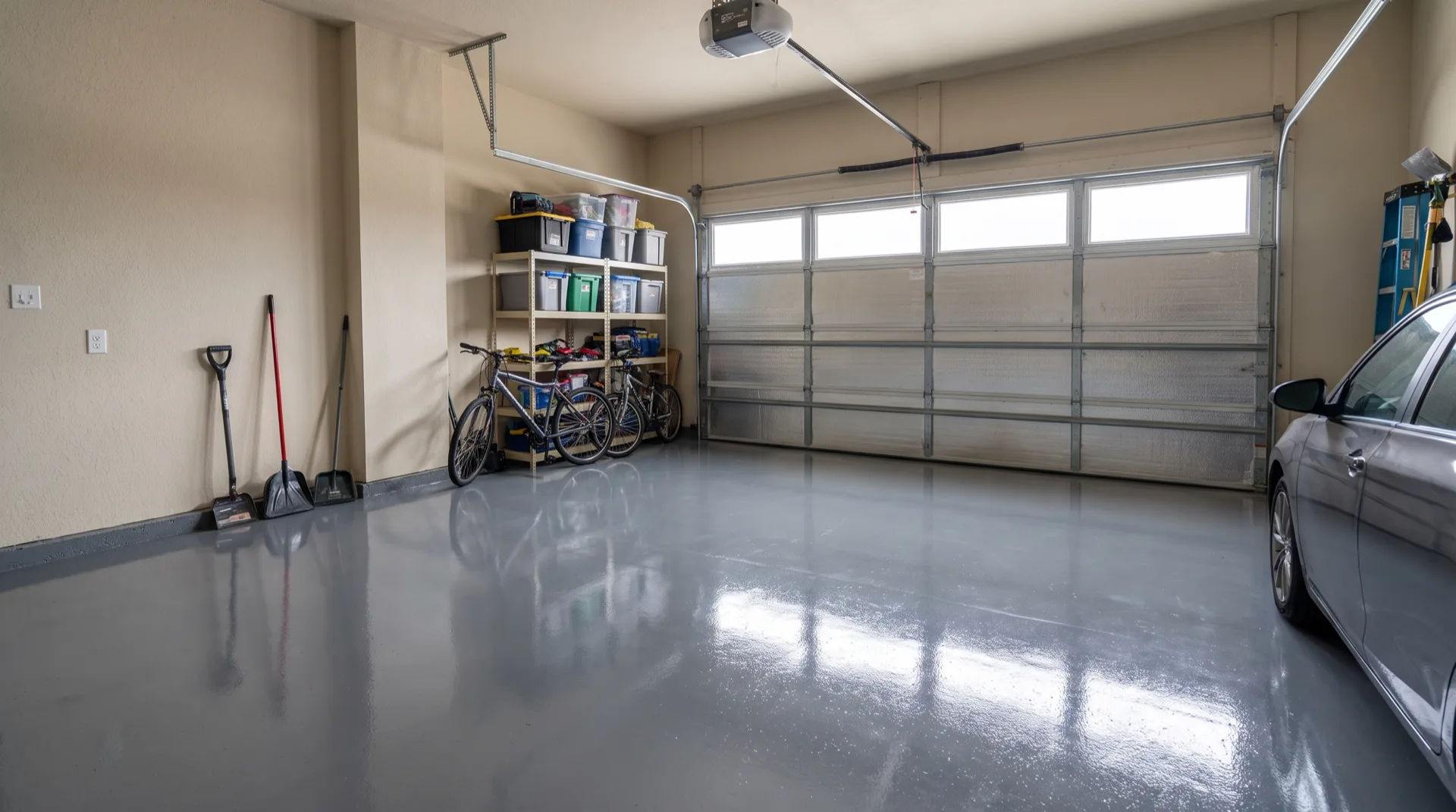
An epoxy garage floor in San Antonio holds up well against the region's freeze-thaw swings because the coating seals the concrete surface against moisture intrusion and bridges minor thermal movement, preventing the surface spalling and cracking that repeated cold-snap-to-warm-day cycling causes in bare, unprotected concrete.
Why San Antonio's Freeze-Thaw Pattern Is Different From Northern Climates
San Antonio doesn't experience the prolonged deep-freeze conditions of northern states, but it does see a distinct freeze-thaw pattern of its own: several nights per winter drop into the mid-20s to low 30s, often followed within days by a rapid warm-up back into the 60s or 70s. This rapid swing - rather than sustained cold - is actually a demanding scenario for concrete, since the surface repeatedly contracts and expands in a short window rather than settling into a stable frozen state for weeks at a time the way it might further north. Garage floors are particularly exposed to this cycling because they're unheated, uninsulated slabs sitting directly on grade, with one side exposed to whatever moisture and temperature the outside air brings in through the open door.
How Freeze-Thaw Cycling Damages Unprotected Concrete
Bare concrete is porous, and any moisture that gets into the surface layer - from rain blown in through an open garage door, condensation, or ground moisture wicking up through the slab - can freeze during a cold snap. Water expands roughly nine percent in volume as it freezes, and inside a concrete pore, that expansion exerts pressure against the surrounding material. Repeated over multiple freeze-thaw cycles each winter, this pressure gradually causes surface scaling, pitting, and hairline cracking, particularly along existing control joints or areas where the concrete finish is already slightly porous or damaged. A garage floor that's gone through several San Antonio winters unprotected often shows this kind of surface deterioration even without any single dramatic freeze event responsible for it.
How Epoxy Coatings Protect Against Freeze-Thaw Stress
A properly installed epoxy coating addresses freeze-thaw damage primarily by eliminating the moisture intrusion that drives it. Once the concrete surface is sealed with a continuous, low-permeability epoxy film, rain, condensation, and de-icing runoff (rare in San Antonio, but not unheard of) simply can't penetrate into the pore structure the way they can with bare concrete, which removes the core mechanism behind freeze-thaw scaling. The coating also has some flexibility of its own, allowing it to accommodate minor surface-level thermal movement in the slab without cracking or delaminating, provided the concrete itself is structurally sound and properly prepared before coating. This combination - sealing out moisture and tolerating minor movement - is why a quality epoxy garage floor installation can extend a slab's usable life well beyond what bare concrete achieves under the same seasonal cycling.
Comparing Coating Systems for Freeze-Thaw Resistance
| Factor | Bare/Sealed Concrete | Epoxy Coating System |
|---|---|---|
| Moisture penetration | Porous, absorbs water | Sealed, low permeability |
| Surface scaling risk | Moderate to high over years | Very low |
| Minor crack tolerance | None - cracks propagate | Some flexibility, bridges hairlines |
| Typical lifespan (San Antonio garage) | Surface wears within 5-10 years | 10-20 years with proper install |
| Maintenance | Periodic resealing needed | Simple mop/sweep care |
The key insight: San Antonio's freeze-thaw risk isn't about extreme cold - it's about the rapid swing between wet, cold nights and warm days, repeated several times a winter. Sealing out moisture, which epoxy does effectively, removes most of the mechanism behind the damage.
Choosing the Right Epoxy System for San Antonio's Climate
Not every epoxy system is specified the same way, and the right choice depends partly on the individual garage's exposure and slab condition. A standard two-part epoxy basecoat with a urethane topcoat performs well for most San Antonio garages, offering good moisture resistance and adequate flexibility for typical thermal movement. Garages with a history of visible cracking, uneven slab settling, or heavier moisture exposure - such as those built on expansive clay soils common in parts of the San Antonio area - may benefit from a more flexible polyaspartic or polyurea topcoat layered over the epoxy basecoat, since these systems tolerate more substrate movement without cracking. A contractor should assess the specific slab before recommending a system rather than defaulting to the same specification for every garage regardless of its history. Timing the project also matters for long-term appearance and durability - our guide on the best time of year to epoxy a garage floor in San Antonio covers how seasonal humidity and temperature swings affect cure quality beyond just freeze-thaw considerations.
Ready to Protect Your Garage Floor Year-Round?
We install epoxy systems engineered for San Antonio's freeze-thaw swings and Texas heat alike.
Request a Free QuoteVapor Barriers and Moisture Considerations Before Coating
Because moisture intrusion is the primary driver of freeze-thaw damage, addressing it properly before coating matters more than the topcoat choice itself. Most slab-on-grade garage floors in San Antonio don't require a dedicated vapor barrier membrane, since the region's soil and slab conditions are generally less moisture-intensive than in wetter climates, but a moisture vapor emission test is still worth running on older slabs or any garage with a known history of dampness. Coating over a slab with elevated moisture vapor transmission - regardless of freeze-thaw considerations - is one of the most common causes of premature epoxy failure, showing up as bubbling, delamination, or a milky haze under the coating within the first year or two.
Seasonal Timing for Installation
Epoxy coatings cure most reliably within a specific temperature and humidity range, which makes timing the installation around San Antonio's seasonal swings worth planning for. Late spring and fall generally offer the most consistent conditions - warm enough for proper cure without the extreme summer heat that can accelerate pot life and complicate application, and before the winter cold snaps that can slow cure time if a garage floor is installed during a sudden temperature drop. Installing in the dead of a Texas summer isn't impossible, but it typically requires a contractor experienced with adjusting application timing and material selection to the heat, since epoxy that flashes off too quickly can affect finish quality.
Real-World Scenarios From San Antonio Garages
A homeowner in a 15-year-old home on the North Side recently discovered fine surface cracking across roughly a third of their garage floor, concentrated near the door threshold where rain most often blows in during storms. Inspection showed the damage matched a classic freeze-thaw pattern: repeated moisture intrusion at that specific zone, followed by winter cold snaps, gradually pitting the surface over more than a decade. Because the underlying slab was structurally sound, an epoxy system with a flexible topcoat resolved the issue by sealing the surface completely, and the homeowner reported no new surface issues through the following two winters. In a separate case, a garage built on a slab with more significant settling required crack routing and a polyurea topcoat rather than standard epoxy alone, since the movement at that property exceeded what a purely rigid coating system could accommodate without eventually cracking again. These two outcomes illustrate why an accurate slab assessment before installation, rather than a one-size-fits-all coating recommendation, determines whether a garage floor actually performs through years of San Antonio's seasonal cycling. Collectors and enthusiasts with higher-value vehicles stored in the garage have even more reason to get this assessment right the first time - see our guide on garage floor epoxy for San Antonio classic car collectors for how coating specification changes when a garage doubles as a storage or display space.
Maintenance Through Winter Months
An epoxy-coated garage floor requires very little seasonal maintenance, but a few habits help it perform through San Antonio's winter cycling specifically. Wiping up any standing water from rain blown in through an open door promptly, rather than letting it sit, minimizes the brief window where moisture could otherwise find its way into any tiny imperfection at a seam or threshold. Avoiding harsh de-icing salts (rarely needed in San Antonio, but occasionally used after an ice event) protects the coating's surface finish, since some de-icing chemicals can degrade certain epoxy topcoats over repeated exposure. Simple sweeping and occasional mopping with a pH-neutral cleaner is otherwise sufficient to keep the floor performing at its designed lifespan.
Cost and Long-Term Value
An epoxy garage floor installation in San Antonio typically costs less than replacing or extensively repairing a deteriorated bare concrete surface after years of freeze-thaw scaling, and it delivers that value while also improving the garage's appearance, cleanability, and resistance to oil and chemical staining. Homeowners comparing the upfront cost of coating against simply leaving concrete bare should factor in the avoided cost of eventual surface repair or resurfacing, which becomes increasingly likely the longer a San Antonio garage floor goes without protection against the area's freeze-thaw and moisture cycling.