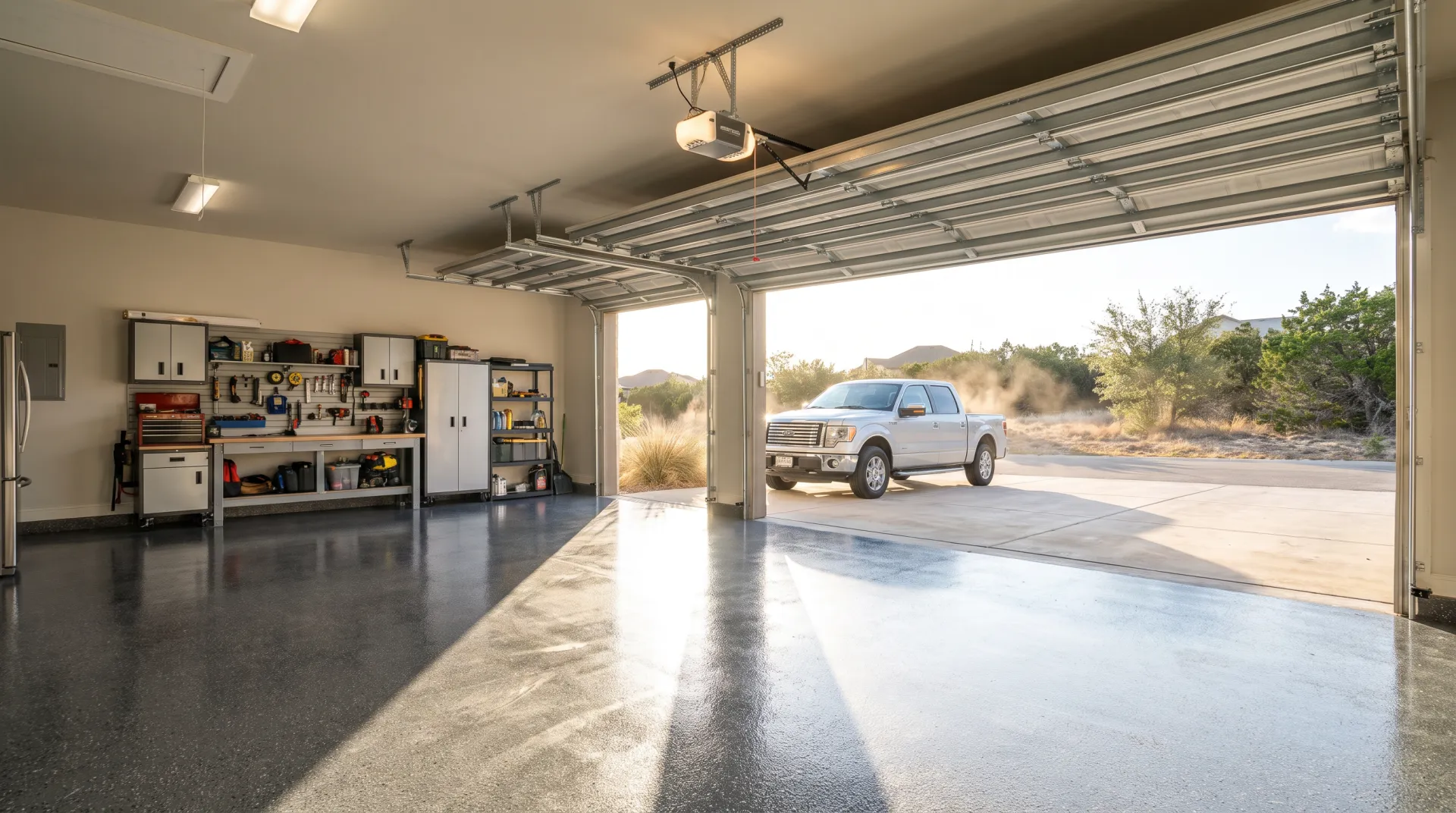
Polyaspartic coatings cure roughly 10 times faster than traditional epoxy - walkable in 1-2 hours versus epoxy's 24-hour minimum - which makes polyaspartic the clear choice when a San Antonio garage needs to be back in service fast. Epoxy still wins on material cost and remains the better pick for homeowners who can spare a few extra days and want the widest range of decorative finishes.
Why Cure Time Is the First Question in San Antonio
San Antonio's climate swings from mild winter mornings to triple-digit summer afternoons, and that range directly affects how a coating cures on a garage slab. Contractors here plan installs around temperature windows more than in milder markets, because both epoxy and polyaspartic chemistry react to heat, humidity, and slab temperature in different ways. Understanding how each system behaves under local conditions is the real deciding factor - not just the numbers on a spec sheet.
Cure Time Side-by-Side
The gap between these two systems is the single biggest practical difference homeowners notice during installation:
| Stage | Epoxy | Polyaspartic |
|---|---|---|
| Light foot traffic | 12-24 hours | 1-2 hours |
| Full foot traffic | 24-48 hours | 4-6 hours |
| Vehicle traffic | 3-7 days | 24-48 hours |
| Total install timeline | 2-3 days | 1 day (single-day install common) |
In San Antonio's summer heat, epoxy's working window can shrink to under 10 minutes on a 100°F afternoon, forcing crews to work in smaller sections and sometimes schedule installs for early morning. Polyaspartic tolerates a much wider temperature range without that same rush.
How San Antonio Heat Affects Each System
Epoxy in High Temperatures
Epoxy is a two-part resin that reacts chemically once mixed, and that reaction speeds up significantly as ambient and slab temperatures rise. On a hot San Antonio afternoon, installers often see the pot life - the workable window before the material starts to set - cut roughly in half compared to a 70°F day. That compressed window increases the risk of lap lines, uneven texture, or a rushed finish if the crew isn't experienced with hot-weather application.
Polyaspartic in High Temperatures
Polyaspartic resin was engineered in part to solve this exact problem. Its chemistry holds a more consistent working window across a broader temperature range, which is why polyaspartic cure times stay predictable even in San Antonio summer heat. That consistency is a major reason polyaspartic has become the default recommendation for garage floor coatings installed between May and September in this market.
Cost and Durability Trade-Offs
Faster cure time isn't the only factor worth weighing. Here's how the two systems compare beyond the clock:
- Material cost: Epoxy typically runs lower per square foot; polyaspartic carries a 15-30% premium tied to its faster-curing resin.
- UV stability: Polyaspartic resists yellowing from sun exposure better than standard epoxy, which matters for garages with west-facing doors that catch afternoon sun.
- Abrasion resistance: Both systems hold up well to vehicle and foot traffic; polyaspartic topcoats generally show slightly better scratch resistance over time.
- Decorative range: Epoxy still offers the widest range of metallic and flake color combinations for homeowners prioritizing a custom look over speed.
Which System Fits Your Timeline
For most San Antonio homeowners, the decision comes down to how much downtime the garage can absorb. A one-car garage that isn't in daily use can tolerate epoxy's longer cure window without much inconvenience, and the lower material cost often makes it the practical choice. A daily-driver garage, or a household with only one usable parking spot, usually benefits more from polyaspartic's same-day turnaround - even compared against garage floor paint, polyaspartic remains the fastest durable option available.
Not Sure Which Coating Fits Your Garage?
Our crews install both epoxy and polyaspartic systems across San Antonio and can walk you through the timeline and cost trade-offs for your specific garage.
Request a Free QuoteWhat to Expect on Install Day
Regardless of which system you choose, prep work looks similar: the slab gets diamond-ground or shot-blasted to open the surface, cracks and pits are patched, and a base coat goes down before color flake or metallic pigment is broadcast in. The difference shows up after that point - an epoxy crew typically returns the next day to apply the topcoat, while a polyaspartic crew can often apply base, flake, and topcoat in a single visit because each layer cures fast enough to build on the same day.