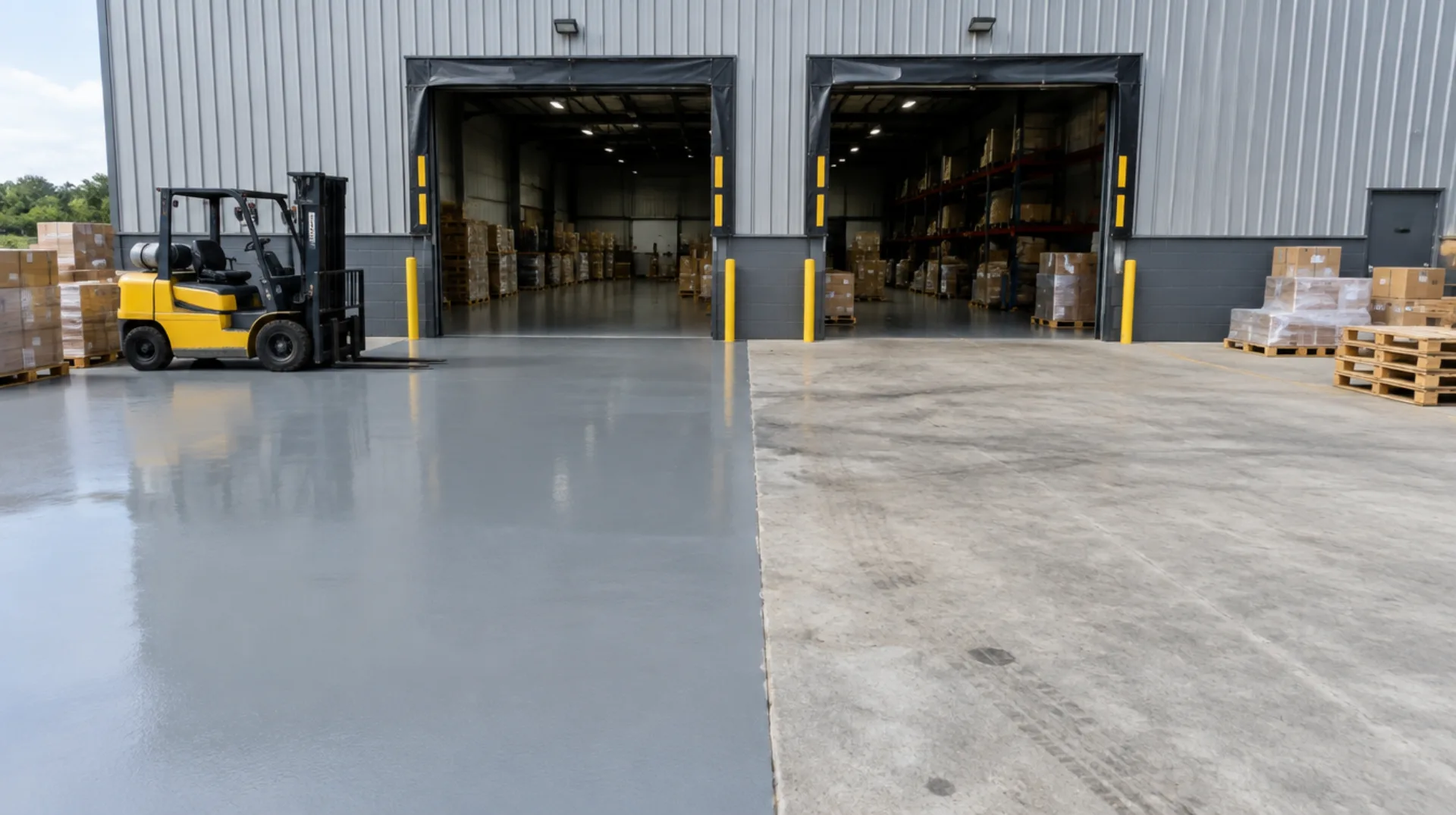
Warehouse flooring in San Antonio can almost always be installed without fully shutting down operations, by sectioning the facility into zones and coating each one in turn while the rest of the warehouse keeps running shipping, receiving, and normal traffic. The key to making this work is phased scheduling built around your actual operational calendar, not a one-size-fits-all install timeline.
Why a Full Shutdown Is Rarely Necessary
Facility managers often assume a new or recoated warehouse floor requires closing the whole building for the project's duration, but that's rarely true with modern fast-curing coating systems and a properly planned phased approach. Installers section off one zone at a time - a specific aisle, dock area, or storage bay - completing surface prep, coating, and cure in that isolated section while forklifts, pallet jacks, and staff continue operating normally in the rest of the facility. The key constraint isn't whether the whole building can stay open; it's making sure each individual work zone is genuinely isolated and staff have a clear, safe path around it.
The Phased/Sectional Install Approach
A phased install divides the warehouse into logical work zones based on your traffic patterns and operational priorities - often starting with lower-priority storage areas and finishing with primary aisles or dock zones last, once the crew and process are dialed in. Each zone is barricaded and clearly marked before work begins, surface prep and coating happen within that isolated footprint, and the zone reopens to traffic once cure time is met before the crew moves to the next section. This approach lets a large warehouse floor project span days or weeks in calendar time without ever taking the whole facility offline at once.
Night and Weekend Install Windows
For facilities that can't spare even a single zone during business hours, night and weekend scheduling is the other major lever. Fast-curing systems like polyaspartic can often be applied after the last shift leaves and be fully cured and ready for traffic before the next shift arrives, effectively making the disruption invisible to daily operations. This works especially well for smaller zones or single-shift facilities; larger, 24/7 operations more often rely on the sectional zone approach described above, sometimes combined with off-hours scheduling for the busiest zones specifically.
Cure Time Comparison by System
| System | Foot Traffic Ready | Full Vehicle/Forklift Traffic |
|---|---|---|
| Standard Epoxy | 24-48 hours | 5-7 days |
| Polyaspartic | 2-4 hours | 24 hours |
| Urethane Cement | 4-12 hours | 24-48 hours |
Cure time drives scheduling flexibility: the faster a system returns a zone to full traffic, the more aggressively it can be scheduled around live operations - this is why fast-curing systems are increasingly the default choice for facilities that can't tolerate extended zone closures.
Planning Your Facility's Phased Schedule
Getting a phased schedule right starts with an honest inventory of your facility's actual traffic patterns and priorities: which zones see the heaviest daily use, which can tolerate being offline longer without disrupting operations, and whether any zones have seasonal or contractual constraints (a peak shipping season, a tenant's specific access needs) that affect timing. A good installer will walk the facility with you before finalizing a schedule, mapping zones to your operational calendar rather than applying a generic sequence. Our warehouse flooring service page covers the systems we install across San Antonio's distribution and industrial facilities, including phased scheduling for active operations.
Need a Floor Project That Doesn't Stop Your Operations?
We'll build a phased schedule around your actual traffic patterns and shipping calendar.
Request a Free QuoteCoordinating With Staff During an Active Install
Beyond the physical zone barricades, clear communication with warehouse staff meaningfully reduces friction during a phased install. Posting the zone schedule in advance, briefing forklift operators and pickers on temporary route changes, and designating a single point of contact for questions during the project all help staff adapt without confusion or accidental incursions into an active work zone. Facilities that treat staff communication as part of the project plan - not an afterthought - consistently report smoother installs with fewer schedule delays caused by staff needing to be redirected mid-shift.
Special Considerations for Cold Storage and Chemical-Exposure Zones
Facilities with cold storage rooms or areas with heavy chemical exposure need additional planning layered onto the phased approach, since these zones often have their own temperature or moisture-control requirements that interact with coating cure schedules. Our guide on cold storage warehouse flooring requirements in San Antonio covers the specific system and scheduling considerations for freezer and cold room zones, which is worth reviewing alongside this guide if your facility includes any temperature-controlled space in the phased plan.
How Traffic Type Affects Zone Sequencing
Not all warehouse traffic behaves the same way, and understanding this helps prioritize which zones to schedule first versus last in a phased plan. High-frequency forklift lanes and turning zones benefit from being scheduled during lower-volume periods (often overnight or weekends) since the concentrated wear these zones see makes even a short unplanned closure more disruptive than in a lighter-traffic storage aisle. Our related post on forklift traffic and warehouse floor coating longevity in San Antonio goes deeper into why these high-wear zones need special attention both during installation scheduling and in the ongoing system selection itself.
Estimating Realistic Timelines for a Phased Project
Facility managers planning a phased warehouse floor project should build their timeline around the total square footage divided by how much a crew can realistically prep and coat per session, rather than assuming the whole project compresses into a single weekend. A large distribution center running dozens of zones might reasonably plan for a project spanning several weeks of scheduled sessions, while a smaller facility with just a few zones might complete the entire project within a week or two. Building in some schedule buffer for unexpected findings during surface prep - unrecorded cracks, moisture readings that require additional drying time, or contamination that needs extra grinding - keeps the overall project on track even when individual zones occasionally take longer than planned.
Communicating the Schedule to Customers and Visitors
For warehouses that see regular visitors, customers, or third-party carriers picking up and dropping off freight, the phased schedule needs to account for external traffic in addition to internal staff. Clear signage directing visitors around active work zones, advance notice to regular carriers about temporary route changes at the dock, and a point of contact for questions from visiting drivers all reduce confusion during the project. Facilities with high external traffic volume sometimes find that scheduling the most visible, high-traffic zones - main entry aisles, primary dock doors - for off-hours work specifically minimizes how much of the project outsiders ever notice at all.
Safety Considerations During an Active-Facility Install
Running a flooring project alongside live warehouse operations introduces safety considerations that a full-shutdown project doesn't have to manage. Fumes and dust from grinding and coating application need proper ventilation, particularly in facilities without ready access to open dock doors on all sides, and staff working near an active zone should be briefed on any temporary odor or airborne particulate they might notice even outside the barricaded area itself. Wet or freshly coated surfaces at the zone boundary need clear, durable signage and physical barriers that hold up to daily bumps from carts and equipment, not flimsy tape that can fail partway through a shift. A reputable installer will walk through their specific safety protocol for working in an active facility before the project starts, including how they handle any material safety data sheet requirements your facility's safety program may call for.
Choosing an Installer Experienced With Active Facilities
Not every flooring contractor has real experience working around live warehouse operations, and this shows up in how well a phased project actually goes. When vetting a contractor for an active-facility install, ask specifically about their track record with phased or zone-based projects, how they handle unplanned scheduling conflicts (a shipment running late, a zone needing to reopen sooner than planned), and whether they carry insurance appropriate for working alongside a client's ongoing operations rather than in an empty, controlled space. A contractor who can speak confidently and specifically to these questions - rather than describing only their standard, full-shutdown installation process - is a much better sign of a smooth phased project than price alone.