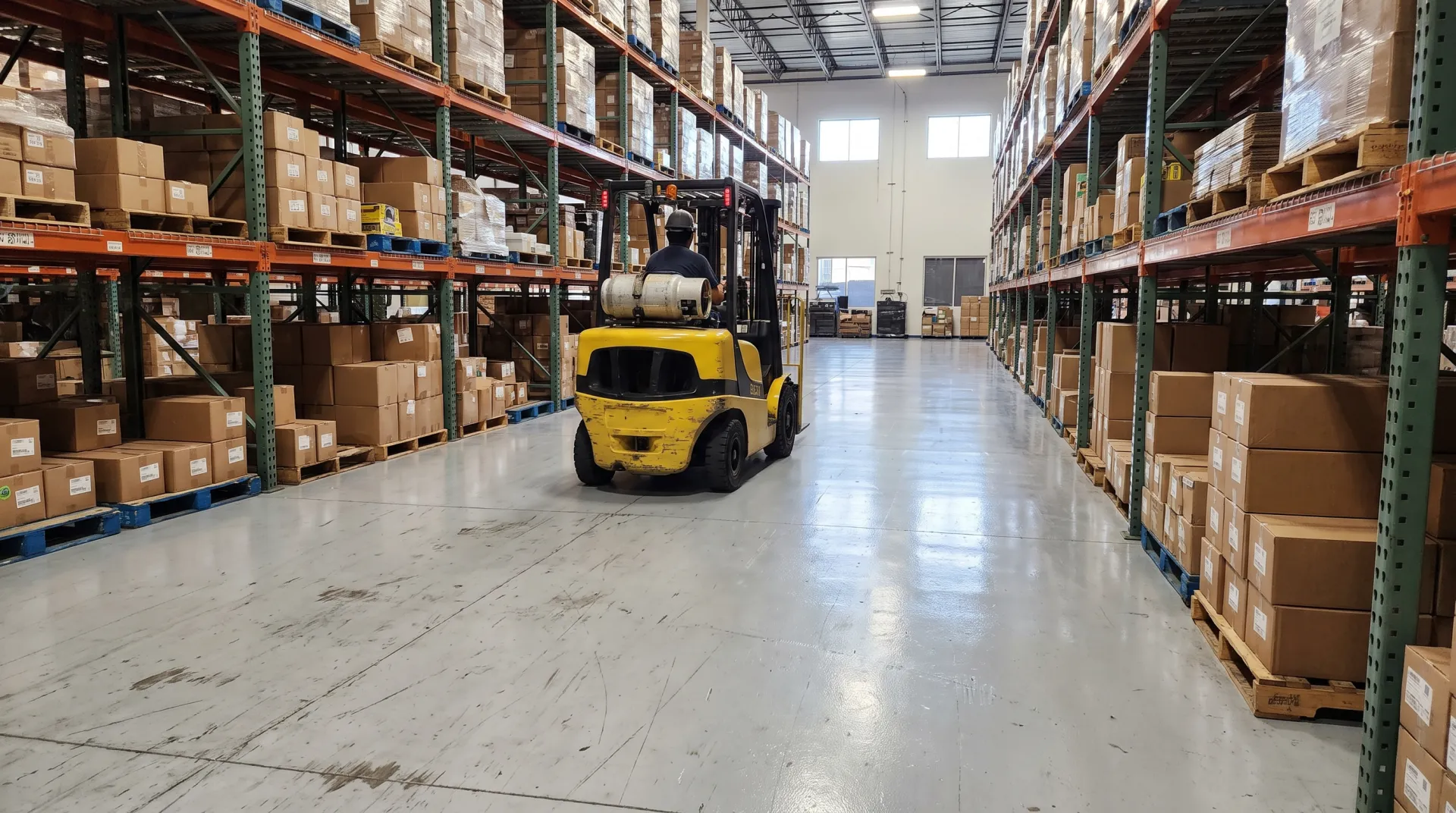
Sustained forklift traffic can cut a standard warehouse floor coating's service life roughly in half compared to foot-traffic-only areas - the culprit is concentrated wheel-contact abrasion and sideways scrubbing at turning zones, not overall weight. A coating system specced for forklift traffic from the start typically outlasts a standard system by years, which is why matching the coating to actual traffic type matters more than most facility managers realize until the floor starts showing it.
Why Forklifts Wear Floors Differently Than Foot Traffic
Foot traffic distributes load across a large, soft contact area and moves in mostly straight lines. Forklift wheels do the opposite: they concentrate the vehicle's full load into a few square inches of hard contact, and every turn scrubs that contact patch sideways across the coating rather than simply rolling over it. That scrubbing action is what erodes a coating's surface over time, well before the coating's raw abrasion resistance would otherwise predict failure.
Wheel Type Changes the Wear Pattern
| Wheel Type | Wear Characteristic |
|---|---|
| Hard polyurethane | Small contact patch, high localized pressure, most aggressive wear |
| Cushion tire (solid rubber) | Larger contact patch, moderate wear, common in general warehousing |
| Pneumatic/air-filled | Largest contact patch, gentlest on coatings, common outdoors/rough terrain |
Practical implication: a facility running hard poly-wheel forklifts on standard-thickness epoxy will see turning-zone wear far sooner than a facility running the same forklift traffic on cushion tires. Wheel type should factor directly into coating thickness and system selection, not just overall traffic volume.
Where Wear Shows Up First
- Turning zones and aisle intersections: where wheels scrub sideways under load rather than rolling straight - almost always the first visible wear
- Dock approach areas: repeated braking and pivoting concentrates stress in a small footprint
- Racking aisle centerlines: the repeated path forklifts travel wears a visible track over time even in otherwise light-traffic warehouses
Facilities can often extend overall floor life significantly by simply specifying a thicker or more abrasion-resistant coating in these specific zones, rather than upgrading the entire floor uniformly.
Matching Coating Thickness to Traffic Level
Standard epoxy systems (roughly 10-20 mils) handle light foot and occasional cart traffic well but wear faster under sustained forklift use. Heavy-duty systems - thicker epoxy builds or urethane cement - are built specifically for continuous forklift and pallet jack traffic and hold up significantly longer in exactly the zones described above. Our guide on warehouse flooring load ratings covers the structural side of this question, while this post focuses specifically on surface wear and coating longevity.
Warehouse Floor Showing Wear in Forklift Zones?
We spec coating thickness by actual traffic pattern, not a one-size-fits-all system - get an assessment of your San Antonio facility's floor.
Request a Free QuoteExtending Coating Life With Targeted Maintenance
Regular inspection of turning zones and aisle centerlines catches early-stage wear before it becomes a full recoat. A localized topcoat refresh in high-wear zones every few years is typically far cheaper than a full facility recoat triggered by neglected wear spreading into structural slab damage. For a broader look at overall traffic durability considerations, our warehouse epoxy flooring guide covering slip resistance and load capacity is a useful companion read, and our warehouse flooring service page details the specific heavy-duty systems we install for San Antonio distribution and manufacturing facilities.