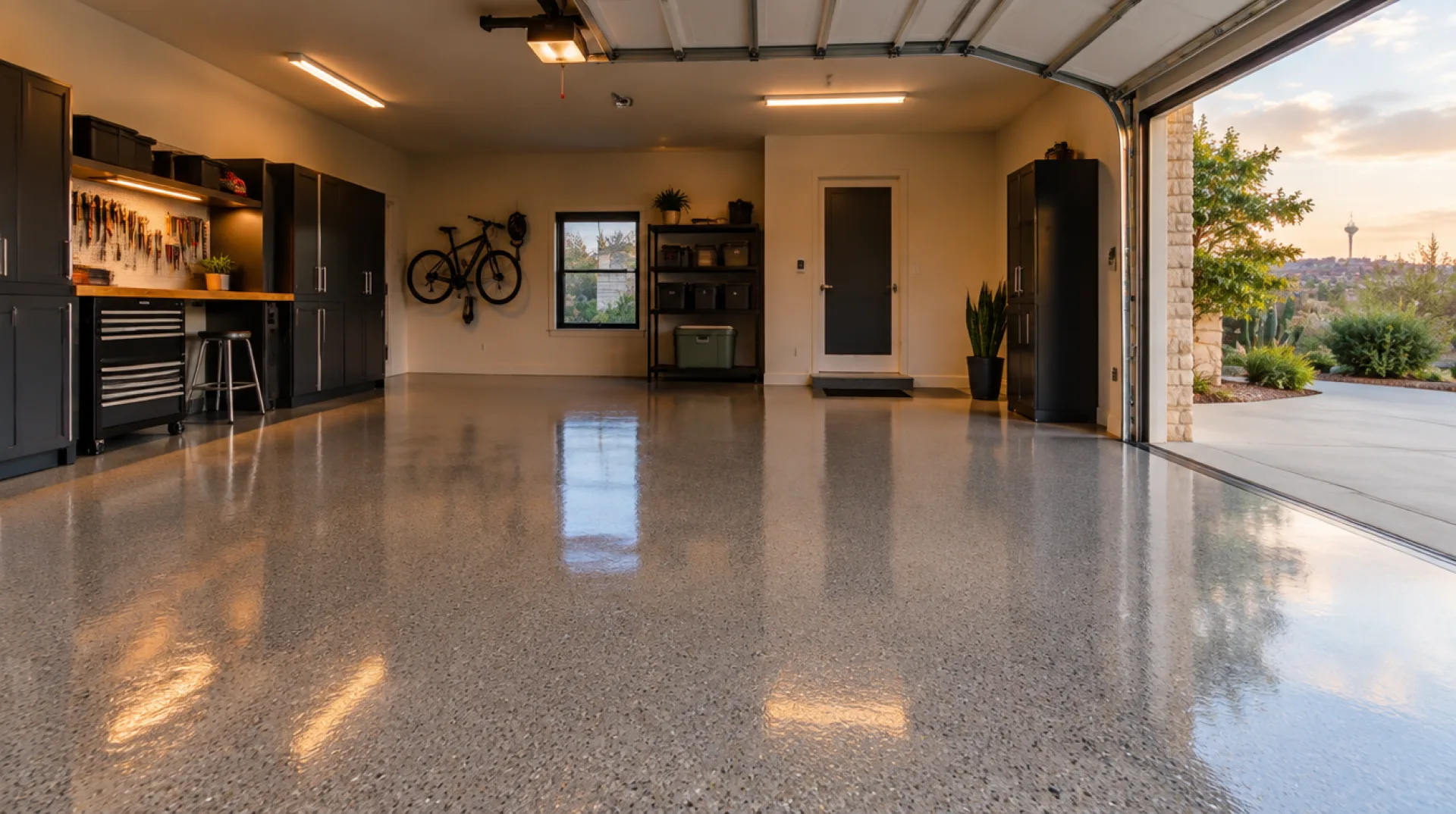
Most polyaspartic floor coating installed in San Antonio can be applied in surface and air temperatures ranging from roughly 35 F to 95 F, a much wider window than standard epoxy's typical 50-90 F range - which is exactly why polyaspartic has become the go-to choice for installers working around this region's hot summers and occasional winter cold snaps.
Why Temperature Range Matters for a Floor Coating Install
Every epoxy and polyaspartic product is a two-part chemical system that cures through a reaction between a resin and a hardener, and that reaction speed is directly tied to temperature. Too cold, and the reaction slows to the point where the coating may not fully cure, cross-link properly, or bond well to the concrete substrate, leaving a soft or tacky finish. Too hot, and the reaction can speed up so much that installers lose their working time before they can properly spread and level the product, leading to visible lap lines, uneven texture, or a rushed, poor-quality finish. Polyaspartic's chemistry is formulated to tolerate a wider band of both extremes than standard epoxy, which is a major reason it has become popular for installers working in climates with significant seasonal or even daily temperature swings.
San Antonio's Climate and the Practical Install Window
San Antonio summers regularly push surface temperatures on a sun-exposed garage slab or warehouse dock well above 95 F by midday, while winter can bring occasional nights near or just below freezing. This wide annual range is a genuine challenge for standard epoxy, which has a much narrower comfort zone, but it's exactly the scenario polyaspartic handles well. For homeowners comparing the two systems more broadly, our guide on epoxy vs. polyaspartic cure time covers additional performance differences beyond just temperature tolerance that are worth understanding before choosing a system.
Temperature Range Comparison: Polyaspartic vs. Standard Epoxy
| Factor | Standard Epoxy | Polyaspartic |
|---|---|---|
| Min install temp | ~50 F | ~35 F |
| Max install temp | ~90 F | ~95 F+ |
| Cure speed in heat | Moderate acceleration | Significant acceleration |
| Cure speed in cold | Slows substantially | Slows, but still workable |
Surface temperature matters more than air temperature: a concrete slab in direct sun can run 20-30 degrees hotter than the surrounding air, so installers measure the actual slab surface with an infrared thermometer rather than relying on the day's forecast high.
How Hot Weather Shortens Working Time
Once polyaspartic's two components are mixed, the clock starts on a limited working time before the material becomes too thick and tacky to spread and level properly. Higher temperatures accelerate that chemical reaction, which shortens the available working time - sometimes down to just a few minutes in extreme summer heat compared to 20-30 minutes in milder conditions. Experienced installers manage this by scheduling hot-weather jobs for early morning or evening, when both air and slab temperatures are lower, and by mixing smaller batches more frequently rather than one large batch that could kick off before it's fully applied. Rushing a large batch in high heat is one of the most common causes of a visibly uneven or lap-marked polyaspartic finish.
Installing in Cold Weather Without Compromising Cure Quality
While polyaspartic tolerates cooler temperatures far better than standard epoxy, a cold install still needs care. Below the manufacturer's minimum threshold, the cure can slow dramatically or stall entirely, leaving a coating that never fully hardens even after the expected cure window passes. For a winter install in an unheated garage or warehouse, bringing the space to a stable temperature with portable heaters for several hours before and during application - rather than just checking the temperature once at the start - helps ensure the concrete substrate itself, not just the ambient air, is within the workable range.
Humidity and Moisture Interactions With Temperature
Temperature doesn't act alone - humidity and moisture in the slab interact with it in ways that affect the finished coating. High humidity combined with a cooling evening slab (as temperatures drop after a hot day) can cause condensation to form on the concrete surface, sometimes called "blushing," which can interfere with proper adhesion if application happens right as this transition occurs. Installers experienced with San Antonio's humid subtropical climate know to check dew point conditions alongside temperature, not just temperature alone, particularly for installs scheduled in the evening to avoid daytime heat.
UV Stability as a Related Temperature Consideration
Beyond install-day temperature tolerance, polyaspartic's chemistry also gives it better long-term UV stability than standard epoxy, which matters for any floor exposed to direct sunlight through a garage door or warehouse dock opening - a common condition in a sun-intense climate like San Antonio's. Our guide on UV stability for polyaspartic vs. epoxy covers how sunlight exposure over time affects each system's color retention, which is a separate but related consideration from the install-day temperature range covered here, and one worth factoring in for any floor that gets meaningful direct sun.
Scheduling an Install Around San Antonio's Seasonal Patterns
Because polyaspartic tolerates such a wide temperature range, it extends the practical installation season well beyond what's workable for standard epoxy in this climate. Late fall through early spring offers the most moderate, predictable temperatures for any coating system, but polyaspartic's flexibility means summer and even brief winter cold snaps don't rule out a quality install the way they might with epoxy, as long as installers plan around time-of-day scheduling and monitor actual slab surface temperature rather than just the forecast.
What to Ask a Contractor About Temperature Planning
Homeowners and facility managers scheduling a polyaspartic install during a particularly hot or cold stretch should ask the contractor directly how they plan to manage temperature on installation day - whether that means an early-morning start time, portable heating or shading equipment, or a willingness to reschedule if conditions fall outside the product's rated range on the day of install. A contractor who proactively raises this topic and has a clear plan for measuring actual surface temperature, rather than just checking the weather app, is generally more experienced with the practical realities of installing coatings in San Antonio's variable climate than one who doesn't mention temperature planning at all.
Matching the System to the Space, Not Just the Season
Temperature tolerance is one factor in choosing a coating system, but it works alongside the space's actual use case rather than replacing that decision. A homeowner weighing a garage floor upgrade, or a business comparing options for a showroom or retail floor, should look at our full polyaspartic floor coating service page for the complete picture on durability, chemical resistance, and finish options beyond just install-day temperature planning. Temperature range mainly affects when and how a job gets scheduled and executed, not whether polyaspartic is the right system for a given space in the first place - that broader decision depends more on traffic level, desired finish, and budget.
Batch Sizing and Crew Coordination in Extreme Conditions
Beyond scheduling around time of day, experienced polyaspartic crews adjust their mixing and application approach based on conditions. In peak summer heat, that often means smaller, more frequent batches mixed by a larger crew working in parallel across sections of the floor, so each batch gets applied and leveled within its shortened working time before the next is mixed. In cooler conditions, crews can work with larger batches and a more relaxed pace, since the extended working time gives more room for careful leveling and detail work around edges, drains, and transitions. A contractor's willingness to adjust batch size and crew staffing to match the day's actual conditions - rather than using the same fixed approach regardless of weather - is a good indicator of real experience with temperature-sensitive coating systems.
Get a Polyaspartic Install Scheduled Around Your Timeline
We plan every polyaspartic install around actual surface temperature and San Antonio's seasonal conditions for a clean, fully cured finish.
Request a Free QuoteTesting Slab Temperature Before Committing to an Install Date
Rather than relying purely on a seasonal calendar, an experienced installer measures actual slab surface temperature with an infrared thermometer at several points across the floor in the days leading up to a scheduled install, particularly for a garage or warehouse with partial sun exposure through open bay doors. Concrete's thermal mass means it can hold heat well after the surrounding air has cooled in the evening, or stay colder than the air after a cold front passes through, so a single air-temperature check from a weather app can be misleading in either direction. This kind of direct, on-site measurement - rather than an assumption based on the forecast - is what allows crews to confidently install polyaspartic near the edges of its rated range without risking a compromised cure.