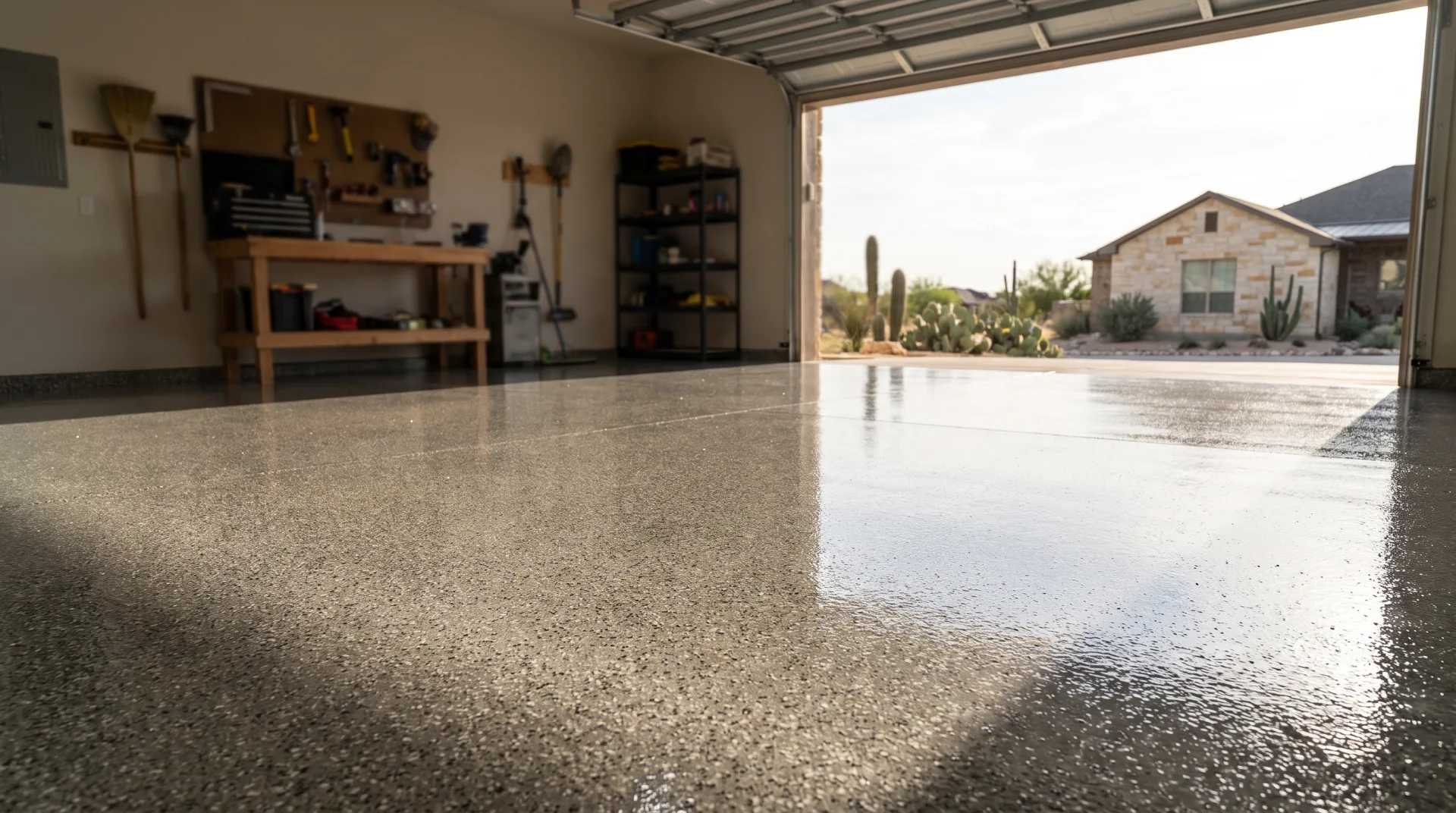
A one-day polyaspartic floor install in San Antonio is a real, complete process, not a marketing simplification - surface prep, coating application, and enough cure time to walk on safely all happen within a single day, thanks to polyaspartic's fast-curing chemistry. For homeowners and small business owners who want a durable new floor without giving up their garage or space for a week, this is what makes polyaspartic the go-to choice.
Step 1: Surface Prep (Morning)
The day starts with diamond grinding the existing concrete to remove any old coating, sealer, or contamination and create a mechanically bondable surface profile. This step is identical in importance to any other coating system - polyaspartic's speed advantage is in cure time, not in skipping prep - so a thorough grind, crack repair, and moisture check happen first, typically taking two to three hours depending on the space's condition and size.
Step 2: Base Coat and Broadcast (Midday)
Once the surface is prepped and clean, the pigmented base coat goes down, followed immediately by any broadcast media - decorative flakes or aggregate for texture and slip resistance - while the base coat is still wet enough for the material to embed properly. This stage moves quickly since polyaspartic's chemistry doesn't require the extended open time epoxy needs, and the crew can move through a typical garage or small commercial space within an hour or two.
Step 3: Topcoat and Cure (Afternoon)
After the base coat and broadcast have set enough to walk on for the topcoat application, a clear polyaspartic topcoat seals and protects the floor. This is where the real time savings show up: this topcoat cures to a walkable state within just a few hours, meaning a project started in the morning can be complete, cured, and ready for light foot traffic by evening, with full vehicle traffic typically cleared by the next day.
Same-Day Polyaspartic vs. Multi-Day Standard Epoxy
| Stage | Polyaspartic | Standard Epoxy |
|---|---|---|
| Surface prep | 2-3 hours | 2-3 hours |
| Base coat cure | 1-2 hours | 12-24 hours |
| Topcoat cure (walkable) | 2-4 hours | 24 hours |
| Full vehicle traffic | 24 hours | 5-7 days |
| Total project timeline | 1 day | 3-7 days |
Same-day doesn't mean rushed: the compressed timeline is a property of polyaspartic's resin chemistry cross-linking faster than epoxy, not a shortcut on prep or material quality - the finished floor is comparably or more durable than standard epoxy.
Why Speed Doesn't Compromise Durability
It's a fair question whether a floor that cures this fast can really hold up as well as one that takes a week. The answer is yes: polyaspartic's fast cure comes from its resin chemistry cross-linking more efficiently, not from using less material or a thinner application. In fact, polyaspartic topcoats are generally more resistant to UV yellowing and abrasion than standard epoxy topcoats, meaning the one-day install often outperforms a multi-day epoxy floor on long-term durability, not just installation speed. Our polyaspartic floor coating service page covers the full range of systems we install across San Antonio homes and businesses.
Ready for a New Floor Without Losing a Week?
Our polyaspartic systems install and cure in a single day for most residential and small commercial spaces.
Request a Free QuoteWhat Makes a Space a Good Fit for a One-Day Timeline
Most residential garages and small to moderate commercial spaces fit comfortably within a true one-day install. Larger spaces - big commercial floors, extensive warehouse zones - may still use the same fast-curing polyaspartic system, but the total square footage means the project spreads across a phased, multi-day schedule simply due to the physical time it takes a crew to prep and coat that much area, not because the chemistry itself is slower. Homeowners planning a one-day install should confirm with their installer that their specific garage or space size realistically fits within a single working day before scheduling.
Comparing Polyaspartic Timelines to Other Fast Applications
Homeowners researching fast-turnaround flooring sometimes also look at how polyaspartic compares to other quick-install scenarios, like retail stores needing overnight work. Our guide on polyaspartic floor coating for San Antonio retail stores that can't close covers a related commercial application of the same fast-cure advantage, useful context if you're weighing polyaspartic for a business space rather than a residential garage. For a deeper comparison of cure chemistry between the two systems, our post on polyaspartic vs. epoxy cure time breaks down the underlying chemistry differences in more technical detail.
Preparing for Your One-Day Install
Homeowners can help their one-day install stay on schedule by fully clearing the garage or space before the crew arrives, confirming vehicle and equipment relocation plans for the day, and being available by phone in case the crew needs a quick decision about an unexpected repair. Because the entire project compresses into a single day, there's less flexibility to pause and wait for a decision compared to a multi-day project - having your prep fully done and being reachable during the workday keeps the tight schedule from slipping into a second day unexpectedly.
Weather and Temperature Factors on Install Day
While polyaspartic is more forgiving of temperature swings than standard epoxy, ambient conditions still affect the one-day timeline in San Antonio's climate. Very high humidity or an unusually cold morning can slightly extend cure windows within each stage, which is why experienced installers check the day's forecast when scheduling and may adjust the sequence timing accordingly. Summer heat, San Antonio's most common install condition, generally works in favor of the fast cure rather than against it, since warmer ambient temperatures typically accelerate polyaspartic's cross-linking chemistry within its normal operating range. Scheduling flexibility around weather is one more reason to book with an installer experienced specifically with polyaspartic's climate sensitivities, rather than one only accustomed to standard epoxy timelines.
What Can Push a One-Day Install Into a Second Day
Even with polyaspartic's speed, certain conditions can extend a project beyond the planned single day. Extensive crack repair or moisture remediation discovered during prep, a larger-than-typical space that takes longer to grind and coat, or an unexpected need to apply an extra coat for color consistency can all add time. A transparent installer will flag these possibilities during the initial walkthrough and quote rather than presenting the one-day timeline as an absolute guarantee regardless of what prep reveals - homeowners should expect a realistic conversation about their specific space's likely timeline, not just a blanket promise.
Color and Finish Options Within a One-Day Timeline
A common misconception is that a fast-cure install limits homeowners to a plain, basic finish. In practice, polyaspartic supports the same range of aesthetic options as standard epoxy - solid colors, decorative flake broadcast systems, and metallic finishes - all achievable within the single-day timeline, since these are applied during the base coat and broadcast stage rather than requiring extra curing days. Homeowners choosing a more elaborate flake or metallic finish should confirm with their installer that the specific look they want doesn't require additional coats beyond the standard base-and-topcoat sequence, since a more complex finish occasionally adds a modest amount of time without necessarily requiring a second full day.
Cost Considerations for a One-Day Install
Homeowners sometimes assume a faster install must cost significantly more, but polyaspartic's material cost premium over standard epoxy is often modest relative to the value of not losing a garage or work space for several days. When comparing quotes, it's worth asking whether the price reflects a true one-day polyaspartic system or a hybrid approach that only appears faster on paper. A transparent quote should specify the exact system, the realistic timeline for your specific space, and what's included in surface prep - details that matter more to the final result than the sticker price alone.
Aftercare Once the One-Day Install Is Complete
Even though the floor cures fast, a short grace period after the crew leaves helps ensure a lasting result. Homeowners should avoid dragging heavy items or parking a vehicle before the full cure window has passed, even though the surface may feel dry and walkable well before then. Light cleaning with a soft broom or dry mop is fine right away, but harsher chemical cleaners should wait until the manufacturer's specified full-cure period has elapsed, typically a few days, to avoid interfering with the coating's final chemical set. Following this simple aftercare window preserves the durability advantage that made polyaspartic worth choosing in the first place.