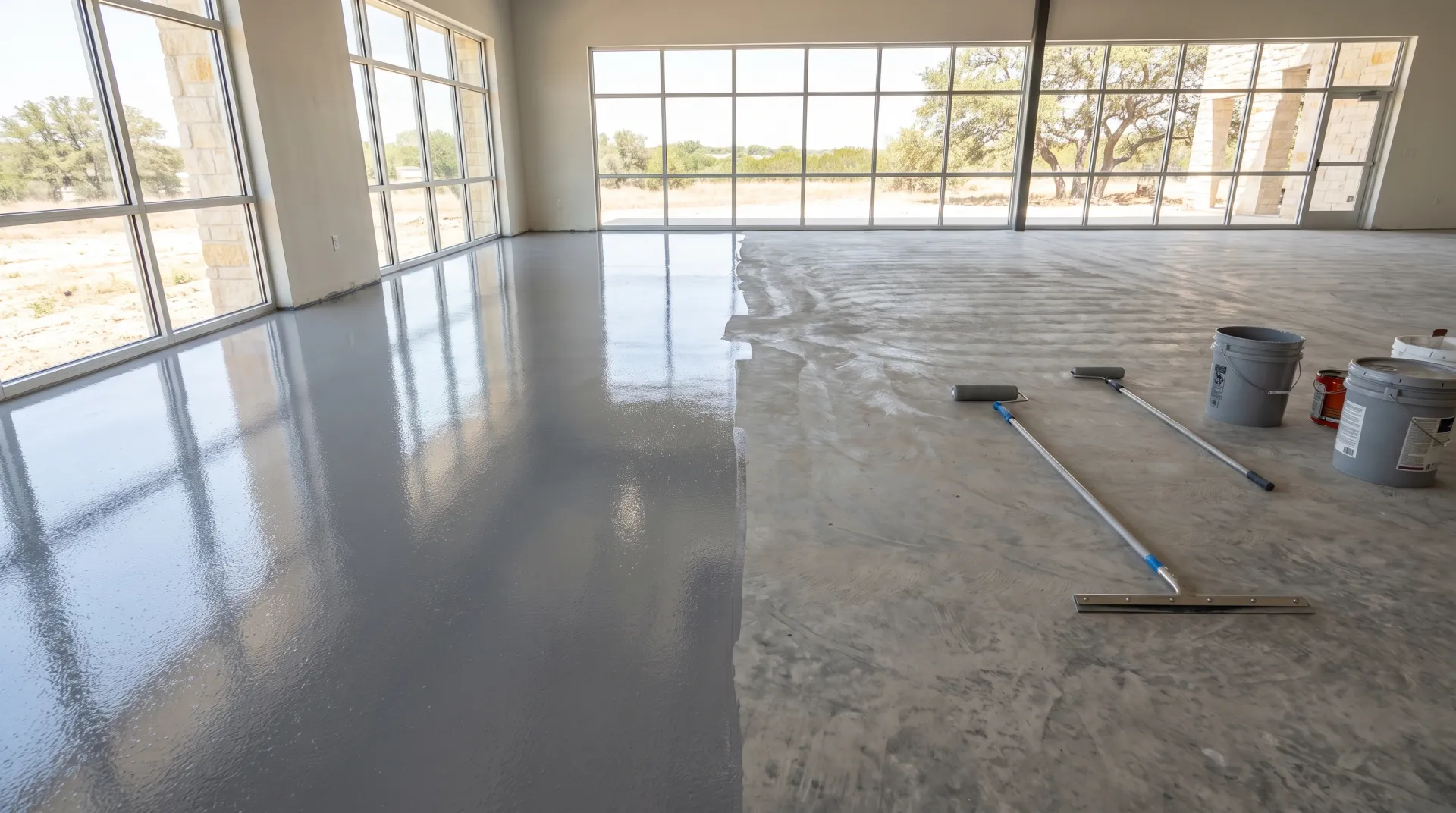
For a San Antonio business, floor coating cure time isn't a technical detail - it's the difference between a one-day closure and a week of lost revenue. Polyaspartic reaches full commercial traffic in about 24 hours; standard epoxy needs 3-7 days before it can handle equipment and heavy foot traffic. That gap is why polyaspartic has become the default recommendation for any space that generates revenue on the floor it's coating.
The Real Cost of Downtime
Material cost is only half the equation on a commercial flooring project. The other half is what a closure actually costs the business - lost sales for a retail space, cancelled reservations for a restaurant, idle service bays for an auto shop. A five- or six-day epoxy cure window can easily cost more in lost revenue than the entire flooring project, which is why more San Antonio business owners are willing to pay polyaspartic's premium once they run the numbers.
Cure Time Comparison
| Stage | Epoxy | Polyaspartic |
|---|---|---|
| Foot traffic ready | 24 hours | 1-2 hours |
| Light equipment/cart traffic | 48-72 hours | 6-12 hours |
| Full commercial/vehicle traffic | 3-7 days | 24 hours |
| Typical business closure needed | 2-4 business days | Overnight or 1 day |
Real-world example: a retail store closing for epoxy installation typically loses 3-4 full sales days. The same store installing polyaspartic overnight can reopen the next morning - a difference that often pays for the coating's price premium in avoided lost revenue alone.
Which San Antonio Businesses Benefit Most
Retail and Showroom Spaces
Every day closed is a day of lost foot traffic and sales that typically doesn't get recovered. Overnight or weekend polyaspartic installs let these spaces reopen on schedule.
Restaurants and Food Service
Kitchen and dining floor closures directly block revenue, and health code considerations often require the space to be fully operational-ready - not just "walkable" - before reopening. Polyaspartic's fast full-cure timeline fits that requirement better than epoxy.
Auto Shops and Service Bays
Idle bays mean idle technicians and lost billable hours. A same-day polyaspartic install on one bay at a time lets a shop keep the rest of the facility operating during the project.
Warehouses and Back-of-House
Spaces without direct customer exposure or continuous revenue-per-square-foot are the exception - a longer epoxy cure window is often perfectly acceptable here, and the lower material cost makes epoxy the more economical choice.
Minimize Downtime on Your Next Floor Project
We schedule most polyaspartic commercial installs after-hours or overnight so your San Antonio business reopens on time.
Request a Free QuoteDurability: No Trade-Off for the Speed
A common misconception is that polyaspartic's fast cure means a thinner or less durable system - it doesn't. The speed comes from the resin's chemistry, not from cutting material thickness, and polyaspartic typically matches or slightly exceeds epoxy on abrasion resistance and holds up noticeably better against UV yellowing near windows and bay doors. For garage-specific cure time numbers, see our companion guide on garage floor epoxy vs polyaspartic cure time in San Antonio heat, and for a deeper technical breakdown of polyaspartic's cure behavior specifically, see polyaspartic floor coating cure time: what to expect. Our polyaspartic floor coating service page covers the full system specs for commercial applications.