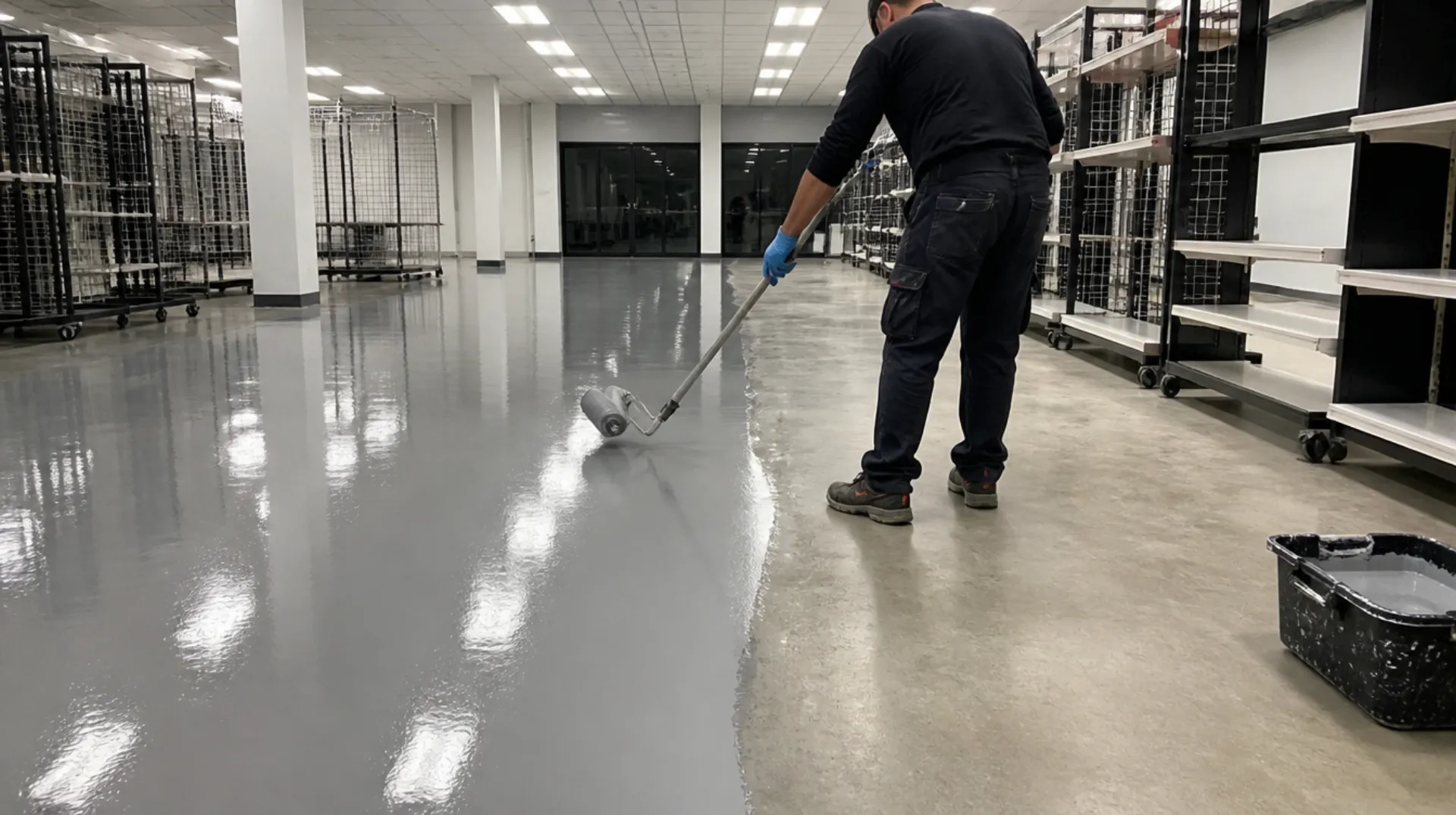
Polyaspartic floor coating cures fast enough for San Antonio retail stores to have a new floor installed overnight and reopen for business the next morning - no multi-day closure, no lost sales, no rescheduling around store hours. That fast-cure advantage is the single biggest reason polyaspartic has become the default choice for retail flooring projects where a business simply can't afford to shut its doors for a traditional multi-day epoxy install.
Why Retail Stores Can't Afford Multi-Day Closures
A traditional epoxy floor system typically needs several days between prep, base coat, and topcoat, with cure time between each layer before the floor can handle foot traffic - let alone shopping carts and rolling fixtures. For a retail business, that timeline translates directly into lost sales days, staffing complications, and often the cost of temporarily relocating inventory or fixtures. Even a single lost weekend can represent a meaningful percentage of a smaller retailer's monthly revenue, which is why store owners and property managers increasingly ask specifically for a coating system that can be installed after closing and be ready before opening.
What Makes Polyaspartic Different
Polyaspartic is a type of polyurea coating with a chemistry that cures dramatically faster than standard epoxy - often foot-traffic-ready within just a few hours rather than the 24-72 hours epoxy typically needs per coat. This isn't just a minor formulation tweak; it changes what's operationally possible for an install schedule entirely, since a full system that would take epoxy the better part of a week can often be completed by polyaspartic in a single overnight session. Beyond speed, polyaspartic also offers strong UV stability - meaning it resists yellowing under storefront window light far better than standard epoxy - and holds up well to the abrasion of shopping carts, rolling racks, and constant foot traffic.
Comparison Table: Cure Time and Performance
| System | Cure Time (Foot Traffic) | Odor Level | UV Stability |
|---|---|---|---|
| Polyaspartic | 2-4 hours | Low | Excellent |
| Standard Epoxy | 24-72 hours | Moderate-High | Poor (yellows) |
| Urethane Cement | 4-24 hours | Low-Moderate | Good |
Why this matters for a lease-bound retailer: a store operating under a lease with strict occupancy or business-hours obligations often can't legally or practically close for multiple days, making polyaspartic's overnight capability less a convenience and more a hard operational requirement.
The Overnight Install Process
A well-planned overnight polyaspartic install follows a tight but proven sequence. The crew arrives shortly after closing to begin surface prep - grinding the existing floor to create a bondable profile and cleaning thoroughly - since a rushed or skipped prep step is the most common reason any floor coating fails prematurely, regardless of how fast it cures. Once prep is complete, the primer and base coat go down, followed by the polyaspartic topcoat, each layer curing within its compressed window. By early morning, the floor has cured enough for staff to safely walk it and begin resetting fixtures and merchandise ahead of the store's normal opening time. For larger stores or multi-color/flake systems, the process sometimes spans two consecutive nights rather than one, but even that remains far faster than a traditional epoxy timeline.
Need a Floor Installed Without Closing Your Doors?
We specialize in overnight and off-hours polyaspartic installs for San Antonio retail businesses that can't afford downtime.
Request a Free QuoteSan Antonio Retail Context
San Antonio's retail corridors - from strip centers along major thoroughfares to mall-anchored storefronts - often operate under lease terms or co-tenancy agreements that make even a short closure logistically complicated to coordinate with property management and neighboring tenants. Fast-turnaround flooring solves that coordination problem directly, letting a store refresh its floor without triggering the notice periods, insurance conversations, or neighboring-tenant disruption that a multi-day closure can involve. Our polyaspartic floor coating service page covers the systems we install across San Antonio's retail, restaurant, and commercial spaces.
Planning an Overnight Install: What Retailers Should Prepare
A handful of preparation steps on the retailer's side make an overnight install go smoothly. Clearing the sales floor of movable fixtures and inventory before the crew arrives - rather than leaving that task for the installation night - saves valuable prep time. Confirming HVAC and ventilation access with property management ahead of time ensures proper airflow during application and cure. And having a clear plan for exactly which items need to be back in place before opening, communicated to both the flooring crew and store staff, prevents a scramble in the final hour before doors open. Stores that treat the overnight install as a coordinated event, rather than assuming the flooring crew will handle everything, consistently see smoother reopenings.
Comparing Polyaspartic to Related Coating Options for Commercial Spaces
Retailers researching polyaspartic sometimes also consider how it stacks up more broadly against standard epoxy for commercial use, beyond just cure time. Our guide on polyaspartic vs. epoxy cure time for San Antonio businesses goes deeper into the cure-time comparison across different commercial settings, while our post on showroom and dealership flooring in San Antonio covers a related use case where fast turnaround and a polished storefront appearance matter just as much as they do in retail.
Long-Term Performance in a Retail Setting
Beyond the installation-day advantage, polyaspartic's long-term performance profile suits retail environments particularly well. Its resistance to scuffing and abrasion holds up under daily shopping cart traffic and merchandise carts better than standard epoxy topcoats, and its UV stability means storefront floors near large display windows won't develop the yellowing that epoxy can show within a year or two of sun exposure. Retailers who choose polyaspartic for the fast install often find the durability benefits become just as valuable as the initial time savings once the floor has been in daily service for a year or more.
Color and Finish Options for Retail Branding
Beyond speed and durability, polyaspartic offers retailers meaningful flexibility in matching a floor's appearance to brand identity. Solid color systems in a specific brand color, flake broadcast systems for a textured, commercial-grade look, and metallic finishes for a more premium showroom feel are all achievable within the same fast-cure chemistry that makes overnight installation possible. Retailers refreshing a storefront as part of a broader rebrand or renovation often find that polyaspartic lets them upgrade both the look and the durability of their floor in the same overnight window, rather than treating flooring and branding as separate projects on separate timelines. Working with an installer experienced in retail-specific color matching helps ensure the finished floor aligns with existing signage, fixtures, and brand guidelines rather than reading as a generic industrial finish.
Coordinating the Install With Store Operations
Multi-location retailers and shopping center tenants often need to coordinate an overnight install with property management, mall operations, or a corporate facilities team in addition to the flooring contractor itself. Confirming after-hours building access, any restrictions on odor or noise during the work window, and insurance or liability documentation the property may require are all details worth resolving well before the scheduled install date rather than the week of. Retailers with multiple locations sometimes stagger installs across several nights at different stores to keep a flooring crew's schedule efficient while still limiting each individual location's disruption to a single overnight closure, which works well for chains looking to standardize flooring across a portfolio of stores over a period of weeks rather than needing every location done simultaneously.
Common Mistakes That Turn an Overnight Install Into a Multi-Night Delay
Even with polyaspartic's fast cure chemistry, a handful of avoidable mistakes can push an intended one-night install into a second night or a rushed, subpar result. Underestimating prep time is the most common: a floor with significant existing coating, oil staining, or damage takes longer to grind and prepare than a clean slab, and an installer who doesn't account for that during scheduling can run out of night before the topcoat goes down. Ambient temperature and humidity also affect cure speed more than many retailers expect - an unusually cold or humid night can extend cure time beyond the typical window, which is why an experienced installer checks weather and HVAC conditions in advance rather than assuming standard cure times will hold regardless of conditions. Finally, unclear communication about what "ready to reopen" actually means - fully cured versus simply dry to the touch - occasionally leads to a store reopening before the floor has reached full chemical cure, risking scuffing or damage from early heavy traffic. Confirming the installer's specific foot-traffic-ready and full-cure timelines in writing before the project starts avoids this kind of misunderstanding.