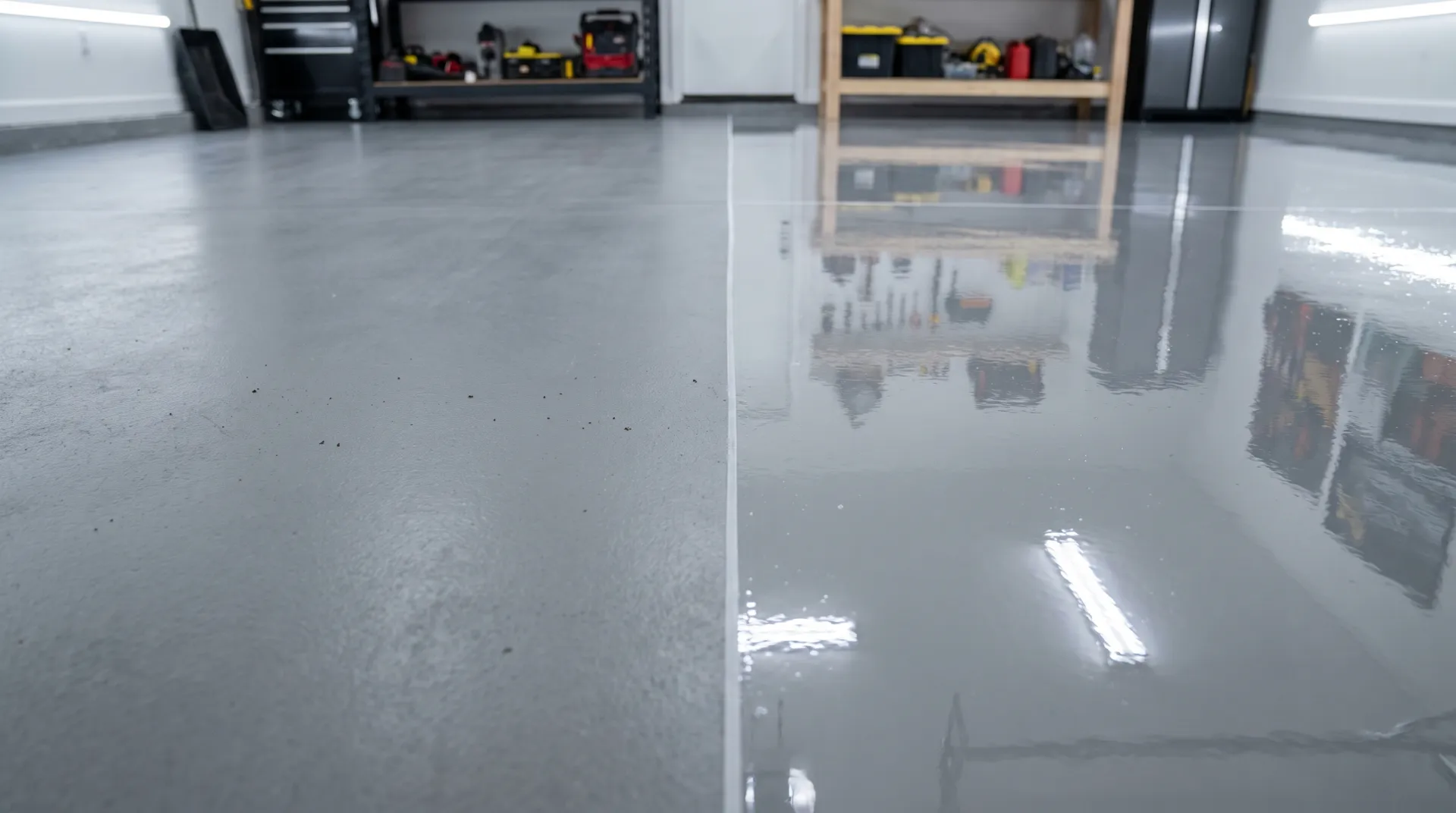
Water-based epoxy uses water as its carrier and cures through evaporation, giving it lower VOC emissions, less odor, and easier cleanup - solvent-based epoxy uses chemical solvents that produce a harder, more chemically resistant film but with stronger fumes during application. For most San Antonio homes and light-commercial spaces, water-based is now the practical default; solvent-based still wins in heavy industrial settings with sustained chemical exposure.
How the Two Systems Actually Differ
Both are still epoxy resin chemically - the difference is in what carries the resin before it cures. Water-based formulas have improved significantly over the past decade and now approach solvent-based performance for most everyday applications, closing a gap that used to be much wider. Solvent-based retains an edge specifically in extreme chemical and abrasion environments where the harder cured film matters more than convenience.
Side-by-Side Comparison
| Factor | Water-Based | Solvent-Based |
|---|---|---|
| VOC emissions | Low | Higher |
| Odor during install | Mild | Strong, requires ventilation |
| Cured film hardness | Good | Excellent |
| Chemical resistance | Good for most residential/light-commercial use | Superior for heavy industrial exposure |
| Re-occupancy time | Faster, less off-gassing | Slower, needs ventilation time |
| Typical cost | Comparable to slightly lower | Comparable to slightly higher |
Practical takeaway: if your space is occupied during or shortly after installation - a home garage, retail store, or office - water-based epoxy's lower odor and faster re-occupancy usually make it the better fit. Facilities that can accommodate longer ventilation time and need maximum chemical resistance are the exception.
When Solvent-Based Still Makes Sense
Manufacturing plants, chemical processing facilities, and some industrial warehouses with sustained exposure to harsh solvents, oils, or heavy abrasion still often specify solvent-based epoxy specifically for its harder cured film and superior chemical resistance. In these environments, the trade-off of stronger odor and required ventilation during installation is usually acceptable given the facility isn't occupied by the general public and can be closed during the cure window.
Why Water-Based Has Become the Default Elsewhere
- Occupied spaces: homes, retail stores, and offices benefit from lower odor and faster re-occupancy
- Environmental regulations: lower VOC output aligns with increasingly strict regional air quality standards
- Improved performance: modern water-based formulas have closed most of the durability gap for typical residential and light-commercial traffic
- Easier application in enclosed spaces: garages and interior commercial spaces with limited ventilation are far more practical to coat with water-based systems
Not Sure Which System Fits Your Space?
We'll assess your traffic, chemical exposure, and occupancy needs to recommend the right epoxy system for your San Antonio property.
Request a Free QuoteCost and Availability in San Antonio
Pricing between the two systems is generally comparable once labor and prep are factored in - the bigger cost driver remains slab condition and decorative complexity rather than resin carrier type. For a broader breakdown of what actually determines your total project cost, see our guide to epoxy floor coating 101 for San Antonio business owners. Our epoxy floor coating service page covers both system types and how we match them to different project needs.