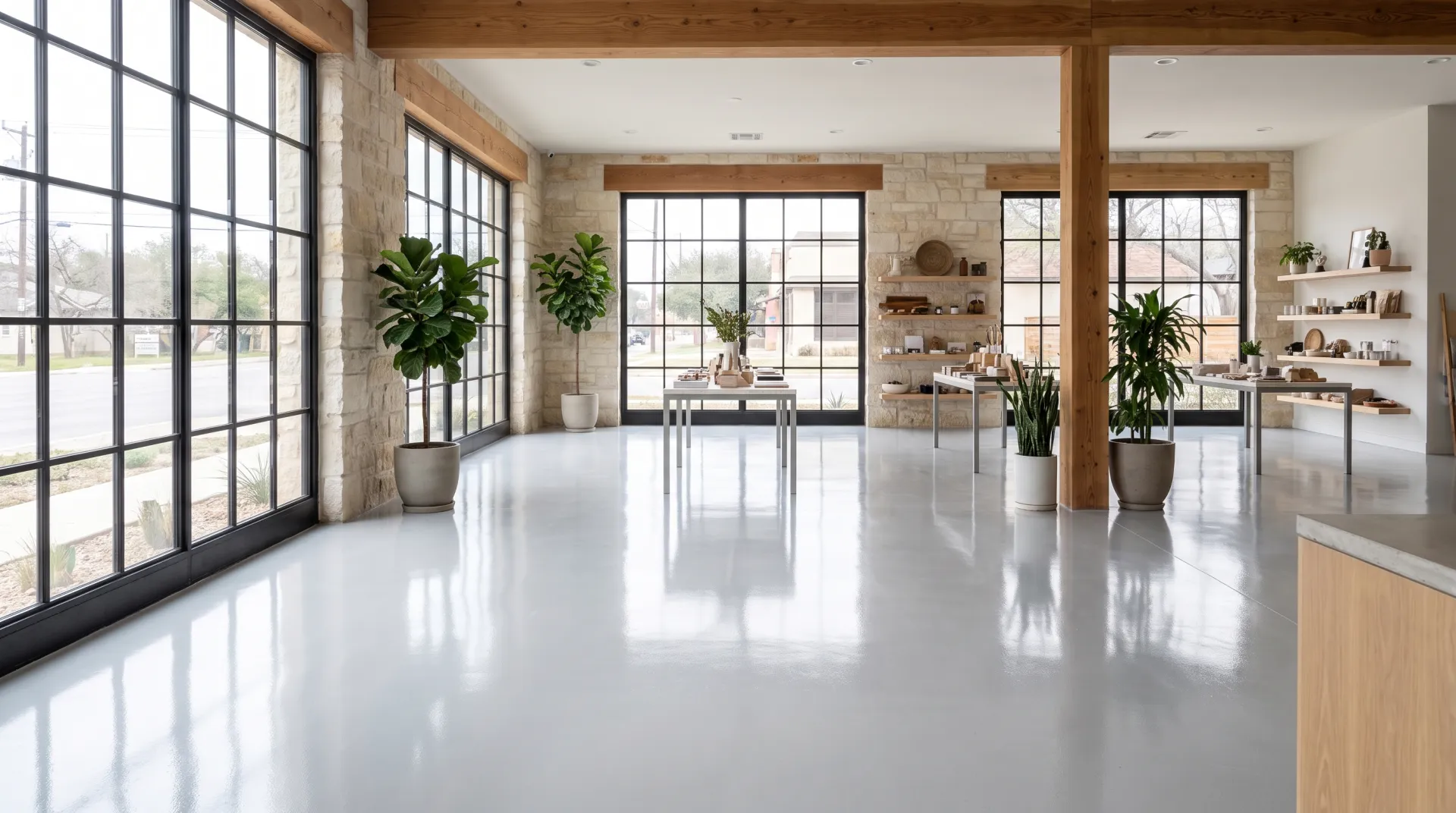
Epoxy floor coating is a two-part resin system that bonds to prepared concrete to create a seamless, chemical- and abrasion-resistant surface - and for San Antonio business owners, it's typically the most cost-effective way to protect a commercial floor while improving light, cleanability, and appearance. This guide covers what the coating actually is, which system fits which business type, what it costs, and what determines whether it lasts 5 years or 20.
What Epoxy Floor Coating Actually Is
Epoxy resin and a hardener are mixed on-site and applied over concrete that has been mechanically prepared - usually diamond-ground or shot-blasted to open the surface pores so the resin can bond mechanically as well as chemically. Once cured, the result isn't a coating sitting on top of the slab the way paint does; it's a hard plastic-like layer fused to the concrete itself, which is why properly installed epoxy resists peeling in a way paint never will.
Why San Antonio Businesses Choose Epoxy
Concrete floors in commercial buildings take a beating from forklift traffic, chemical spills, foot traffic, and constant cleaning - and bare concrete dusts, stains, and cracks under that kind of load. Epoxy solves all three problems at once: it seals the surface against moisture and chemicals, brightens the space by reflecting overhead light, and creates a smooth surface that's dramatically easier and cheaper to clean than raw or painted concrete.
Common Epoxy Systems for Commercial Spaces
Not every business needs the same system. The right choice depends on traffic type, chemical exposure, and how much decorative finish matters to the space:
| System | Best For | Typical Cost/sq ft |
|---|---|---|
| Solid color epoxy | Warehouses, back-of-house, storage | $4-$6 |
| Flake broadcast epoxy | Retail, showrooms, offices | $6-$9 |
| Metallic epoxy | Showrooms, lobbies, restaurants | $8-$12 |
| Heavy-duty industrial epoxy | Manufacturing, forklift traffic | $7-$11 |
Most San Antonio commercial projects land in the $5-$9 per square foot range once surface prep and a durable topcoat are factored in - the biggest cost swing usually comes from how much crack repair or moisture mitigation the existing slab needs before coating can begin. See our full commercial epoxy flooring guide for a deeper cost breakdown.
What Determines How Long the Floor Lasts
Surface Preparation
This is the single biggest factor, full stop. Epoxy applied over a slab that wasn't properly ground, degreased, and profiled will delaminate - sometimes within months - no matter how good the resin is. Mechanical prep (diamond grinding or shot blasting) is non-negotiable for a commercial installation expected to last a decade or more.
Topcoat Quality
A UV-stable polyurethane or polyaspartic topcoat protects the decorative or color layer underneath from abrasion and sun exposure through windows and bay doors. Skipping or skimping on the topcoat is the most common reason a floor looks worn within a few years.
Traffic Type
Foot traffic alone is gentle on a properly cured epoxy floor. Forklifts, pallet jacks, and dragged equipment accelerate wear significantly, which is why heavier-duty systems with thicker build are worth the added cost in warehouse and manufacturing settings.
Ready to Protect Your San Antonio Commercial Floor?
We install every system covered in this guide - from solid color to heavy-duty industrial epoxy - with our own crews and no subcontractors.
Request a Free QuoteChoosing a Contractor
Because prep work is invisible once the floor is finished, it's the step most likely to get shortcut by an inexperienced or budget crew - which is why vetting a contractor's prep process matters more than comparing bids on price alone. Our guide on choosing an epoxy flooring contractor in San Antonio walks through the specific questions to ask before signing a contract. For a full look at the broader epoxy floor coating options available for your space, our service page breaks down each system in more detail.