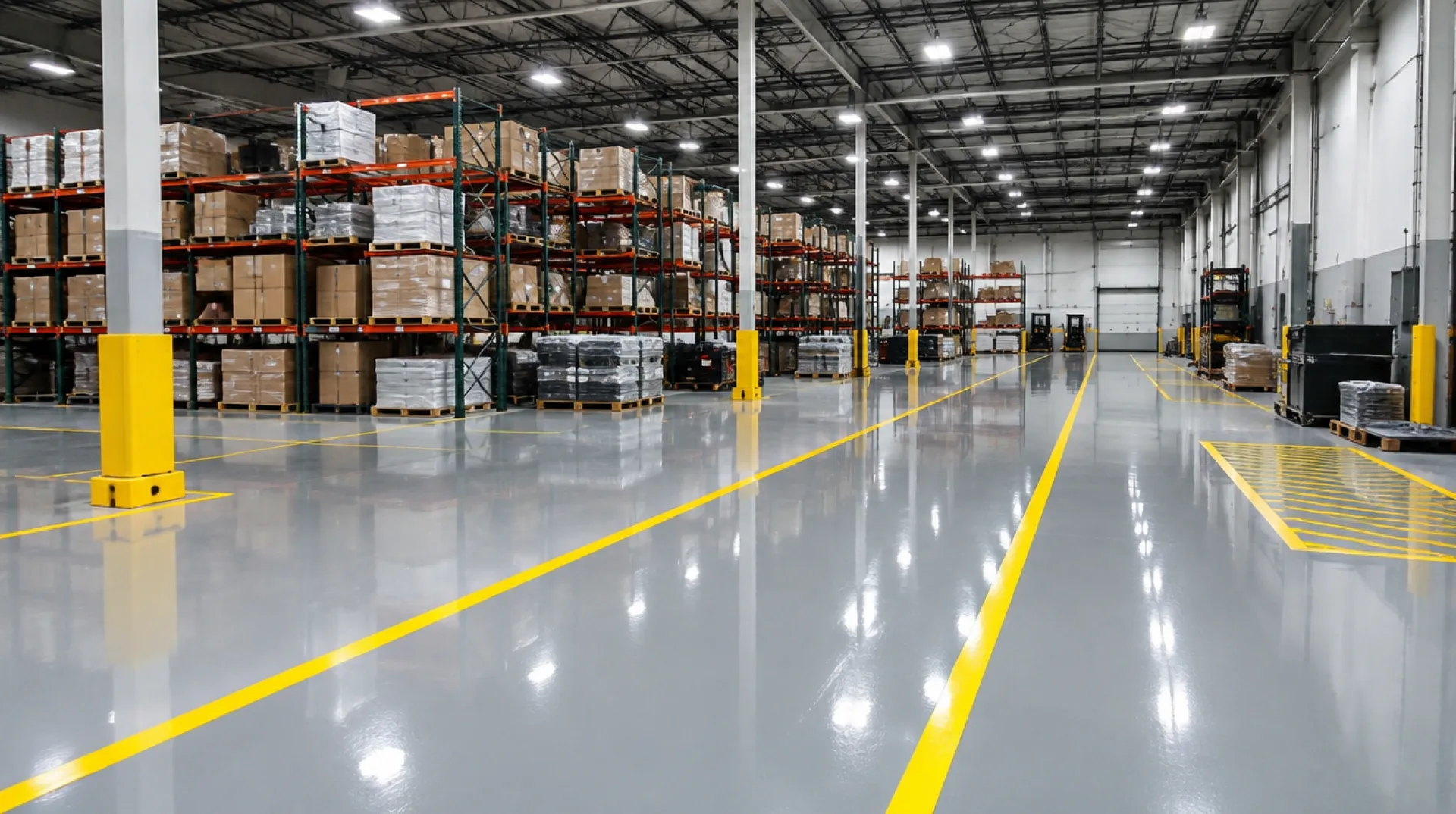
Most warehouse flooring in San Antonio needs recoating every 5-10 years, with the exact interval depending heavily on traffic level - heavy forklift lanes and chemical-exposure zones often need attention closer to the 5-year mark, while lower-traffic storage areas can comfortably reach toward the 10-year end of that range before recoating becomes necessary.
Why Recoat Interval Isn't a Single Fixed Number
A warehouse floor coating's lifespan is driven far more by how the floor is actually used than by the calendar. Two facilities that installed identical coatings on the same day can need recoating years apart if one runs 24/7 forklift traffic through narrow aisles and the other stores palletized goods with only occasional foot traffic. This is why a single "recoat every X years" answer misses the point - the right framework ties the interval to actual traffic volume, forklift load, and chemical exposure specific to each zone of a facility, not a generic industry average that doesn't reflect a given warehouse's real conditions.
Early Signs a Warehouse Floor Needs Recoating
The earliest signs of coating wear are easy to miss if a facility isn't looking for them specifically. Visible rutting or grooving in the wheel paths of main forklift traffic lanes is usually the first clear sign, followed by a dulling or chalky appearance where the topcoat is thinning through repeated abrasion. Small chips or delamination starting at control joints, dock thresholds, or other high-impact transition points typically appear before more widespread failure sets in, which is why a periodic walk-through inspection focused specifically on these zones catches problems early enough for a straightforward recoat rather than a more extensive repair.
How Traffic Type Affects the Recoat Timeline
Not all warehouse traffic wears a floor equally. Steel-wheeled forklifts and pallet jacks abrade a coating's surface far more aggressively than rubber-wheeled equipment, and a facility running continuous multi-shift operations compounds that wear compared to single-shift use. Chemical exposure - from battery-charging stations, spilled cleaning agents, or product leakage in a warehouse handling liquids - adds another variable that can shorten the interval in specific zones even when the rest of the facility's flooring holds up well. Our related guide on forklift traffic and warehouse floor coating longevity goes deeper into how equipment type and traffic frequency specifically shape wear patterns across a facility.
Recoat Interval by Traffic Level
| Traffic Level | Typical Interval | Example Zones |
|---|---|---|
| Light | 8-10 years | Low-traffic storage, office-adjacent areas |
| Moderate | 6-8 years | General warehouse aisles, mixed traffic |
| Heavy | 4-6 years | Main forklift lanes, loading docks |
| Chemical exposure | 3-5 years | Charging stations, spill-prone zones |
Zone-specific recoating is usually more cost-effective than facility-wide recoating: since wear concentrates in specific high-traffic lanes and zones, targeting just those areas rather than recoating an entire facility on the same schedule typically saves significant cost without sacrificing overall floor performance.
Cost Factors for a Recoat Project
Recoating an existing, structurally sound floor costs a fraction of a full tear-out and replacement, since it reuses the existing substrate and typically only requires surface prep - light grinding or shot blasting to profile the old coating for adhesion - followed by a new topcoat application. Cost scales primarily with square footage and the specific system chosen, with a straightforward epoxy recoat costing less than upgrading to a more durable urethane cement system during the same recoat project. For facilities weighing whether their overall cost picture favors extending their existing floor's life versus a full replacement, our guide on what epoxy flooring costs in San Antonio provides useful cost context for comparison, even though it's framed around new installation rather than recoating specifically.
Maintenance Practices That Extend Time Between Recoats
A consistent maintenance routine meaningfully extends the interval between recoats. Regular auto-scrubbing or sweeping along main traffic lanes reduces the grit and debris that act as an abrasive under wheel traffic, one of the largest contributors to premature coating wear beyond traffic volume itself. Prompt cleanup of chemical spills, rather than letting them sit on the coating, prevents localized degradation that can otherwise force an early, targeted recoat in just that one spot. Facilities that build floor inspection into an existing preventive-maintenance checklist for material handling equipment tend to catch early wear signs before they require anything beyond a straightforward, planned recoat.
Get Your Warehouse Floor Assessed
We assess San Antonio warehouse floors zone by zone and recommend the right recoat timeline and system for each area.
Request a Free QuoteDeciding Between a Recoat and a System Upgrade
A scheduled recoat is also a natural opportunity to reconsider whether the original coating system still matches the facility's current needs, particularly if traffic patterns or use cases have changed since the original install. A facility that has shifted toward heavier automated equipment or expanded chemical handling since its original epoxy install might use a recoat project as the moment to upgrade specific zones to a more durable urethane cement system rather than simply reapplying the same coating that's already showing signs of being undersized for current demands. Reviewing our full warehouse flooring service page alongside a recoat assessment helps clarify whether a straightforward recoat or a targeted system upgrade makes more sense for a given facility's current operations.
Planning a Recoat Around Facility Operations
Recoating doesn't have to mean shutting down a facility. Like a new installation, a recoat project is typically phased zone by zone or scheduled during off-hours and weekends, allowing the majority of the facility to stay fully operational throughout the project. Facilities running multi-shift operations often coordinate recoat timing with a planned slowdown period, such as a seasonal lull in order volume, to minimize the operational impact of even a phased, zone-by-zone recoat schedule.
Documenting Floor Condition Over Time
Facilities that photograph and log floor condition during routine inspections build a useful baseline for spotting wear trends before they become urgent. A simple quarterly or semi-annual photo record of key traffic lanes and high-risk zones, compared against earlier photos, makes gradual changes like thinning topcoat or emerging rutting far easier to catch than relying on memory or waiting for a problem to become visually obvious during a walkthrough. This kind of documentation also helps when budgeting for an upcoming recoat, since a facility manager can point to a clear progression of wear over multiple inspection cycles rather than making a subjective, one-time call about whether recoating is needed now or can wait another year.
Coordinating Recoat Timing With Other Facility Projects
A planned recoat is often easiest to schedule alongside other facility maintenance or improvement projects that already require some disruption to normal operations, such as a racking reconfiguration, a conveyor system upgrade, or a broader facility renovation. Combining projects reduces the total number of separate disruptions a warehouse has to absorb over the course of a year, and can also reduce overall cost if the same contractor crew or equipment rental can serve multiple purposes across a shared project window. Facilities planning any kind of larger renovation or equipment change in the near term should factor floor recoat timing into that planning conversation early, rather than treating it as a separate, later decision disconnected from other scheduled facility work.
Choosing a Contractor for a Recoat vs. a New Install
Recoating existing flooring calls for a somewhat different skillset than a fresh installation on bare or newly ground concrete, since the contractor needs to properly evaluate and prepare an existing coating rather than starting from raw substrate. Improper surface prep before recoating - skipping adequate abrasion of the old topcoat, or failing to identify areas of hidden delamination beneath an intact-looking surface - can cause the new coating to fail prematurely, sometimes faster than the original coating it replaced. Asking a prospective contractor specifically about their recoat experience, not just their general installation experience, and how they assess an existing floor's condition before quoting a recoat project, helps identify a contractor genuinely equipped for this specific type of work.
Weighing a Recoat Against Full Replacement
Recoating only makes sense when the underlying substrate is still structurally sound - a floor with significant slab cracking, moisture intrusion issues, or widespread delamination well beyond the surface topcoat may need a more thorough repair or even a full tear-out rather than a straightforward recoat. A contractor's initial assessment should include checking for these deeper substrate issues, not just evaluating the visible topcoat wear, since proceeding with a simple recoat over a compromised substrate risks the new coating failing again quickly regardless of how well it's applied. Facilities with an older slab or a history of moisture problems should specifically ask about this deeper assessment before assuming a routine recoat is the right path forward.