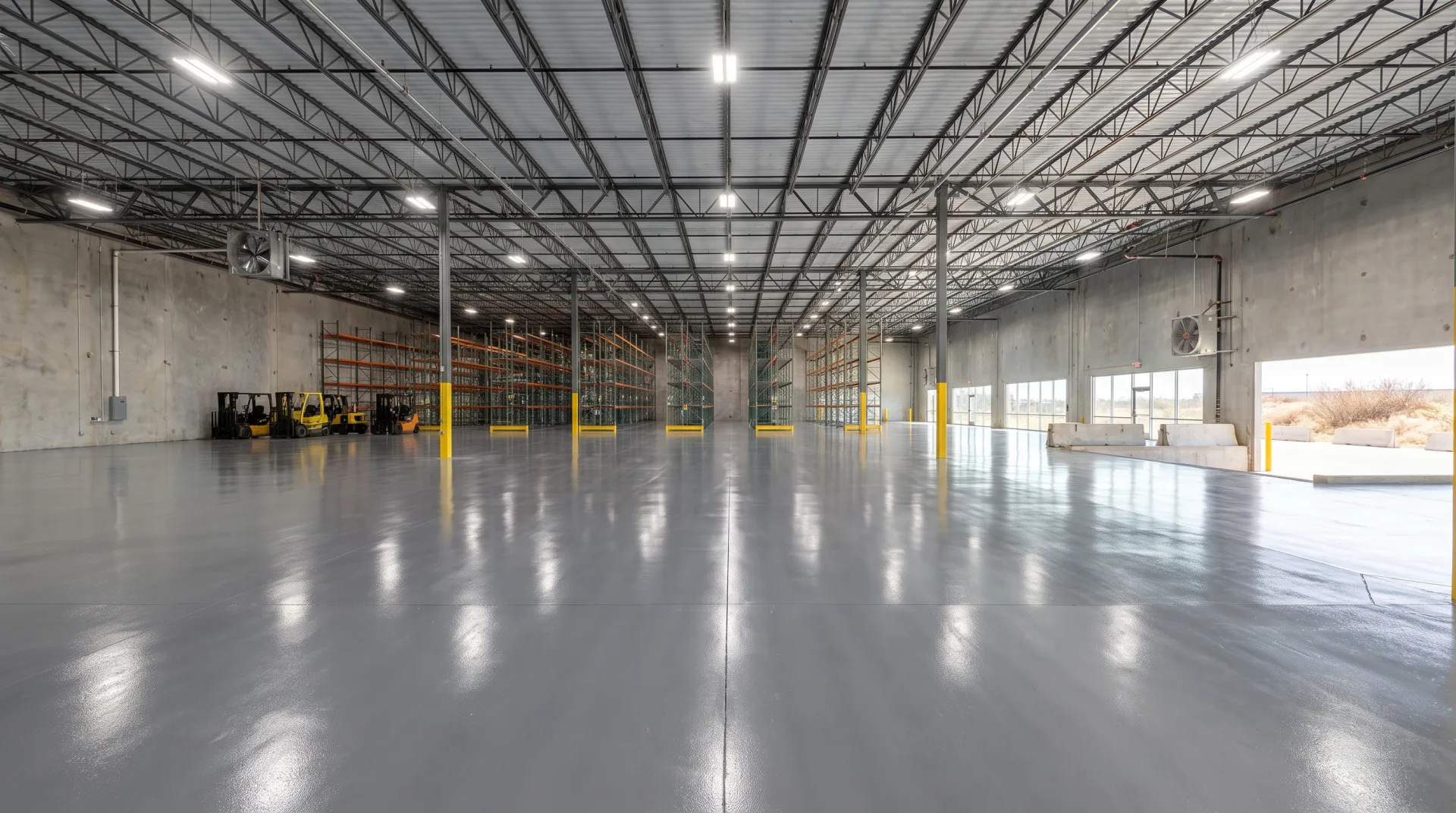
Chemical spill resistance in San Antonio warehouse flooring comes down to matching the coating system to the specific chemicals your facility actually handles - standard epoxy resists mild spills like oil and cleaning solutions, while facilities dealing with harsh solvents, acids, or fuels need a more specialized system like novolac epoxy or urethane cement to avoid staining, etching, or long-term degradation.
Why Not All Chemical Exposure Is the Same
Warehouses vary enormously in what chemicals actually touch their floors day to day. A general distribution warehouse might see occasional forklift battery acid drips or hydraulic fluid leaks, while a facility handling industrial cleaning products, automotive fluids, or manufacturing inputs deals with far more frequent and often harsher chemical exposure. Specifying flooring based on your facility's actual chemical inventory - not a generic warehouse assumption - is the single most important step in avoiding premature floor failure from chemical damage. Our warehouse flooring service page covers the range of chemical-resistant systems we install across San Antonio distribution and industrial facilities.
Common Chemical Sources in San Antonio Warehouses
Understanding where chemical exposure actually originates in a typical warehouse helps facility managers prioritize which zones need the most robust protection. Forklift and equipment charging stations are a frequent source of battery acid exposure, since lead-acid forklift batteries can leak or off-gas corrosive material during charging and maintenance. Loading dock areas see exposure from truck fluids - diesel, hydraulic fluid, coolant - dripping from vehicles during loading and staging. Maintenance and repair bays within a warehouse often see the most concentrated chemical exposure of any zone, from degreasers, solvents, and lubricants used in equipment upkeep. Mapping these specific zones and matching coating specification to each one's actual exposure level, rather than treating the entire warehouse floor identically, is often more cost-effective than blanket-specifying the highest resistance level everywhere.
How Chemicals Damage Unprotected or Under-Specified Floors
Different chemical categories damage flooring in different ways. Acids and alkalis can etch bare or standard-sealed concrete, permanently roughening and weakening the surface. Solvents can soften and degrade standard epoxy resin over repeated exposure, eventually causing the coating to lift or discolor. Fuels and petroleum products can stain porous surfaces and, in high concentrations, break down certain coating chemistries not formulated to resist them. Understanding which of these categories applies to your facility - and how often exposure occurs versus how quickly spills get cleaned - determines what level of chemical resistance your floor actually needs.
Coating Options for Chemical Resistance
| System | Chemical Resistance Level | Best For |
|---|---|---|
| Standard Epoxy | Moderate | Mild, occasional exposure |
| Novolac Epoxy | Excellent | Solvents, acids, harsh chemicals |
| Urethane Cement | Excellent | Combined chemical + thermal/mechanical demands |
| Polyurea/Polyaspartic | Good to very good | Fast-turnaround with solid chemical resistance |
Frequency matters as much as chemical type: a facility with rare, promptly-cleaned exposure to a harsh chemical may do fine with standard epoxy, while frequent exposure to even a moderately aggressive chemical can justify upgrading to a novolac or urethane cement system.
Novolac Epoxy: The Specialist Option
Novolac epoxy is a specially formulated resin system designed specifically for superior chemical resistance beyond what standard epoxy offers, commonly specified in facilities handling industrial chemicals, battery manufacturing, chemical processing, or heavy automotive and equipment maintenance operations. It costs more than standard epoxy and requires precise application, but for a facility with genuinely aggressive chemical exposure, it's often the only coating that reliably holds up over years of service without staining, softening, or delaminating.
Urethane Cement: Chemical Plus Physical Demands
For facilities facing chemical exposure alongside heavy mechanical or thermal demands - forklift traffic, hot water washdown, temperature swings - urethane cement often makes more sense than novolac epoxy alone, since its dense cement-modified matrix resists chemicals while also standing up to the physical wear a thinner coating system might not handle as well. Our urethane cement floor service page and our guide on how urethane cement handles San Antonio's hard water and mineral buildup cover this system's broader resistance profile in more depth.
Not Sure Which System Fits Your Chemical Exposure?
We'll assess your facility's actual chemical inventory and specify a floor built to handle it.
Request a Free QuoteSpill Response and Cleanup Protocols
Even the most chemically resistant coating benefits from a facility having clear spill response protocols, since prompt cleanup meaningfully reduces staining and degradation risk regardless of the floor system. Facilities handling regular chemical exposure should keep appropriate absorbent materials and neutralizing agents on hand for their specific chemical inventory, train staff on immediate spill response, and establish clear reporting so recurring small leaks - a slow drip from equipment, for example - get identified and fixed at the source rather than repeatedly damaging the same floor area. A floor's chemical resistance and a facility's spill response protocol work together; neither fully compensates for a serious gap in the other.
Assessing Your Facility's Chemical Exposure Before Specifying a Coating
Before choosing a coating system, it's worth conducting an honest inventory of every chemical regularly present in the facility - not just the primary process chemicals, but also cleaning products, maintenance fluids, and anything stored or transferred through the space. Safety Data Sheets (SDS) for each chemical typically list compatibility information that can inform coating selection, and a contractor experienced with chemical-resistant flooring can help translate that information into a specific system recommendation. Facilities that skip this assessment and default to a standard coating sometimes discover the gap only after visible damage appears in specific zones - the areas nearest chemical storage, mixing stations, or transfer points - at which point a costly recoat or spot repair becomes necessary that proper upfront specification would have avoided.
Comparing Chemical Resistance to Other Warehouse Priorities
Chemical resistance is rarely the only consideration for a warehouse floor - traffic level, moisture conditions, and installation timeline all factor into the final system choice as well. Our related guide on water-based vs. solvent-based epoxy floor coatings in San Antonio covers a related chemistry consideration relevant to warehouses balancing chemical performance against VOC and application factors, which is worth reviewing alongside chemical resistance planning for a complete picture of your floor's full requirements.
Long-Term Cost of Under-Specifying Chemical Resistance
Warehouses that under-specify chemical resistance to save on upfront installation cost often pay more over time through repeated spot repairs, premature full recoats, and in some cases structural concrete damage from repeated chemical penetration through a failed coating. A floor that develops chemical staining or etching typically continues degrading in that spot even after the immediate spill is cleaned, since the coating's protective barrier has already been compromised at that location. Facilities that experience this kind of recurring, localized failure often end up spending more across several years of patch repairs than they would have spent specifying the correct chemical-resistant system from the start. Factoring in the full lifecycle cost - not just the initial quote - when comparing standard epoxy against a chemical-resistant upgrade gives a more accurate picture of the actual value each option provides for a facility's specific exposure profile.
Working With Your Contractor on Chemical Resistance Specification
When getting quotes for a warehouse floor with chemical resistance requirements, provide your contractor with the actual chemical names or Safety Data Sheets for substances present in the facility, rather than a general description like "some chemical exposure." A contractor experienced with industrial flooring can cross-reference specific chemicals against manufacturer resistance charts for different coating systems, giving you a data-backed recommendation rather than a generic upsell to the most expensive system available. Asking whether the proposed system has documented resistance data for your specific chemicals - not just general chemical resistance claims - helps separate a well-matched specification from an oversized or undersized one.
Maintaining Chemical Resistance Over Time
A chemically resistant coating's protection can diminish over years of use if the topcoat wears thin in high-traffic zones, so periodic inspection of the coating's condition - not just reactive response to visible damage - helps catch thinning before it becomes a full failure point. Facilities should also confirm that any cleaning products used on the floor itself are compatible with the specific coating system, since an incompatible cleaner can gradually degrade even a well-specified chemical-resistant coating faster than the chemicals it was originally designed to resist.