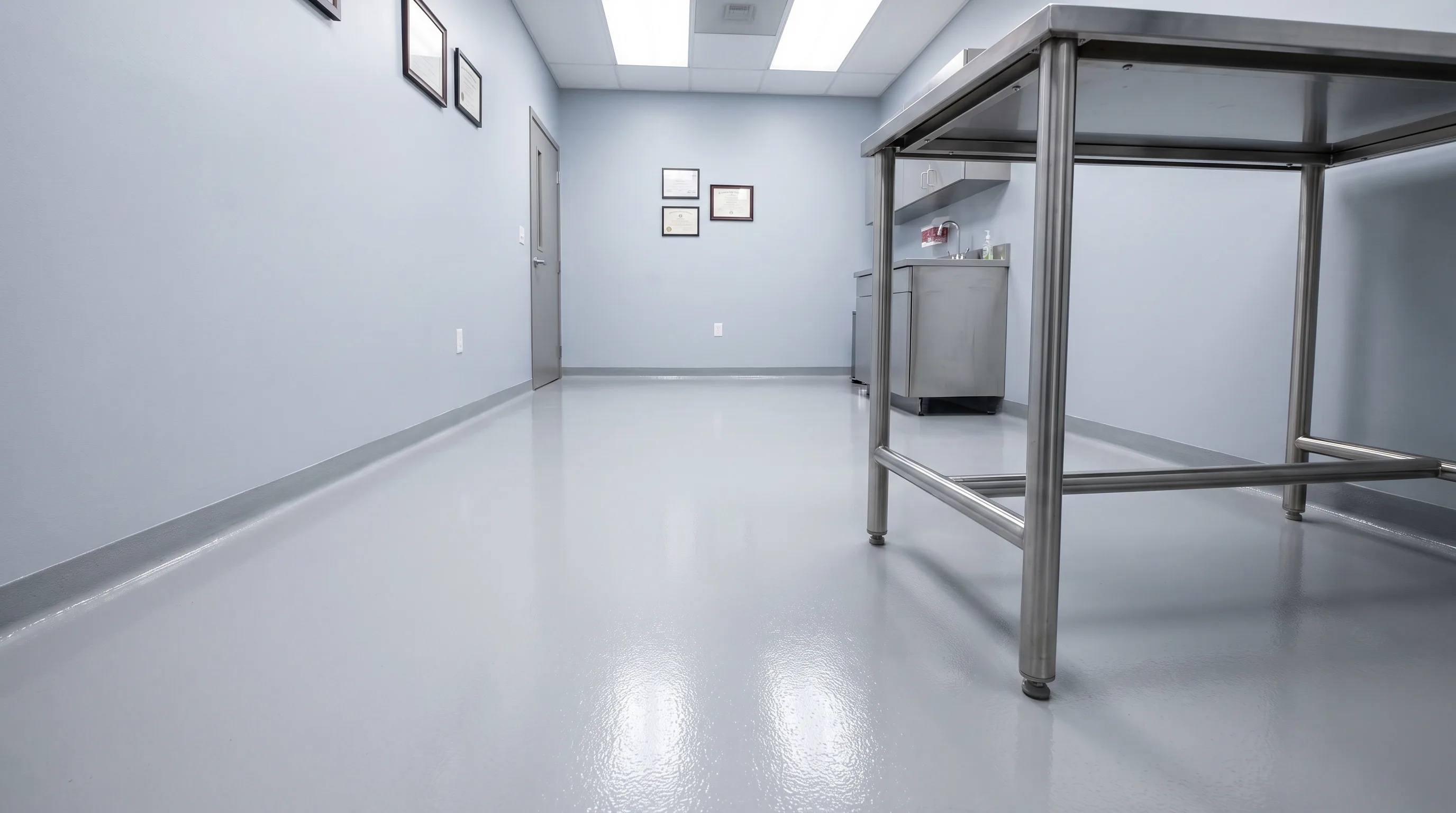
Veterinary clinics deal with a flooring problem most commercial buildings never face: biological contamination from a species that can't be told to wipe its paws. Fur, dander, urine, blood, and cleaning chemicals hit the floor constantly, and the surface has to handle all of it without becoming a slip hazard or a hiding place for bacteria between animal patients. Epoxy has become the standard flooring spec for San Antonio veterinary practices for exactly these reasons.
Why Standard Flooring Fails in a Veterinary Setting
- Grout lines in tile flooring trap biological material and are nearly impossible to fully sanitize between patients.
- Sealed concrete and vinyl absorb urine and blood over time, leading to persistent odor that no amount of surface cleaning removes.
- Standard finishes degrade quickly under the disinfectants required for proper sanitation between animal patients.
- Smooth, non-textured floors become dangerously slick when wet - a real risk with both animals and staff moving quickly during emergencies.
What Makes Epoxy the Right Spec for Vet Clinics
Seamless epoxy flooring eliminates the grout lines and porous surfaces that cause sanitation problems in tile and sealed concrete. Paired with the right additives and topcoat, it's built specifically for the biological and chemical load a veterinary practice generates every day.
- Antimicrobial additives: Built into the coating itself, providing continuous protection between cleanings rather than relying on surface disinfectant alone.
- Chemical resistance: Withstands the disinfectants and sanitizers used for infection control without discoloring or breaking down.
- Non-slip texture: An aggregate broadcast gives the floor traction even when wet, without creating a surface that's hard to clean.
- Coved base: Running the coating up the wall a few inches eliminates the hard floor-wall corner where contamination collects.
Planning a Veterinary Clinic Floor in San Antonio?
We install antimicrobial, non-slip epoxy systems built for exam rooms, surgical suites, and kennel areas - sanitary, durable, and easy to maintain.
Get a Free QuoteZoning a Veterinary Clinic Floor
| Space Type | Recommended Spec |
|---|---|
| Exam rooms | Antimicrobial epoxy, coved base |
| Surgical suites | Seamless antimicrobial epoxy, chemical-resistant topcoat |
| Kennel & boarding areas | Heavy-duty epoxy with drain slope, non-slip texture |
| Lobby & reception | Standard epoxy, design-forward finish |
| Grooming stations | Non-slip epoxy with proper drainage |
Installation Around an Active Practice
Most veterinary clinic flooring projects are phased to keep the practice operational - treatment rooms are typically completed during off-hours or weekends, with fast-cure epoxy systems allowing rooms to reopen within 24 hours rather than the multi-day cure window standard epoxy needs.