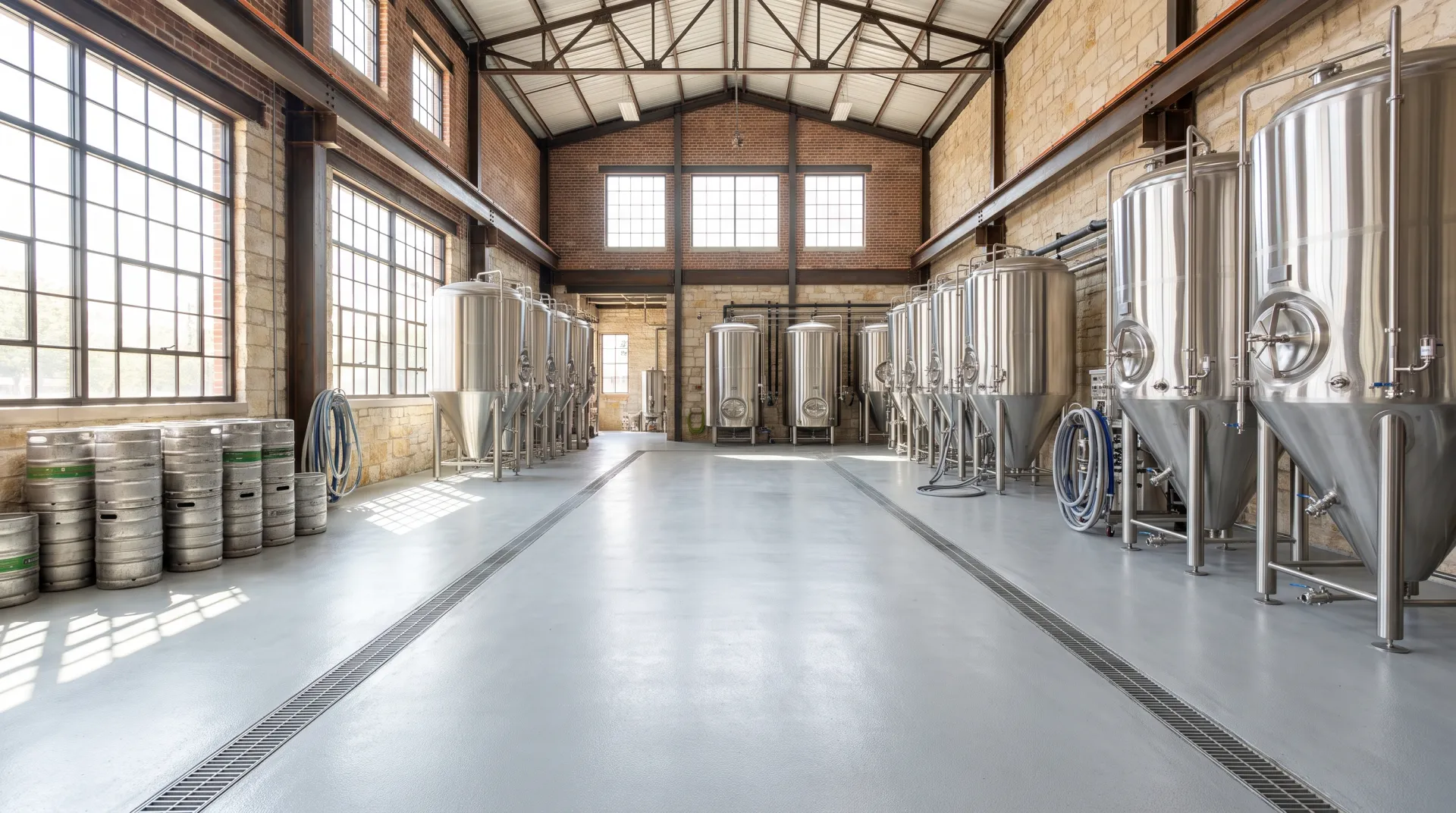
Urethane cement is the standard flooring recommendation for San Antonio breweries and wineries because it's the only common coating system built to handle both thermal shock from hot water wash-downs and the organic acid exposure that comes with fermentation - conditions that cause standard epoxy to crack, delaminate, or degrade over time. If your production floor sees daily steam cleaning, spilled wort or must, and constant foot and cart traffic, urethane cement is worth the closer look.
Why Breweries and Wineries Are Different from Typical Commercial Floors
Most commercial floor coatings are specified for foot traffic, light chemical exposure, and stable temperatures. Brewery and winery production floors break all three assumptions at once: hot water and steam wash-downs cycle the slab through rapid temperature swings multiple times a day, fermentation produces organic acids that attack standard resin chemistry, and constant moisture demands both slip resistance and proper drainage. A coating system has to be engineered for all of that simultaneously, not just one variable.
Thermal Shock Resistance
Daily sanitation in a brewery or winery typically involves hot water or steam wash-downs immediately followed by cold rinse cycles - a repeated thermal cycling pattern that standard epoxy handles poorly over time. Epoxy's rigid resin structure doesn't flex well with rapid temperature change, which leads to hairline cracking and eventual delamination at the seams and edges. Urethane cement's more flexible resin base absorbs that thermal cycling without the same failure pattern, which is why it's the standard spec for any production floor with regular hot wash-down cycles. Our detailed comparison on urethane cement vs epoxy flooring and which handles thermal shock goes deeper into the mechanics of why this happens.
Chemical and Acid Resistance
| Exposure | Epoxy | Urethane Cement |
|---|---|---|
| Organic fermentation acids | Moderate resistance, degrades over time | High resistance, built for it |
| Hot water/steam cycling | Prone to cracking | Flexes without cracking |
| Cleaning chemical exposure | Good | Excellent |
| Typical lifespan in production use | 5-10 years | 15-20+ years |
Sanitation detail that matters: urethane cement can be installed with integral cove base, curving the coating up the wall-floor junction in one seamless piece. That eliminates the caulked or grouted corner joint where bacteria and mold typically take hold in a wet production environment - a detail health inspectors specifically look for in food and beverage facilities.
Slip Resistance for Wet Production Floors
Brewery and winery floors are wet for most of the operating day between active production, wash-downs, and condensation from refrigeration. Slip-resistant aggregate broadcast into the urethane cement topcoat gives continuous traction underfoot without creating a texture that traps residue or makes cleaning harder - a balance that matters as much for OSHA compliance as it does for day-to-day safety.
Building Out a San Antonio Brewery or Winery Production Floor?
We install urethane cement systems specced for thermal cycling, acid exposure, and integral cove base sanitation requirements.
Request a Free QuoteInstallation Considerations for Active Facilities
Because urethane cement is typically installed at a greater thickness than standard epoxy - often 1/4 inch or more - it's better suited to new construction or a full production shutdown rather than a quick overnight turnaround. Most breweries schedule installation during a planned equipment downtime window or a facility expansion phase rather than trying to phase it around ongoing production. For general specs on the system outside the brewery-specific context, see our urethane cement floor coating service page, and for how it performs in a comparable food-grade setting, our guide on urethane cement floors for San Antonio food processing facilities covers similar sanitation and durability requirements.