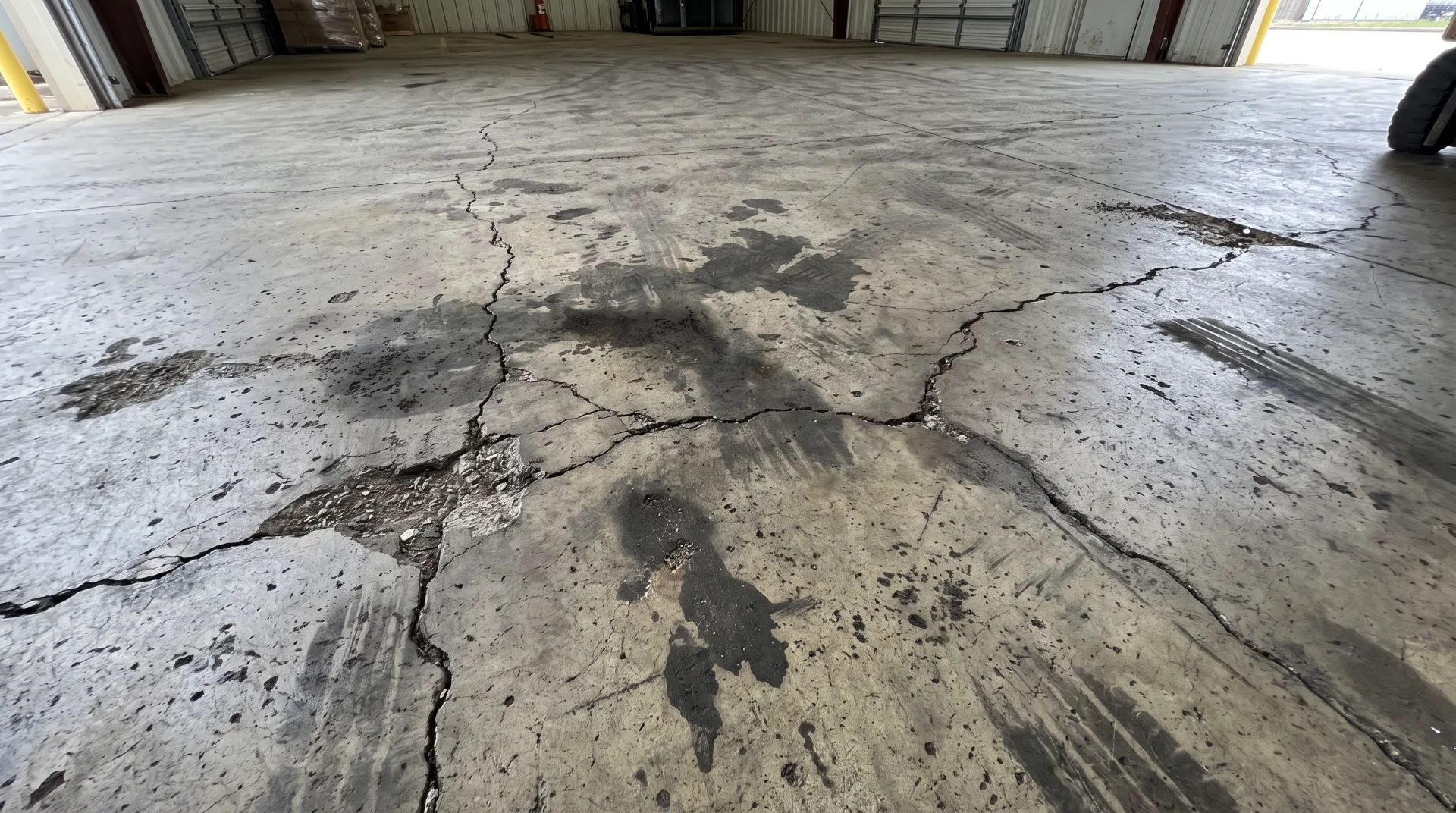
The clearest signs your San Antonio business needs a new epoxy floor coating are visible cracking that goes beyond surface-level, peeling or bubbling in multiple spots rather than one isolated area, a chalky residue that transfers to shoes or equipment, and a noticeable loss of slip resistance in high-traffic zones. Any one of these on its own might be manageable with a patch, but two or more together usually mean the floor has moved past spot repair and into full recoat territory.
Cracking: When It's Cosmetic vs. Structural
Fine hairline cracking that doesn't extend through the coating is often cosmetic and doesn't necessarily signal failure. The concern is cracking that's widening over time, cracking concentrated at specific stress points like forklift turning zones or dock thresholds, or cracking accompanied by a hollow sound when tapped - a sign the coating has separated from the concrete below. If you can see daylight or feel a ridge when running a hand across a crack, that's beyond cosmetic and should be assessed by a professional rather than monitored further.
Peeling and Bubbling: A Bonding Failure Signal
Peeling or bubbling almost always indicates the coating never bonded properly to the concrete in that area, often due to moisture trapped beneath the surface or inadequate surface prep during the original installation. A single small bubble might be a minor defect worth monitoring, but peeling that's spreading or appearing in multiple unrelated areas of the floor points to a systemic issue - either widespread moisture intrusion or a prep failure across the whole installation - that a recoat addresses more reliably than repeated spot patches.
Warning Signs Checklist
| Sign | Likely Cause | Typical Fix |
|---|---|---|
| Hairline cracking | Normal aging, minor stress | Monitor or topcoat refresh |
| Widening/structural cracks | Slab movement, heavy traffic | Repair + full recoat |
| Peeling/bubbling | Moisture, prep failure | Full recoat, address moisture |
| Chalky residue | UV or chemical degradation | Topcoat refresh or full recoat |
| Lost slip resistance | Worn texture/aggregate | Full recoat with fresh texture |
Don't wait for total failure: a floor that's showing 2-3 of these signs simultaneously is typically more cost-effective to fully recoat now than to keep patching individual spots as they appear, since patch-on-patch repairs rarely match the original finish and don't extend the floor's overall service life.
Chalky Residue and Loss of Gloss
A chalky, powdery film that appears on the floor's surface and transfers to shoes or mop heads is a classic sign of UV degradation or chemical exposure breaking down the topcoat resin. This is common in floors near loading dock doors or windows with direct sun exposure, and it's also common in floors that have seen years of exposure to cleaning chemicals not well-matched to the coating type. Chalking is primarily cosmetic in its early stages but signals the topcoat's protective layer is thinning, which means the floor is becoming more vulnerable to staining and wear underneath that visible chalk.
Slip Resistance: A Safety-Critical Sign
Epoxy floors with a broadcast aggregate or textured finish for slip resistance can wear smooth over years of heavy foot and equipment traffic, particularly in high-traffic lanes and near entrances. A floor that once had reliable texture but now feels noticeably smoother, especially when wet, has lost some of its slip-resistant properties and should be evaluated - this is one of the more safety-critical signs on this list, since a smooth, worn coating creates real slip hazards for employees and customers alike. Our guide on epoxy floor slip resistance in San Antonio covers how texture and aggregate selection affects this over a floor's lifespan.
Not Sure If Your Floor Needs a Recoat?
We'll assess your current floor's condition and tell you honestly whether a patch, topcoat refresh, or full recoat makes sense.
Request a Free QuoteHow Age and Traffic Level Factor In
A floor's age relative to its expected lifespan for its traffic level is a useful baseline check even before visible damage appears. A retail floor with moderate foot traffic might be expected to perform well for 7-12 years, while a warehouse floor under constant forklift traffic might show its age closer to the 5-10 year mark. If your floor is approaching or past its expected lifespan for its use case and you're starting to notice any of the warning signs above, that's a stronger signal to act than either factor alone. Our post on epoxy floor coating lifespan breaks down expected lifespans by setting and traffic type in more detail.
The Cost of Waiting Too Long
Delaying a recoat once multiple warning signs appear typically increases total project cost rather than saving money. Cracking that could have been addressed with surface repair and a topcoat refresh often progresses to full delamination requiring complete coating removal and reinstallation if left unaddressed. Peeling that starts in one small area spreads as moisture continues working beneath the coating at the edges of the failure. And a floor that's become a documented slip hazard carries liability exposure that only grows the longer it's left in that condition. Businesses that address warning signs early, while they're still limited to a topcoat refresh or partial recoat, consistently spend less than those that wait until the floor requires full removal and reinstallation.
What a Professional Assessment Looks For
When you bring in a contractor to assess a business floor showing wear, they're typically checking several things beyond what's visible on the surface: moisture levels at suspect areas using a moisture meter, the extent and depth of any cracking, whether peeling is isolated or has spread beneath adjacent sound-looking coating, and the overall remaining film thickness across different traffic zones. This assessment determines whether a topcoat refresh, partial recoat of specific zones, or full removal and reinstallation is the right scope - and getting that scope right the first time avoids paying for a partial fix that doesn't actually resolve the underlying issue. Our epoxy floor coating service page covers the systems we install across San Antonio's commercial and industrial spaces, including full recoat and reinstallation projects.
Scheduling a Recoat Around Business Operations
One of the biggest hesitations business owners have about addressing a failing floor is the disruption a recoat project seems to imply. In practice, most commercial recoat projects can be scheduled around business hours or during planned closures rather than requiring an extended shutdown. Faster-curing systems like polyaspartic coatings in particular allow many businesses to complete a recoat overnight or over a single weekend, minimizing lost operating time. Discussing your specific operating constraints with your contractor during the initial assessment lets them recommend a coating system and installation schedule that fits your business's actual downtime tolerance, rather than assuming a multi-day closure is unavoidable.
Documenting Floor Condition for Insurance and Liability Purposes
Businesses concerned about liability exposure from a deteriorating floor benefit from documenting its condition over time - photos of cracking or peeling as it develops, dates when warning signs were first noticed, and any incident reports if a slip or fall has occurred. This documentation serves two purposes: it helps a contractor assess how quickly the floor has been deteriorating when planning a fix, and it demonstrates a business's awareness and response timeline if a liability question ever arises. Businesses that address known floor issues promptly once documented are generally in a stronger position than those that can be shown to have left a known hazard unaddressed for an extended period.
Choosing the Right System for a Recoat, Not Just Matching the Old One
When a floor has reached the point of needing a full recoat, it's worth pausing to consider whether the original coating system was actually the right fit for the space, rather than defaulting to the same system again. A warehouse floor that failed early due to forklift wear might benefit from a thicker, more abrasion-resistant system on the recoat. A retail floor that chalked from UV exposure might do better with a UV-stable topcoat this time around. Treating a recoat as an opportunity to correct an underlying mismatch between the original system and the space's actual demands often results in a longer-lasting second installation than simply replicating what failed the first time.