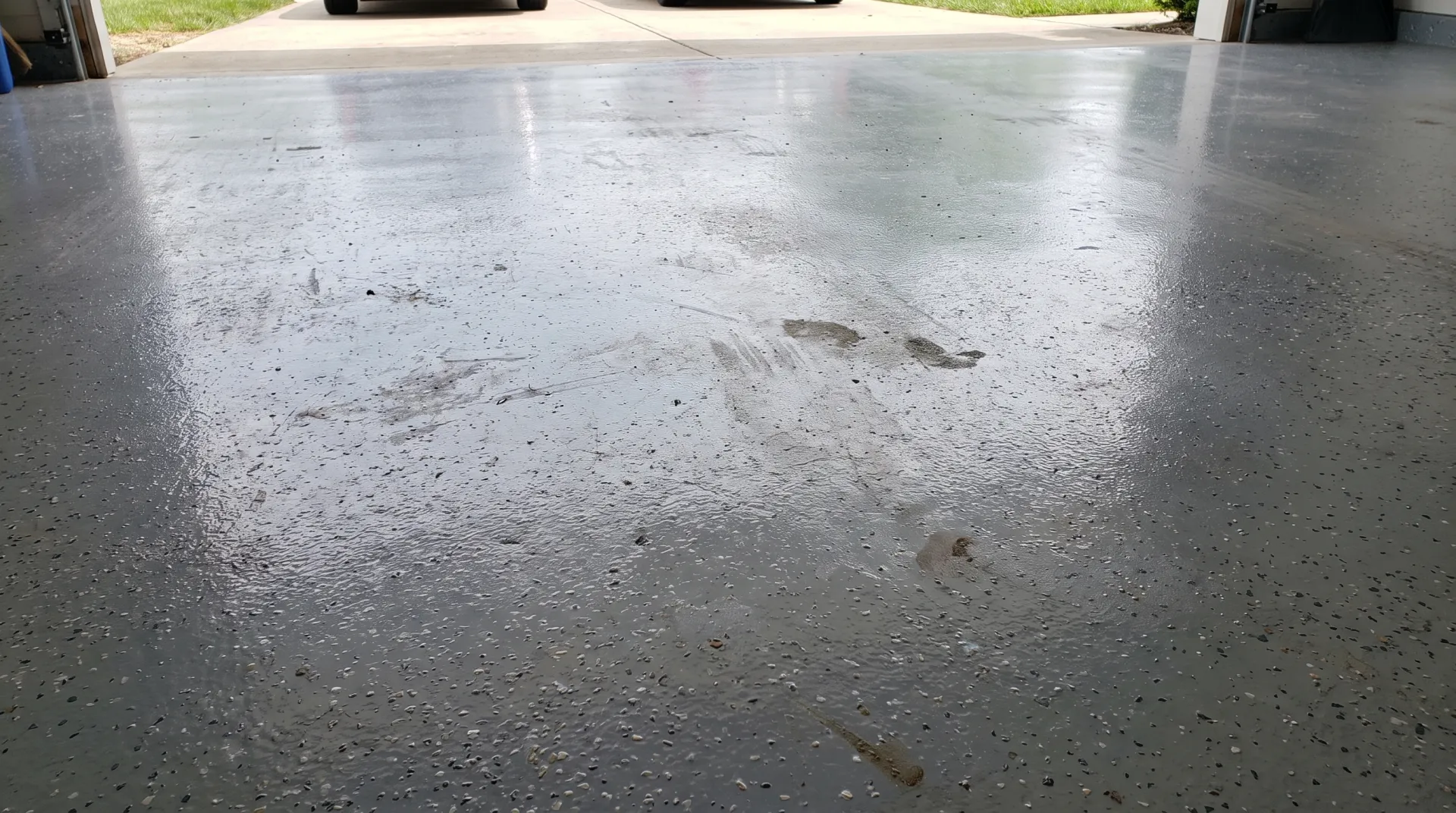
A properly installed epoxy floor coating in San Antonio typically lasts 10-20 years in a residential setting or 5-10 years under heavier commercial and industrial traffic - but that range swings dramatically based on four factors: surface prep quality, traffic level, chemical and UV exposure, and topcoat type. Two floors installed with identical coating products can have wildly different lifespans depending on how well those four variables were managed before and after installation.
Surface Preparation: The Biggest Factor by Far
More epoxy floors fail early because of inadequate surface prep than for any other reason combined. Epoxy bonds mechanically to concrete through a textured profile created by grinding or shot-blasting, not just chemically to a smooth surface. A floor coated over concrete that wasn't properly ground, or that had elevated moisture vapor emission that wasn't tested for beforehand, can start delaminating within the first year or two regardless of how premium the coating product itself was. This is why a thorough epoxy floor coating installation always starts with moisture testing and mechanical profiling, not just cleaning.
Traffic Level and Type
How a floor is used day to day has an enormous effect on how long the coating stays intact. A residential garage seeing one or two vehicles a day wears very differently than a warehouse floor under constant forklift traffic, and the type of traffic matters as much as the volume. Rolling loads like forklifts and pallet jacks create shear stress at turning points that flat foot traffic never produces, which is why industrial floors typically need a thicker, more abrasion-resistant topcoat system than residential ones to reach comparable lifespans.
Typical Lifespan by Setting
| Setting | Typical Traffic | Expected Lifespan |
|---|---|---|
| Residential garage | 1-2 vehicles daily | 10-20 years |
| Home workshop/gym | Foot traffic, equipment | 10-15 years |
| Retail/showroom | Moderate foot traffic | 7-12 years |
| Warehouse/distribution | Forklift, pallet jack | 5-10 years |
| Manufacturing w/ chemicals | Heavy + chemical exposure | 3-8 years (topcoat dependent) |
These ranges assume proper installation: a poorly prepped floor in any of these settings can fail in a fraction of these timelines, which is why prep quality outweighs even traffic level as a lifespan predictor.
Chemical and UV Exposure
Standard epoxy topcoats are durable against everyday spills - oil, coolant, mild cleaning chemicals - but sustained exposure to harsher chemicals or ongoing UV light accelerates wear differently than mechanical traffic does. Chemical exposure without proper rinsing can etch or dull a topcoat over time, particularly in facilities working with solvents or acidic cleaning agents. UV exposure, meanwhile, is primarily a concern for garages with windows or frequently open doors, since standard epoxy resin will gradually yellow and chalk under direct sunlight - a cosmetic change rather than a structural failure, but one that noticeably ages a floor's appearance well before the coating itself actually fails.
Topcoat Type Sets the Ceiling
The specific topcoat chosen has a direct relationship to expected lifespan, independent of prep and traffic. A polyurethane or polyaspartic topcoat over a standard epoxy base coat generally outperforms a standalone epoxy topcoat in abrasion resistance and UV stability, which is why many professional installers now default to a hybrid system - epoxy base for adhesion and build, polyaspartic or polyurethane topcoat for wear and UV resistance - especially for garages and sun-exposed commercial spaces.
Want a Floor Built to Last a Decade or More?
We'll assess your specific traffic, exposure, and climate factors and recommend the coating system built to match.
Request a Free QuoteHow to Extend Your Epoxy Floor's Lifespan
A handful of maintenance habits meaningfully extend how long an epoxy floor performs well before needing a recoat, regardless of the original installation quality.
- Clean with pH-neutral products: harsh alkaline or acidic cleaners can dull or etch the topcoat over repeated use, so a pH-neutral floor cleaner preserves the finish longer
- Clean up chemical spills promptly: oil, coolant, and especially harsher solvents should be wiped up rather than left to sit, since prolonged contact is what actually damages the coating, not brief exposure
- Use protective pads under heavy equipment: stationary equipment left directly on the coating can create localized wear or indentation over years; felt or rubber pads distribute that load
- Avoid dragging heavy or sharp objects: dragging metal shelving, tool chests, or equipment across the floor can scratch through the topcoat, exposing the base coat to faster wear at that specific spot
- Recoat high-wear zones proactively: rather than waiting for visible failure, applying a fresh topcoat to heavily trafficked areas every several years resets the wear clock on just the surface layer, without needing a full strip-and-recoat
Signs Your Epoxy Floor Is Approaching End of Life
Certain visual and physical signs indicate a floor is nearing the point where a recoat or full replacement makes more sense than continued spot maintenance. Widespread hairline cracking across the topcoat (distinct from isolated chips), a chalky residue that transfers to hands or shoes, peeling or bubbling in multiple areas rather than one isolated spot, and a noticeable loss of gloss across the whole floor rather than just high-traffic lanes are all signals worth having assessed. Catching these signs early, while the underlying concrete and base coat are still sound, usually means a topcoat refresh is sufficient rather than a full grind-and-recoat project - which is meaningfully less expensive and disruptive.
San Antonio-Specific Considerations
Local climate factors shape which lifespan variables matter most here specifically. San Antonio's long, intense summer heat season makes UV-stable topcoats worth the modest upfront cost premium for any garage or space with natural light exposure, and the occasional heavy rain events mean proper drainage and slope matter for any coated area near garage door openings, where water intrusion at the threshold can undermine adhesion at the floor's edge over time if not addressed during installation. Our related guide on how UV stability compares between polyaspartic and epoxy in San Antonio sunlight goes deeper into the topcoat selection question for sun-exposed floors.
How Coating Thickness Affects Lifespan
Film thickness is often overlooked in lifespan discussions, but it has a direct relationship to how much wear a floor can absorb before the underlying concrete is exposed. A thin, single-coat DIY-style application might measure just a few mils thick, while a professional multi-layer system - primer, pigmented base coat, optional broadcast media, and topcoat - can build total film thickness several times greater. That extra thickness functions like tread depth on a tire: it's the material available to be worn away by traffic before the coating stops protecting the slab underneath. High-traffic commercial floors typically specify a thicker build for exactly this reason, since the additional material directly translates into additional years of service life under the same traffic volume.
Why Two Identical-Looking Floors Age Differently
It's common for two epoxy floors installed around the same time, using similar-looking products, to age at noticeably different rates - and the explanation is rarely the coating brand. Differences in slab moisture at the time of installation, how thoroughly the contractor ground the surface, whether ambient temperature and humidity were within spec during application, and even how quickly the facility resumed full traffic after installation all compound over time. This is part of why choosing an experienced, licensed contractor matters as much as choosing a specific coating product - the installation process itself accounts for more of the eventual lifespan difference than most homeowners and facility managers expect.
Warranty Terms and What They Actually Cover
A written warranty is one of the more useful lifespan indicators available before a floor is even installed, since it reflects how confident the contractor is in their own prep and materials. Warranties on professionally installed epoxy systems commonly range from 1 to 10 years depending on the coating tier and setting, but the details matter more than the headline number. Some warranties cover material defects only, while others cover installation workmanship - delamination or peeling caused by improper prep - which is the failure mode homeowners are actually most likely to encounter. Asking specifically whether a warranty covers workmanship, not just product defects, and getting the terms in writing before work begins, gives a much clearer picture of expected lifespan than the coating's marketed durability claims alone.