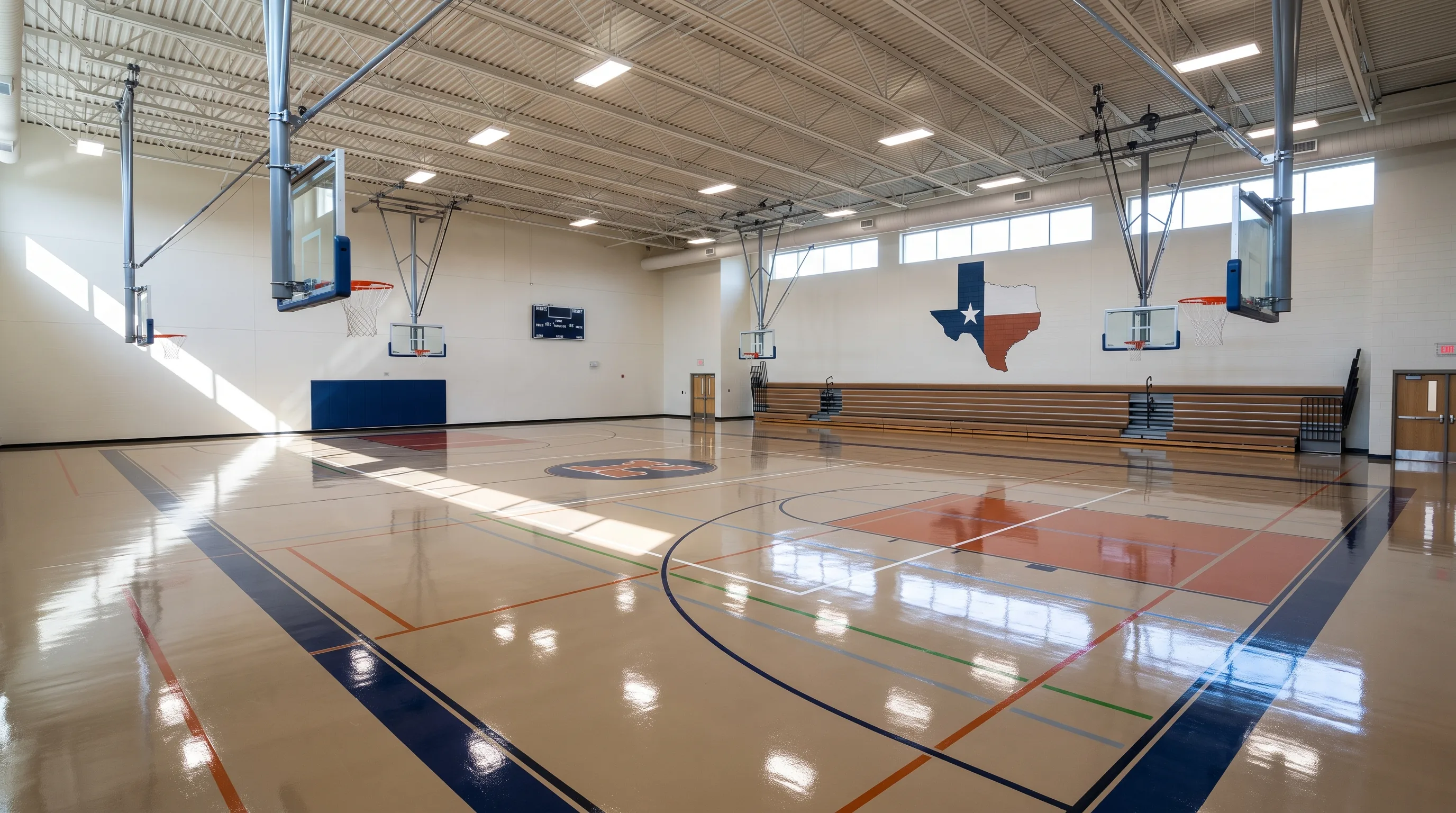
Summer is the only real window most San Antonio schools have to redo a gymnasium floor. Classes are out, the building is quiet, and the floor has to be finished, cured, and ready for line inspection before students and athletic programs return in August. Epoxy has become a common alternative to traditional hardwood and sport tile for school gyms - here's what a proper install involves and why the summer timeline matters as much as the material choice.
Why Schools Choose Epoxy Over Hardwood or Sport Tile
- Significantly lower long-term maintenance than hardwood, which requires periodic refinishing and is vulnerable to water damage from leaks or flooding.
- More impact- and scuff-resistant than sport tile under heavy daily use from PE classes, athletics, and community events.
- Seamless surface eliminates the seams and grout lines that trap dirt and require more intensive cleaning in tile systems.
- Custom court line painting is built into the install process, versus tape or paint-only systems that wear and need reapplication.
Sports Line Painting for Multi-Use Gymnasiums
Most school gymnasiums run multiple sports on the same floor - basketball, volleyball, and often badminton or pickleball lines layered together. Getting this right requires planning before the coating goes down, not after:
- Court dimensions and line colors are mapped out in the design phase so each sport's lines are distinguishable at a glance.
- Lines are painted directly into the epoxy system during application, not taped on afterward, so they hold up under the same wear as the rest of the floor.
- Contrasting colors are used for overlapping court lines (basketball vs volleyball vs auxiliary courts) to avoid confusion during games and practices.
- School colors and mascot logos can be incorporated into center court as part of the same install.
Planning a Summer Gymnasium Project?
We schedule San Antonio school gym floors around your summer break window, with multi-sport line layouts and full cure before students return.
Get a Free QuoteThe Summer Install Timeline
A gymnasium floor project has to fit inside a hard deadline - the first day of fall sports practice or the start of the school year. Working backward from that date:
- Surface prep and old floor removal: Existing hardwood, tile, or coating is removed and the slab is diamond-ground for proper bonding - typically the longest phase of the project.
- Base coat application: The primary epoxy layer is applied across the full gym floor.
- Line layout and painting: Court lines for each sport are measured, taped, and painted into the system.
- Topcoat and cure: A polyaspartic or polyurethane topcoat seals the floor and provides the final gloss and durability layer.
- Final inspection: Lines are checked against official court dimensions before the gym is handed back for use.
Booking early in the summer is critical - gym floor projects are one of the most requested school facility jobs in the June-August window, and late bookings risk missing the fall sports deadline entirely.
Durability for Multi-Purpose Use
School gymnasiums rarely serve one purpose. Between PE classes, athletics, assemblies, and community events, the floor needs to handle rolling bleachers, folding chairs, and event setups without scuffing or scratching. A properly specified epoxy topcoat is rated for exactly this kind of mixed heavy use.