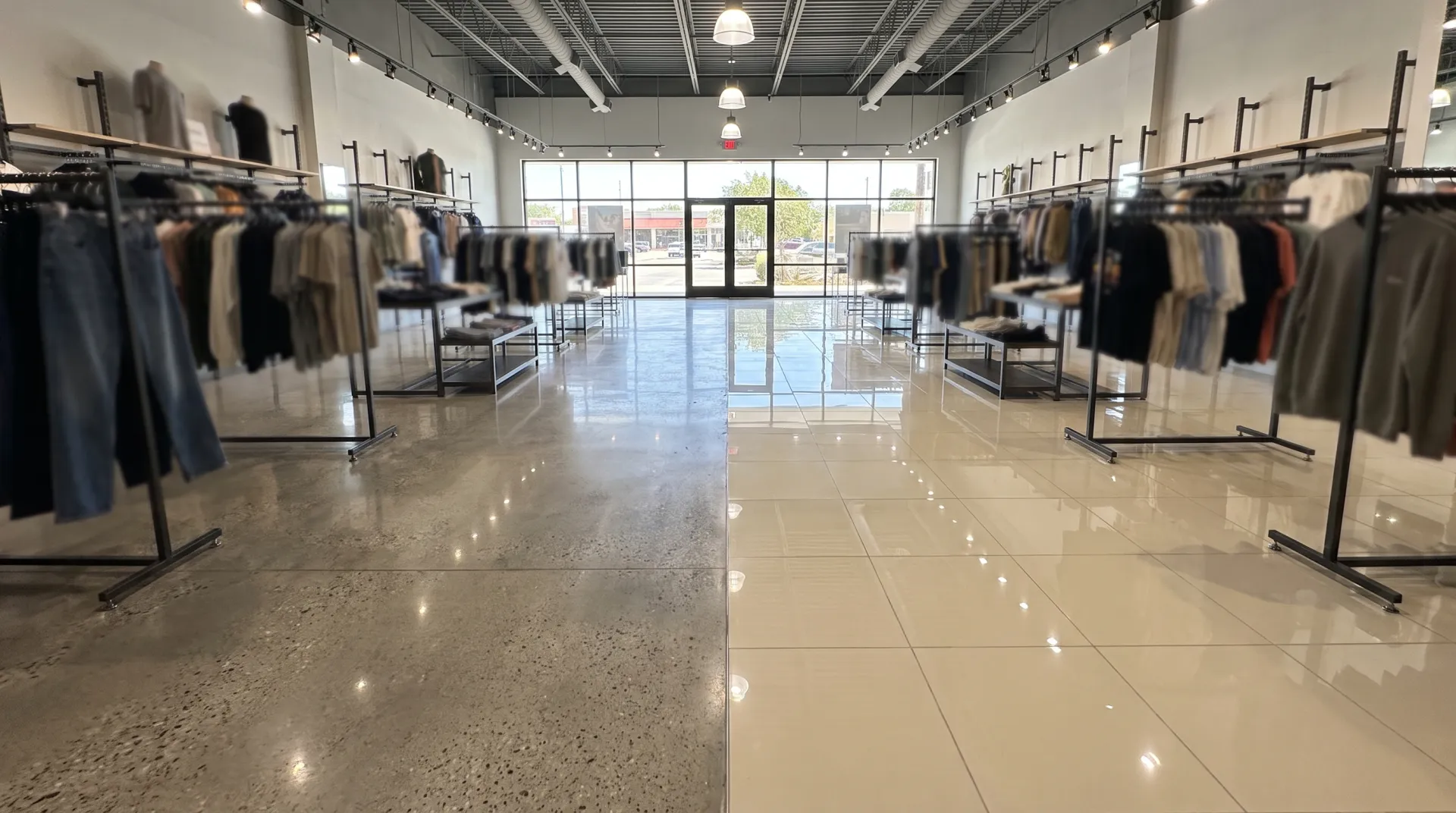
Polished concrete is typically the more cost-effective choice for San Antonio retail spaces since it refines the existing slab rather than adding a separate tile product, while polished porcelain offers more uniform color and pattern consistency at a higher material and installation cost. Both hold up well to heavy foot traffic - the right choice usually comes down to budget, maintenance tolerance, and the specific look your brand wants.
The Core Trade-Off
Polished concrete works with what's already there - grinding and densifying the existing slab into a hard, reflective surface. Polished porcelain tile is an added material installed on top of the slab, which means material cost, adhesive, grout, and skilled tile-setting labor all factor into the total price. That structural difference drives most of the practical trade-offs between the two.
Side-by-Side Comparison
| Factor | Polished Concrete | Polished Porcelain |
|---|---|---|
| Typical cost | $3-$12/sq ft | $8-$20+/sq ft (material + install) |
| Installation | Grinds existing slab | Adds tile layer, requires adhesive/grout |
| Color/pattern consistency | Natural variation, some control via dye | Highly uniform, more color/pattern options |
| Maintenance | Dust mop, periodic burnish/reseal | Dust mop, periodic grout sealing |
| Repair if damaged | Re-grind and re-polish locally | Replace individual tiles |
| Lead time | Faster - no material ordering | Slower - tile ordering and setting time |
Budget-conscious retailers in San Antonio generally lean polished concrete for its lower cost and faster installation timeline. Brands wanting precise, uniform color matching across a large footprint sometimes choose porcelain specifically for that consistency, even at a premium.
Durability for Retail Foot Traffic
Both systems perform well under sustained retail foot traffic. Polished concrete has an advantage in having no grout lines or tile edges that can chip or crack under rolling racks and heavy carts. Porcelain's surface resists scratching slightly better than concrete, though in practice this rarely becomes a visible issue in a typical retail environment within a normal renovation cycle.
Maintenance Considerations
- Polished concrete: routine dust mopping plus an occasional burnishing or re-polish pass every few years to maintain gloss - no grout to clean or reseal
- Polished porcelain: similar day-to-day cleaning, but grout lines need periodic sealing and are more prone to trapping dirt and grime in high-traffic aisles
For retailers weighing ongoing maintenance labor against upfront cost, polished concrete's lack of grout lines is often the deciding factor. Our guide on polished concrete cost per square foot in San Antonio breaks down 2026 pricing by gloss level in more detail.
Choosing Between Polished Concrete and Porcelain for Your Store?
We'll walk your space and give you a real cost and timeline comparison based on your existing slab and design goals.
Request a Free QuoteWhich Fits Your Retail Brand
Neither option is universally "better" - it depends on what your space needs. A store prioritizing a fast, budget-conscious renovation with a modern industrial look typically fits polished concrete well. A brand wanting precise, repeatable color consistency across multiple locations sometimes leans porcelain despite the higher cost. Our concrete polishing and grinding service page covers the full range of finish options available for retail and commercial polished concrete projects.