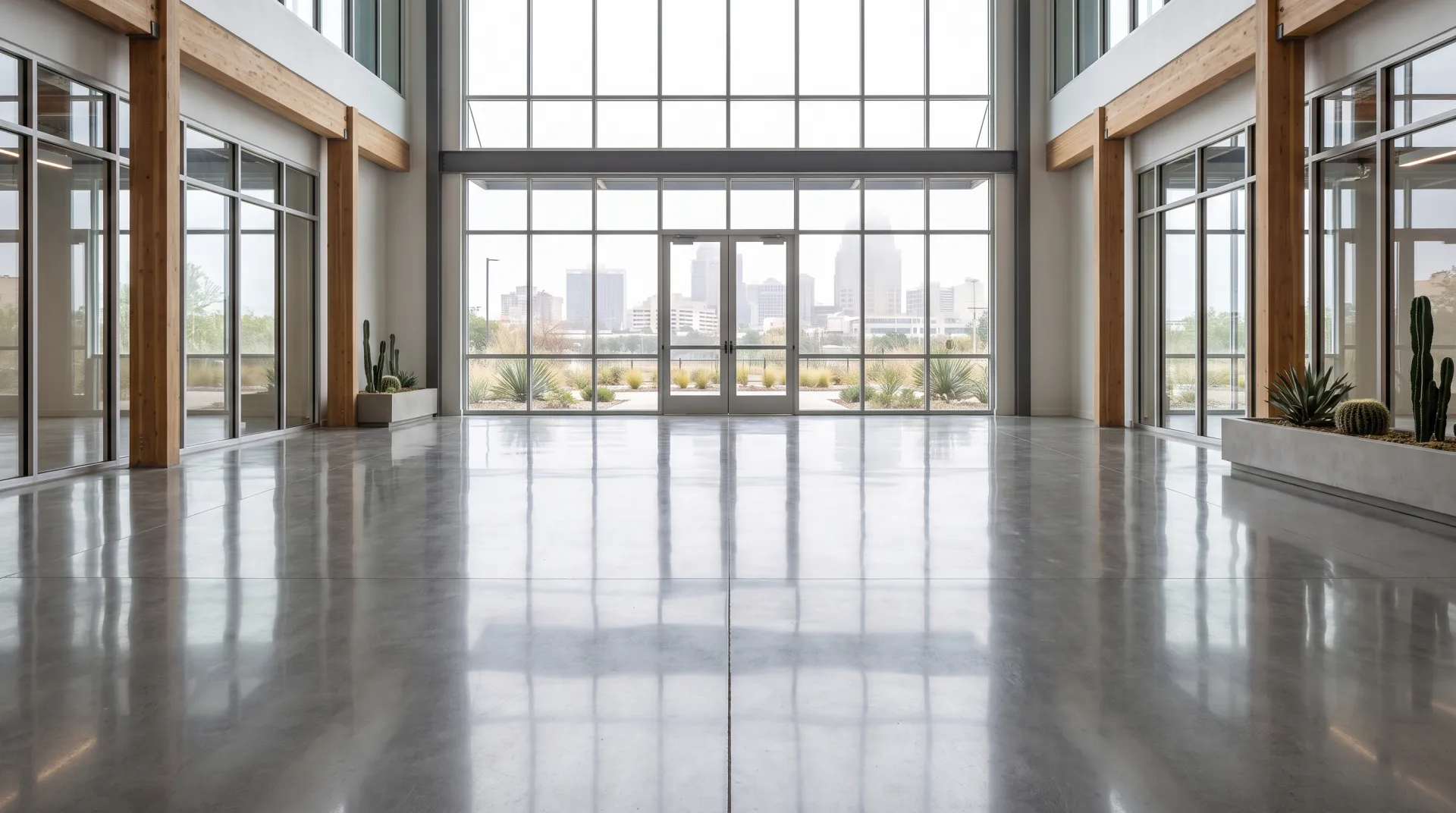
Polished concrete in San Antonio typically costs $3 to $12 per square foot, with most residential and light-commercial projects landing between $5 and $8 once grinding, densifying, and polishing are all included. The exact number depends heavily on the existing slab's condition and how high a gloss level you're targeting - this guide breaks down both.
What Drives Polished Concrete Pricing
Unlike epoxy, polished concrete doesn't add a coating - it grinds, densifies, and refines the existing slab itself into a hard, reflective surface. That means the biggest cost variable isn't material, it's labor: how many grinding passes the floor needs, how much crack or joint repair comes first, and whether decorative dye or aggregate exposure is part of the plan.
2026 Cost Breakdown by Polish Level
Concrete polishing is done in stages, and each additional gloss level requires another pass with progressively finer diamond tooling - which is why price climbs as gloss level increases:
| Polish Level | Finish | Cost/sq ft |
|---|---|---|
| Level 1-2 (Flat/Matte) | Ground, sealed, low sheen | $3-$5 |
| Level 3 (Satin) | Semi-gloss, mild reflection | $5-$7 |
| Level 4 (High-Gloss) | Mirror-like reflection | $7-$10 |
| Decorative (dye/aggregate) | Custom color or exposed aggregate | $9-$12 |
For a breakdown of what separates each stage in more technical detail, see our guide to concrete polishing levels 1 through 4.
New Slab vs Existing Slab
A new slab poured specifically for polishing is almost always cheaper to finish than an existing one. It starts flat, crack-free, and without old paint, adhesive, or coating residue to grind out first. Existing commercial slabs - especially ones that previously had tile, carpet glue, or an old epoxy coating - often need an extra prep pass that adds $1-$3 per square foot before polishing can even begin.
Budget tip: if your existing slab has an old epoxy or paint coating, get a contractor to inspect it before assuming a polish-only quote applies - removing an incompatible coating is one of the most common reasons a polished concrete estimate comes in higher than expected.
Polished Concrete vs Epoxy Cost
For large commercial spaces, polished concrete is usually the more budget-friendly option since there's no resin material cost to factor in - you're refining the slab that's already there rather than adding a new surface on top of it. Epoxy tends to win on color customization and chemical resistance, while polished concrete wins on long-term maintenance cost and lifespan. Our detailed polished concrete vs epoxy comparison covers the full trade-off if you're deciding between the two.
Get an Exact Quote for Your San Antonio Floor
Slab condition changes pricing more than anything else - we'll inspect your floor and give you a real number, not a ballpark.
Request a Free QuoteMaintenance Costs After Installation
Polished concrete's ongoing cost advantage shows up after installation, too. There's no topcoat to reapply and no risk of peeling - routine maintenance is typically limited to dust mopping and an occasional re-polish or burnishing pass every few years to maintain gloss in high-traffic areas. For commercial spaces considering the full picture, our concrete polishing and grinding service page outlines what a maintenance schedule typically looks like, and our guide on how long polished concrete lasts in San Antonio covers the lifespan side in more depth.