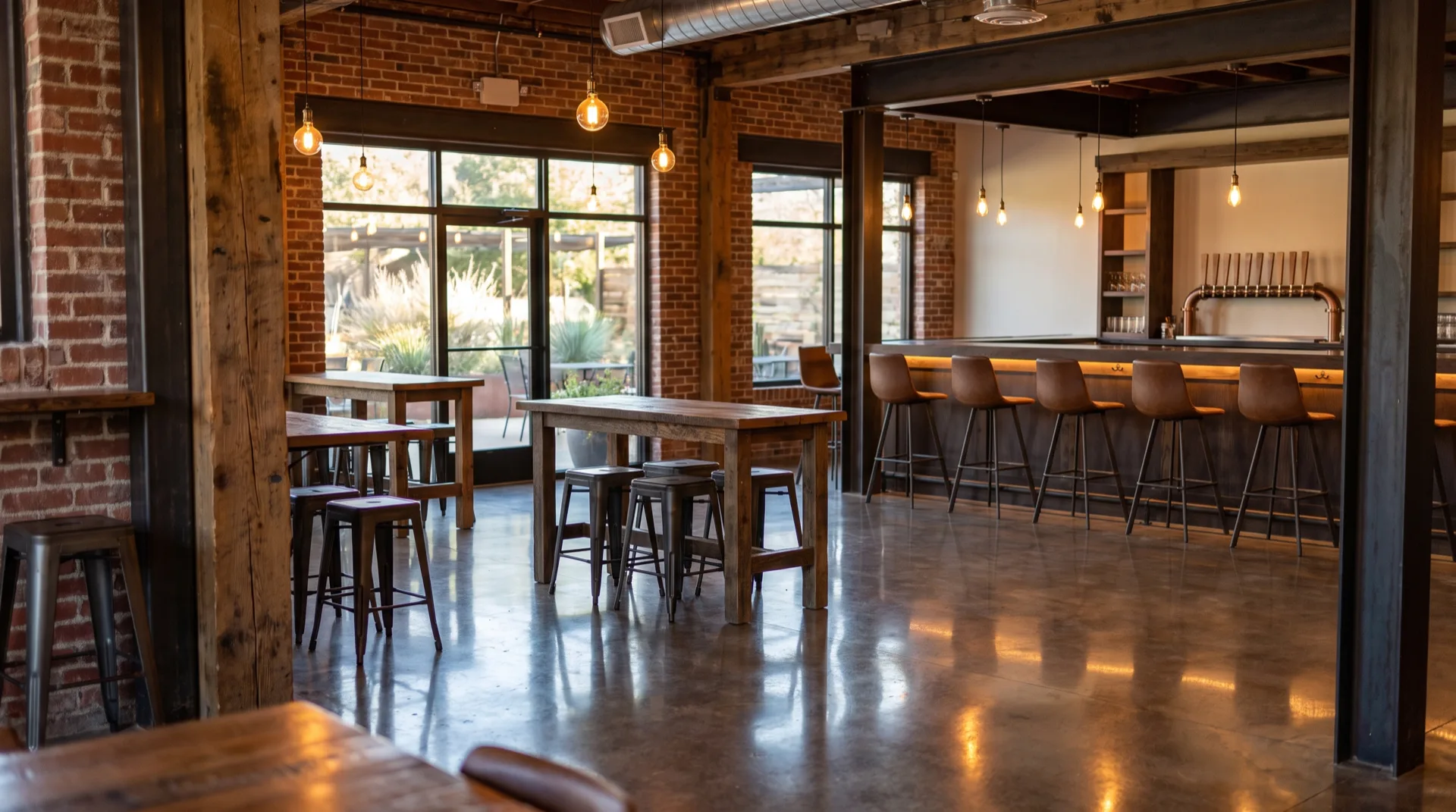
Concrete polishing is one of the most practical flooring choices for San Antonio breweries and taprooms - it stands up to constant foot traffic, spilled beer, and daily cleaning chemicals while pairing naturally with the exposed-brick, industrial-chic aesthetic most taprooms are already going for, at a lower long-term maintenance cost than tile, wood, or carpet in the same high-traffic hospitality setting.
Why Polished Concrete Fits the Taproom Aesthetic
Most breweries and taprooms lean into an industrial or craft aesthetic - exposed brick, steel beams, reclaimed wood, Edison-bulb lighting - and polished concrete's clean, reflective surface complements that look far better than a more traditional flooring material would. Beyond aesthetics, the reflective finish also helps bounce ambient and pendant lighting around the space, which is particularly useful in a taproom that leans on warm, moody lighting rather than bright overhead fixtures, since a duller flooring material would absorb more of that light instead of contributing to the room's overall brightness and atmosphere.
Durability Against Constant Foot Traffic
A taproom floor takes a beating - constant foot traffic from patrons, furniture being moved and rearranged, and often direct exposure to outdoor grit tracked in from a patio or beer garden area. Polished concrete's ground and densified surface is significantly harder and more abrasion-resistant than the original unpolished slab, and unlike wood or vinyl flooring, it doesn't show the kind of visible wear patterns that develop in a heavily trafficked path between the bar and seating areas over just a year or two of steady use.
Handling Beer Spills and Bar Cleaning Chemicals
Spilled beer, wine, and the cleaning chemicals used to manage them daily are a fact of life in any taproom, and a properly sealed polished concrete floor resists staining from all of these significantly better than unsealed concrete would. The densified, sealed surface doesn't allow liquids to soak in and stain the way porous, untreated concrete does, which matters especially in a space serving dozens of pours a day where spills are inevitable regardless of how careful staff and patrons are. For businesses weighing polished concrete against other durable commercial options, our comparison of urethane cement flooring for breweries and wineries covers an alternative system with even higher chemical and thermal resistance, worth considering for production areas specifically, separate from the front-of-house taproom space covered here.
Comparing Polished Concrete to Other Taproom Flooring Options
| Factor | Polished Concrete | Tile | Wood/LVP |
|---|---|---|---|
| Durability | Excellent | Good (grout wears) | Moderate |
| Spill/stain resistance | Excellent (sealed) | Good | Poor-moderate |
| Maintenance | Low | Moderate (grout) | Moderate-high |
| Aesthetic fit | Industrial/craft | Varies | Traditional/warm |
Slip resistance near the bar deserves special attention: while a standard polished finish meets typical hospitality slip-resistance expectations, areas directly behind the bar or near ice bins - where spills concentrate most - often benefit from a slightly less glossy finish or added texture for extra traction.
Retrofitting an Existing Taproom Space
Many San Antonio breweries and taprooms occupy converted industrial or warehouse buildings that already have a concrete slab in place, which makes polished concrete a particularly efficient retrofit option compared to installing an entirely new flooring material over the existing slab. Polishing an existing floor is typically faster than a full tear-out and replacement, and phased scheduling around business hours - working overnight or during closed days - can further minimize the disruption to an already-operating business, which matters for a taproom that can't easily close for an extended renovation period without losing revenue.
Comparing Concrete Polishing to Standard Commercial Finishes
Our full concrete polishing service page covers the different polish levels and finish options available, from a matte, low-sheen look that suits a more rustic taproom aesthetic to a high-gloss finish for a brewery going for a sleeker, more modern feel. The right polish level often comes down to how much reflectivity fits the space's specific design vision, since a high-gloss finish reads very differently under warm pendant lighting than a satin or matte finish does, even though both offer comparable durability once properly sealed.
See Polished Concrete Options for Your Taproom
We assess existing slabs and recommend the right polish level and sealer for San Antonio breweries and taprooms.
Request a Free QuoteComparing Polished Concrete to Standard Epoxy for a Taproom
Some brewery owners also consider a standard epoxy coating instead of polished concrete for the front-of-house space. Our guide to polished concrete vs. epoxy covers the tradeoffs in more depth, but broadly, polished concrete tends to hold up better long-term against the kind of heavy furniture-dragging and constant foot traffic a taproom sees, while epoxy can offer more decorative color and pattern flexibility for businesses wanting a more customized look than polished concrete's natural gray or lightly tinted finish provides.
Acoustic and Noise Considerations for Taproom Spaces
One tradeoff worth planning around: polished concrete's hard, reflective surface doesn't absorb sound the way carpet or certain acoustic flooring materials do, which can make an already loud taproom environment - full conversation noise, live music, or a busy trivia night - feel even louder. Breweries and taprooms choosing polished concrete often offset this with acoustic treatments elsewhere in the space, such as fabric wall panels, exposed ceiling insulation, or strategically placed soft furnishings, rather than avoiding polished concrete altogether for its many other practical advantages in a high-traffic hospitality setting.
Planning Around Patio and Beer Garden Traffic
Many San Antonio breweries and taprooms feature an indoor-outdoor layout with a patio or beer garden that patrons move between freely, which means the indoor polished concrete floor takes on additional grit, dirt, and moisture tracked in from outside compared to a fully enclosed hospitality space. A slightly more aggressive finish level near entry points and the transition zone between indoor and outdoor seating can help manage this added wear, while the rest of the taproom's interior can use a smoother, more reflective finish since it sees less direct outdoor traffic. Discussing this zone-by-zone traffic pattern with a contractor during the initial assessment, rather than applying one uniform finish level throughout, produces a more durable result in the specific areas that need it most.
Working Around an Active Brewing Operation
For breweries that combine a working brewhouse with an attached taproom, the concrete polishing project needs to account for both spaces even though only the taproom is typically customer-facing. The production side of a brewery deals with far more aggressive spills - wort, cleaning acids, caustic solutions - than a taproom ever will, which is why many breweries specify a different, more chemical-resistant system like urethane cement for the brewhouse floor while reserving polished concrete for the front-of-house taproom where the aesthetic and lighter-duty durability profile makes more sense. Coordinating both projects with the same contractor, even when different systems are used in each space, helps ensure a consistent installation timeline and reduces the number of separate business disruptions a growing brewery has to plan around.
Budgeting for a Taproom Concrete Polishing Project
Cost for a taproom polished concrete project depends heavily on the existing slab's condition - a newer, relatively flat and crack-free slab costs meaningfully less to polish than an older floor requiring significant grinding, crack repair, or leveling work before the polishing process can begin. Breweries planning a build-out or renovation budget should get a contractor's assessment of the existing slab early in the planning process, since discovering extensive repair needs partway through a broader renovation timeline can create costly delays compared to identifying and budgeting for that work upfront, before other trades and design elements are finalized around an assumed completion date.
Choosing an Installer Familiar With Occupied Hospitality Spaces
Polishing concrete in an operating restaurant, bar, or brewery presents different logistical challenges than a residential garage or a warehouse being built out before occupancy - dust containment, noise timing around business hours, and protecting existing fixtures, furniture, and bar equipment all become active project considerations rather than afterthoughts. A contractor experienced specifically with occupied hospitality spaces will typically propose a phased schedule that works around your open hours, use dust containment equipment appropriate for a space with food and beverage service nearby, and coordinate directly with staff on protecting equipment that can't be easily moved. Asking a prospective contractor about their specific experience polishing floors in active restaurants or bars, rather than only residential or new-construction commercial work, is a good way to gauge whether they understand these added logistical demands before committing to a project timeline.