Why Standard Epoxy Fails Outdoors in San Antonio
The most common mistake San Antonio homeowners make when coating a patio or driveway is using an interior epoxy system outdoors. Standard epoxy is UV-reactive - within 6–18 months of outdoor exposure, it yellows, chalks, and loses its gloss. In San Antonio, where concrete surface temperatures on south-facing patios regularly reach 120°–140°F in July, the UV degradation is accelerated further. An interior epoxy that might last 10 years in a garage will fail visually and structurally within 1–3 years outside.
The correct specification for San Antonio outdoor concrete is a UV-stable aliphatic polyaspartic system. Polyaspartic binders are aliphatic - meaning they don’t degrade under UV exposure. The same chemistry used on commercial parking garages exposed to full sun is appropriate for residential patios and driveways. ProEpoxy uses only UV-stable systems for all outdoor applications in the San Antonio metro.
Polyaspartic vs. Epoxy for Outdoor Use in San Antonio
Here’s the direct comparison for outdoor applications in our climate:
- UV stability: Polyaspartic - excellent (aliphatic, UV-non-reactive). Standard epoxy - poor (aromatic, UV-reactive, yellows within months outdoors).
- Temperature tolerance: Polyaspartic cures at temperatures from 0°F to 120°F. Epoxy has a narrower cure window - in San Antonio summer, afternoon application of epoxy on a hot slab can cause premature cure and bubbling.
- Hot-tire resistance: Polyaspartic topcoats resist hot-tire pickup. Standard epoxy softens at surface temperatures above 90°F - common on San Antonio driveways in summer - and bonds to vehicle tires when they park.
- Cure time: Polyaspartic returns to foot traffic in 4–6 hours and vehicle traffic in 24 hours. Epoxy typically requires 24–72 hours before light traffic.
- Cost: Polyaspartic systems cost 20–40% more per square foot than standard epoxy for outdoor applications. The price difference is recovered in longevity - a UV-stable system lasts 8–12 years outdoors vs. 1–3 years for a UV-reactive epoxy.
Decorative Options for San Antonio Patios
Full-Broadcast Chip System
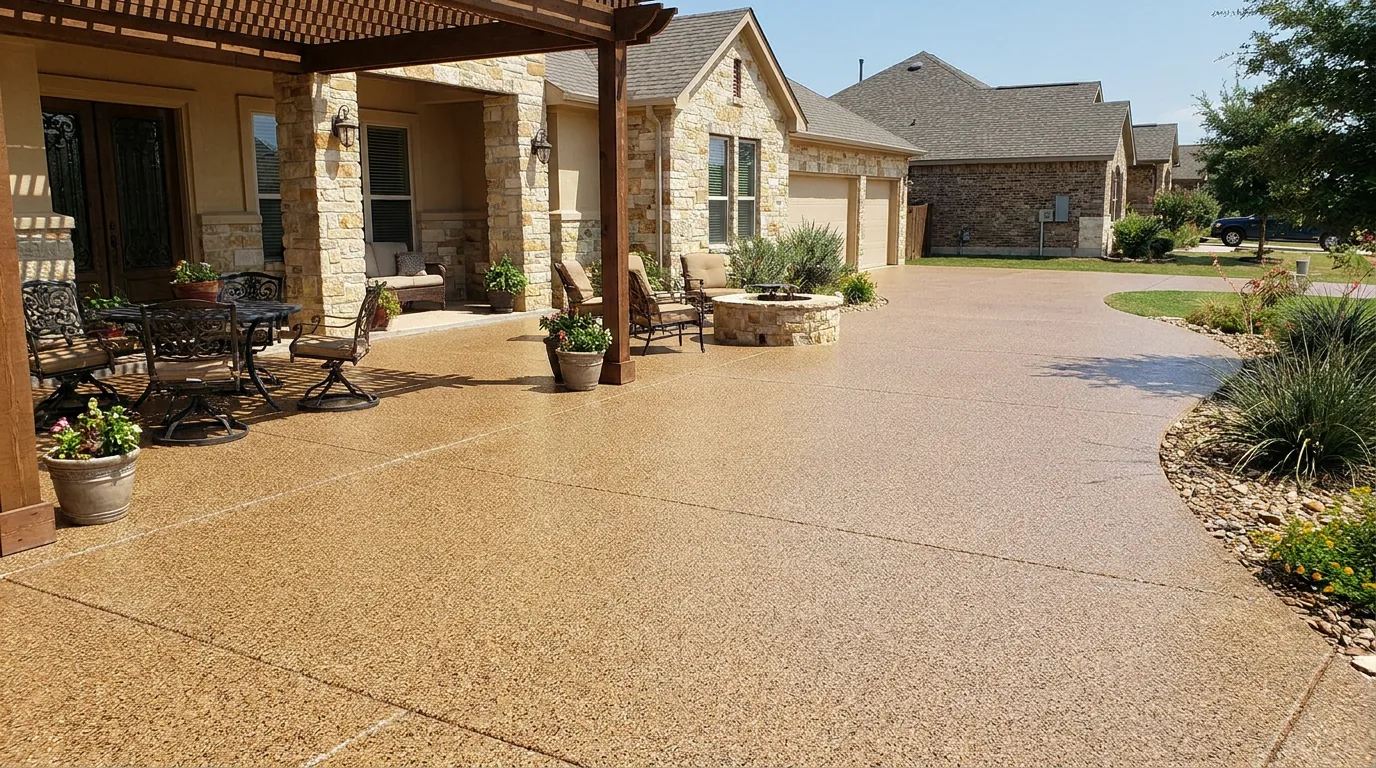
The most popular decorative outdoor coating in San Antonio. A color chip (vinyl chip or quartz chip) is broadcast into the base coat at full saturation, creating a speckled, textured surface that hides minor surface imperfections, provides anti-slip texture, and is virtually maintenance-free. Color options range from earth tones (tan, brown, beige) to contemporary palettes (charcoal and white, slate gray). The chip system is ideal for patios, pool decks, and driveways where the homeowner wants visual interest without the high-maintenance look of a solid-gloss surface.
Quartz Aggregate System
A quartz sand broadcast system provides a more uniform, fine-textured surface than vinyl chips. Popular for pool decks where slip resistance is the primary requirement. The quartz aggregate creates COF values above 0.6 (wet) - significantly safer than bare concrete when wet. Quartz systems are also more resistant to pool chemical splash than many chip systems.
Solid Color with Anti-Slip Topcoat
For homeowners who prefer a cleaner, more contemporary look, a solid color polyaspartic base with an anti-slip additive in the topcoat provides a professional appearance similar to commercial parking surfaces. The most common color choices in San Antonio are medium gray and charcoal - both of which complement the limestone and stucco architecture common in the metro.
Concrete Moisture and Outdoor Slabs
Outdoor concrete slabs in San Antonio sit over the Bexar County clay soil, which retains moisture year-round. Moisture vapor transmitting upward through a slab will blister any coating system that doesn’t allow vapor to pass or include a moisture mitigation barrier. ProEpoxy tests all outdoor slabs before coating using a calcium chloride test or in-situ relative humidity probe (ASTM F2170) to determine whether moisture mitigation is required. Slabs with active moisture transmission above threshold require either a moisture-tolerant primer or mechanical venting before coating - not an additional coat of epoxy on top of the problem.
Driveway-Specific Considerations
Driveways present specific requirements that patios don’t share:
- Vehicle load: Passenger vehicles apply 2,000–3,000 psi point loads at tire contact patches. The coating system must have sufficient compressive strength to resist indentation.
- Oil drips: Engine oil from parked vehicles will eventually contact the driveway coating. The polyaspartic topcoat must be oil-resistant, or small stains will penetrate and become permanent.
- Expansion joints: San Antonio driveway concrete typically includes expansion joints that may need to be filled with semi-rigid polyurea before coating. Rigid epoxy filler in a moving joint will crack - flexible polyurea accommodates thermal movement.
- Garage apron transition: Where the driveway meets the garage floor, the coating system typically changes. ProEpoxy coordinates indoor/outdoor system selection to create a clean visual transition at the garage threshold.
Pool Deck Coatings in San Antonio
Pool deck concrete requires a system specifically resistant to pool chemicals - primarily chlorinated water and pH adjustment chemicals (muriatic acid, sodium carbonate). The coating must also handle the constant wet/dry cycling from bathers exiting the pool. ProEpoxy installs quartz or chip-broadcast polyaspartic systems on San Antonio pool decks specifically formulated for chemical resistance and wet slip safety.
Call (830) 355-3303 or request a free estimate for your patio or driveway. We’ll assess your slab, test for moisture, and recommend the system that holds up through San Antonio’s summers.
Get a Free Quote for Your San Antonio Floor
ProEpoxy installs epoxy, polyaspartic, urethane cement, and polished concrete in the San Antonio metro - using our own crews, not subcontractors. We test every slab before we quote and back our work with a written warranty.
Request Free Estimate →