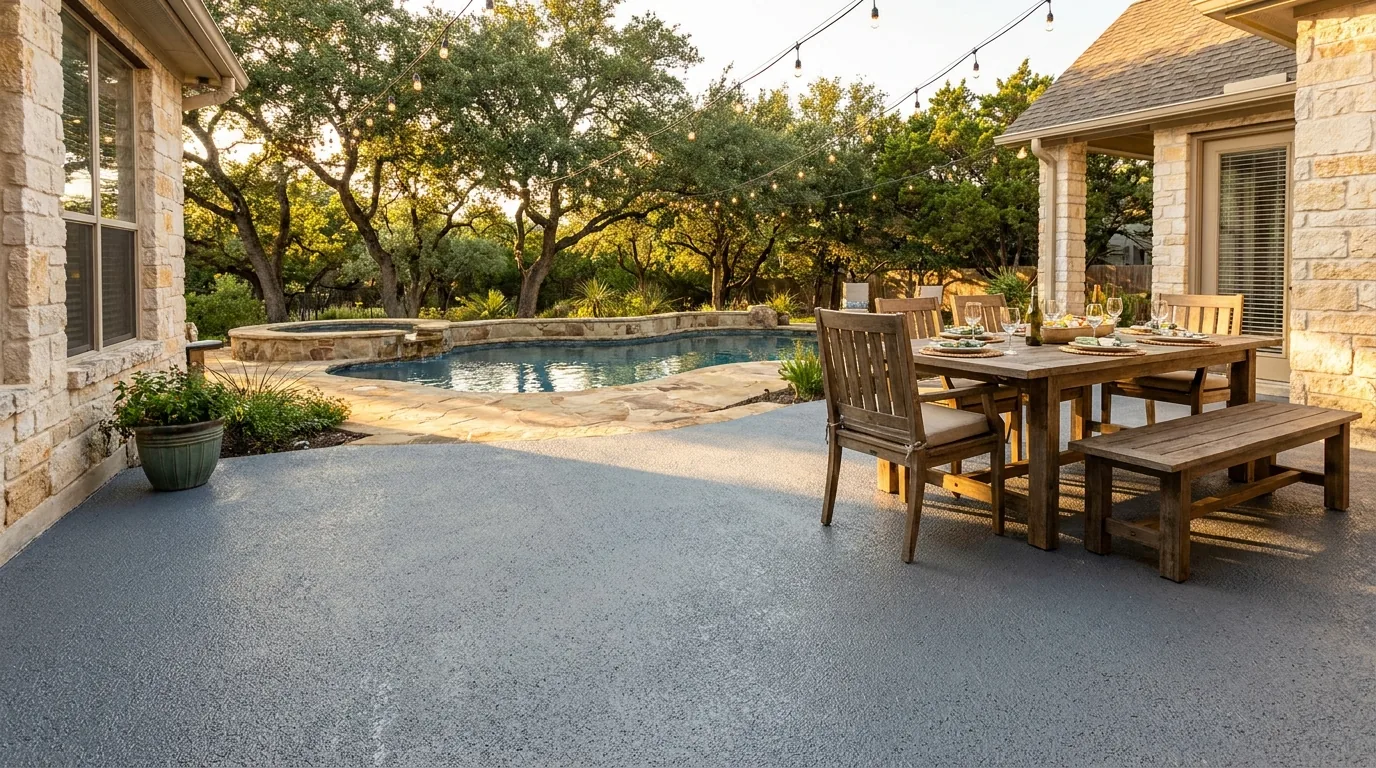
Outdoor epoxy patio coating in San Antonio is one of the most misunderstood applications in the concrete coating industry. The same product that performs for a decade on an indoor garage floor can yellow, blister, and peel within 18 months when exposed to San Antonio's combination of intense UV radiation, extreme surface temperatures, and seasonal moisture cycles. Getting outdoor coating right means choosing chemistry specifically designed for exterior conditions - not just a standard garage epoxy applied outside.
This guide explains why most epoxy fails outdoors, what coating systems actually hold up in Texas conditions, and what realistic lifespans look like for patio and driveway epoxy coating in Bexar County's climate.
Can Standard Epoxy Work Outdoors in San Antonio?
The short answer is no - not for long. Standard epoxy is formulated with aromatic amines and bisphenol-A resins that are not UV-stable. Ultraviolet light breaks down the molecular structure of these resins, causing yellowing (ambering), surface chalking, and eventually brittleness that leads to cracking and delamination.
In San Antonio, this degradation is accelerated by the combination of UV intensity (the city receives over 220 sunny days per year with a UV index regularly hitting 11+ in summer), concrete surface temperatures that can reach 140–160°F in direct afternoon sun, and rapid thermal cycling between daytime highs and nighttime lows.
A standard aromatic epoxy applied to a San Antonio patio in spring will typically begin yellowing by fall, show surface chalking within 18 months, and start delaminating by year two or three. This is not a failure of installation - it is a chemistry mismatch.
Many homeowners and contractors apply standard interior garage epoxy to patios or pool decks. The product looks identical at installation. By the following summer, the difference is obvious. UV-stable coatings cost 20–35% more per gallon but last 3–5x longer in outdoor San Antonio conditions - the math strongly favors the correct product.
UV Degradation Explained
The chemistry distinction that matters for outdoor coatings is aromatic vs. aliphatic:
- Aromatic resins (most standard epoxies) contain benzene ring structures that absorb UV energy and break down. Fast to cure, cheaper, excellent adhesion and chemical resistance - but UV-unstable. Correct for interior use.
- Aliphatic resins (polyaspartic, polyurea, aliphatic polyurethane) lack the UV-absorbing benzene rings. They transmit UV energy rather than absorbing it, so they do not yellow or chalk. More expensive, require more precise application conditions - but mandatory for any exterior coating in San Antonio.
The practical takeaway: the base coat of an outdoor system can be epoxy (for adhesion and build), but the topcoat - the layer that faces the sun - must be an aliphatic product. A polyaspartic coating or aliphatic polyurea coating as the topcoat is what separates a coating that lasts from one that fails.
Best Outdoor Coating Systems for San Antonio Patios
| System | UV Stability | Heat Resistance | Slip Resistance | Lifespan (SA) |
|---|---|---|---|---|
| Epoxy base + aliphatic polyaspartic topcoat | Excellent | Excellent | High (with aggregate) | 8–12 years |
| 100% aliphatic polyurea (2-coat) | Excellent | Excellent | High (with aggregate) | 7–10 years |
| Aromatic epoxy (standard garage) | Poor | Fair | Moderate | 1–3 years |
| Acrylic sealer (penetrating) | Good | Good | Low–moderate | 3–5 years |
Slip Resistance for Pool Decks and Patios
Bare concrete and smooth-coated surfaces become dangerously slippery when wet. A San Antonio pool deck or patio that receives foot traffic during and after rain, pool splashing, or morning dew requires an anti-slip aggregate broadcast into the topcoat while it is still wet.
Common aggregate options and their tradeoffs:
- Aluminum oxide (30–60 grit): Most durable anti-slip medium. Does not polish down over time like sand. Aggressive texture - suitable for pool surrounds and high-traffic wet areas. Harder underfoot on bare skin than sand.
- Silica sand (50–80 mesh): Softer underfoot, slightly less durable than aluminum oxide. Good for entertaining patios where comfort is prioritized. Requires denser broadcast density to maintain traction.
- Polymer grit (shark grip type): Very fine texture, nearly invisible in the finished coating. Lowest slip resistance of the options - suitable for light-traffic covered patios only, not pool decks.
For a pool deck in San Antonio, aluminum oxide at 30–40 grit broadcast at 0.5–1 lb per square foot provides OSHA-compliant wet traction while remaining comfortable for barefoot use.
Concrete Prep for Outdoor Applications
Outdoor concrete prep follows the same core requirements as indoor, with a few additional considerations:
- Existing coating removal: Any previous paint, sealer, or coating must be mechanically removed - shot blasting is preferred for large areas, diamond grinding for smaller patios. Applying new coating over an old failed sealer is the most common reason new outdoor coatings delaminate within months.
- Moisture testing: Shaded patios, patios adjacent to planters or grass, and any concrete over soil (rather than over a crawl space or interior slab) can have significant moisture vapor emissions. Test with ASTM F1869 calcium chloride kits before coating - high vapor rates require a moisture-mitigating primer before the topcoat system.
- Crack repair: Outdoor concrete cracks are common in San Antonio due to caliche soil movement. Fill active cracks with flexible polyurea rather than rigid epoxy paste before applying a topcoat system. Rigid fillers in moving cracks will re-crack and compromise the coating above.
Expected Lifespan for Outdoor Systems in San Antonio
A properly installed epoxy base with aliphatic polyaspartic topcoat should provide 8–12 years of service in San Antonio before the topcoat shows UV degradation requiring a refresh coat. The base coat typically remains intact and well-bonded - only the topcoat needs replacement, which costs significantly less than a full strip and recoat.
Lifespan is extended by:
- Annual pressure washing to remove organic debris, mold, and mildew (common under live oak canopy)
- Avoiding harsh cleaning chemicals (bleach diluted to 10% is acceptable; concentrated acids are not)
- Timely resealing of any edge lifting before water infiltration can undermine adhesion
- Installing shade structures or pergolas that reduce direct UV exposure on the coated surface
Planning an Outdoor Patio Coating?
We'll assess your concrete, test for moisture, and recommend the right UV-stable system for San Antonio's conditions - with realistic lifespan expectations before you commit.
Get a Free Quote