If you're planning to coat your garage floor, you've probably narrowed it down to two main options: a broadcast flake system with colored chips, or a solid color epoxy floor with a clean, uniform look. Both are popular in San Antonio, and both can last for years when installed correctly. But they don't perform the same way once South Texas heat, caliche dust, and daily driving get involved.
This guide breaks down the real differences between epoxy flake vs solid color garage floor systems - not just how they look, but how they actually hold up in a San Antonio garage. By the end, you'll know which finish fits your home, your budget, and how you actually use your garage.
The Two Most Popular Garage Floor Finishes
Walk through any new construction neighborhood from Alamo Ranch to Stone Oak, and you'll see garage floors falling into one of two camps: multi-colored flake floors that hide everything, or smooth, solid-tone floors that look sharp and modern. Both start with the same foundation - a properly prepped concrete slab and a bonded epoxy base coat - but the finish layer is where they diverge.
The right choice comes down to how you'll use the space. A weekend workshop with tools, oil changes, and kids' bikes has different needs than a showroom-style garage for a truck or a classic car. San Antonio's climate adds another layer to the decision, since UV exposure, heat cycling, and dust are more aggressive here than in cooler, cloudier parts of the country.
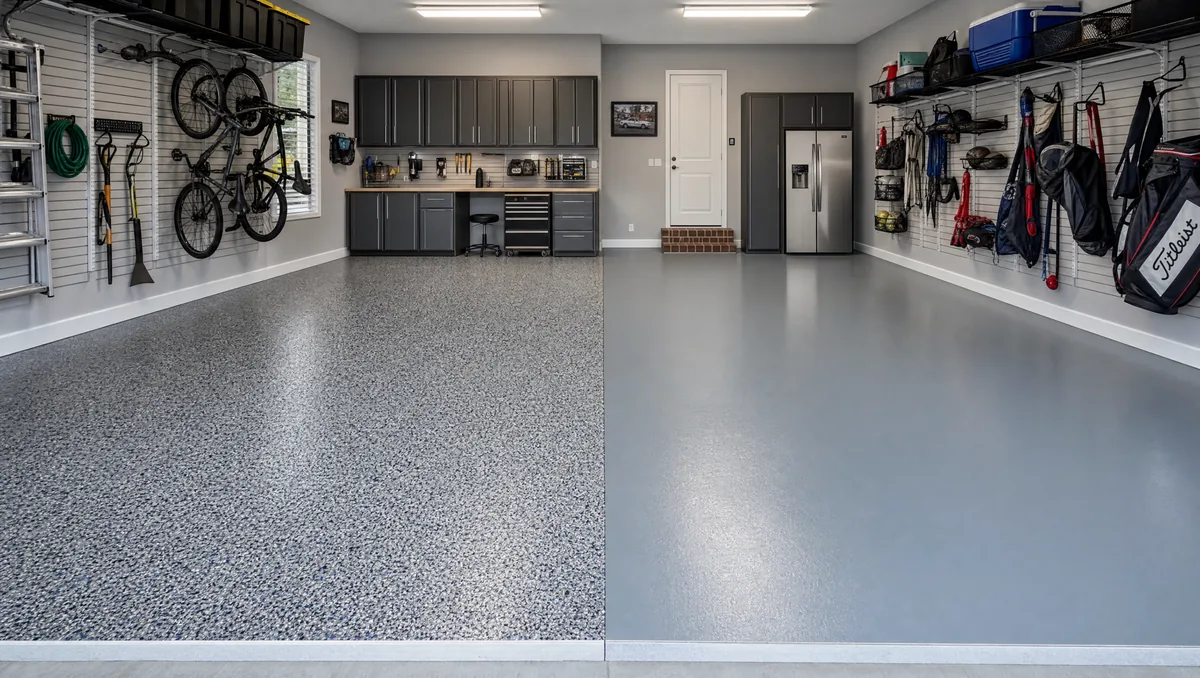
What Is a Broadcast Chip (Flake) System?
A broadcast flake floor starts with a pigmented epoxy base coat. While that base is still wet, vinyl color chips are broadcast across the entire surface - either lightly for a speckled look or to full saturation for a stone-like, textured appearance. Once the chips cure in place, the floor gets one or two coats of clear topcoat, usually a polyaspartic or polyurethane, to lock everything down and add durability.
Flake systems come in dozens of color blends, from neutral grays and tans that match Texas Hill Country stone to bold blends that match a favorite team or brand color. The texture created by the chips also adds a small amount of surface grip, which matters more than most homeowners expect.
This is the system used in most of our epoxy flake flooring San Antonio installs, because it's forgiving, durable, and hides the everyday mess that comes with a working garage.
What Is a Solid Color Epoxy System?
A solid color epoxy floor skips the chip layer entirely. It's a pigmented base coat - gray, tan, charcoal, forest green, or almost any custom color - finished with a clear topcoat for gloss and protection. The result is a smooth, uniform surface with a clean, almost polished-concrete look.
Solid color floors are popular for garages that double as living or entertaining space, home gyms, or showroom setups where the goal is a crisp, monochrome background rather than a busy pattern. Many of our epoxy garage floor San Antonio clients choose solid color when the priority is visual simplicity over camouflage.
Head-to-Head: How Each Finish Performs
Here's how the two systems compare across the factors that matter most for a San Antonio garage.
| Category | Epoxy Flake System | Solid Color System |
|---|---|---|
| Slip Resistance | Better out of the box - chip texture adds grip, especially with an anti-slip additive in topcoat | Smoother surface; needs an additive in topcoat to match flake's traction |
| Hiding Dirt & Dust | Excellent - variegated color pattern camouflages caliche dust, tire marks, and everyday grime | Shows dust, footprints, and tire residue more readily, especially in darker tones |
| Scratch Resistance | Very good - texture and multi-tone pattern disguise light scuffs and hairline scratches | Scratches and swirl marks are more visible against a flat, single-tone background |
| UV Fading | Minimal visible fading - color variation masks gradual changes over time | Fading is more noticeable, particularly with darker pigments near the garage door |
| Repairability | Patch repairs blend in fairly well thanks to the mixed color pattern | Harder to color-match perfectly on a single, flat tone after aging |
| Cost | Slightly higher due to extra broadcast step and material | Generally more affordable; simpler application process |
Slip Resistance
South Texas garages deal with sudden downpours tracked in on tires and shoes, plus the occasional hose-down after yard work. The texture from broadcast chips gives a flake floor a natural grip advantage. Solid color floors can match that performance, but only if an anti-slip aggregate is added to the topcoat - otherwise a glossy solid floor can get slick when wet.
Hiding Dirt
This is where flake systems really separate themselves. San Antonio's caliche soil creates a fine, chalky dust that settles on everything, and daily driving tracks in road grime year-round. A flake floor's broken color pattern hides that dust between cleanings far better than a solid color, which shows every footprint and tire mark almost immediately - especially in darker shades.
Scratch Resistance
Neither system is scratch-proof, since the topcoat (not the color layer) determines actual durability. But cosmetically, flake floors hide the evidence of daily wear - dragged toolboxes, dropped wrenches, bike kickstands - much better than a solid color floor, where every scuff stands out against the flat tone.
UV Fading
Garage doors facing south or west in San Antonio take a real beating from UV exposure, especially in summer when the door is open for hours during yard work or projects. Polyaspartic topcoats resist yellowing well, but solid color floors still show fading more obviously over years of sun exposure than a flake floor's multi-tone pattern, which masks gradual color shift.
Repairability
If you ever need to patch a chipped corner or a cracked control joint, a flake floor is easier to touch up invisibly because the mixed color pattern hides small inconsistencies. Matching a solid color patch to a floor that's aged a few years in Texas sun is more difficult, and a slight mismatch is easier to spot.
Cost
Solid color epoxy is typically the more budget-friendly option since it skips the broadcast step and uses less material overall. Flake systems cost a bit more upfront but often pay that back in reduced visible wear and a longer-looking "like-new" appearance between deep cleanings.
Which Finish Do Most San Antonio Homeowners Choose?
In our experience, the majority of San Antonio homeowners go with a flake system for their primary garage - particularly if the garage is used for parking, storage, yard equipment, or DIY projects. The practical benefits of hiding dust and dirt tend to outweigh the extra cost for a space that sees daily traffic.
Solid color floors are more common in secondary spaces: home gyms, workshops converted from a garage, or show garages where a single truck or car is the centerpiece and the owner is committed to regular cleaning. Homeowners going for a specific brand color, a minimalist aesthetic, or coordinating with an epoxy accent wall also tend to lean solid.
If durability and long-term appearance under daily use are the priority, flake wins for most families. If a clean, modern look matters more than hiding dust, solid color is a strong choice - especially when paired with a durable polyaspartic floor coating in San Antonio, which adds scratch and UV resistance to either system.
Making the Final Decision
Ask yourself these questions before choosing:
- How is the garage actually used? Daily parking and yard equipment favor flake. A dedicated gym or show space can handle solid color.
- How often will you clean it? Solid color floors look best with more frequent sweeping and mopping. Flake floors are more forgiving between cleanings.
- What's your budget? Solid color is typically the more economical option if cost is the deciding factor.
- What's your design goal? Flake gives texture and camouflage. Solid color gives a sleek, uniform surface.
- How much direct sun does the garage door area get? Heavy UV exposure favors flake's fade-masking pattern, especially on south- or west-facing garages.
There's no universally "better" option - only the better fit for your household, your garage's daily use, and how much maintenance you're willing to do.
The Bottom Line
Both epoxy flake and solid color garage floors can deliver a durable, attractive finish in a San Antonio home - the real difference is how each one performs against dust, sun, and daily wear over time. Flake systems generally win on hiding dirt, disguising scratches, and masking UV fading, making them the go-to choice for busy, daily-use garages. Solid color systems win on cost and a clean, modern look, and shine in lower-traffic or showroom spaces.
Still not sure which finish is right for your garage? Our team has installed both systems across San Antonio and can walk your space, talk through how you actually use your garage, and recommend the finish that will hold up best for your home.
Get a Free Estimate - See Both Finishes in Person
We bring samples of flake blends and solid color options to your home so you can compare them in your actual lighting and space before committing. No sales pressure, just an honest recommendation.
Schedule Your Free Quote →