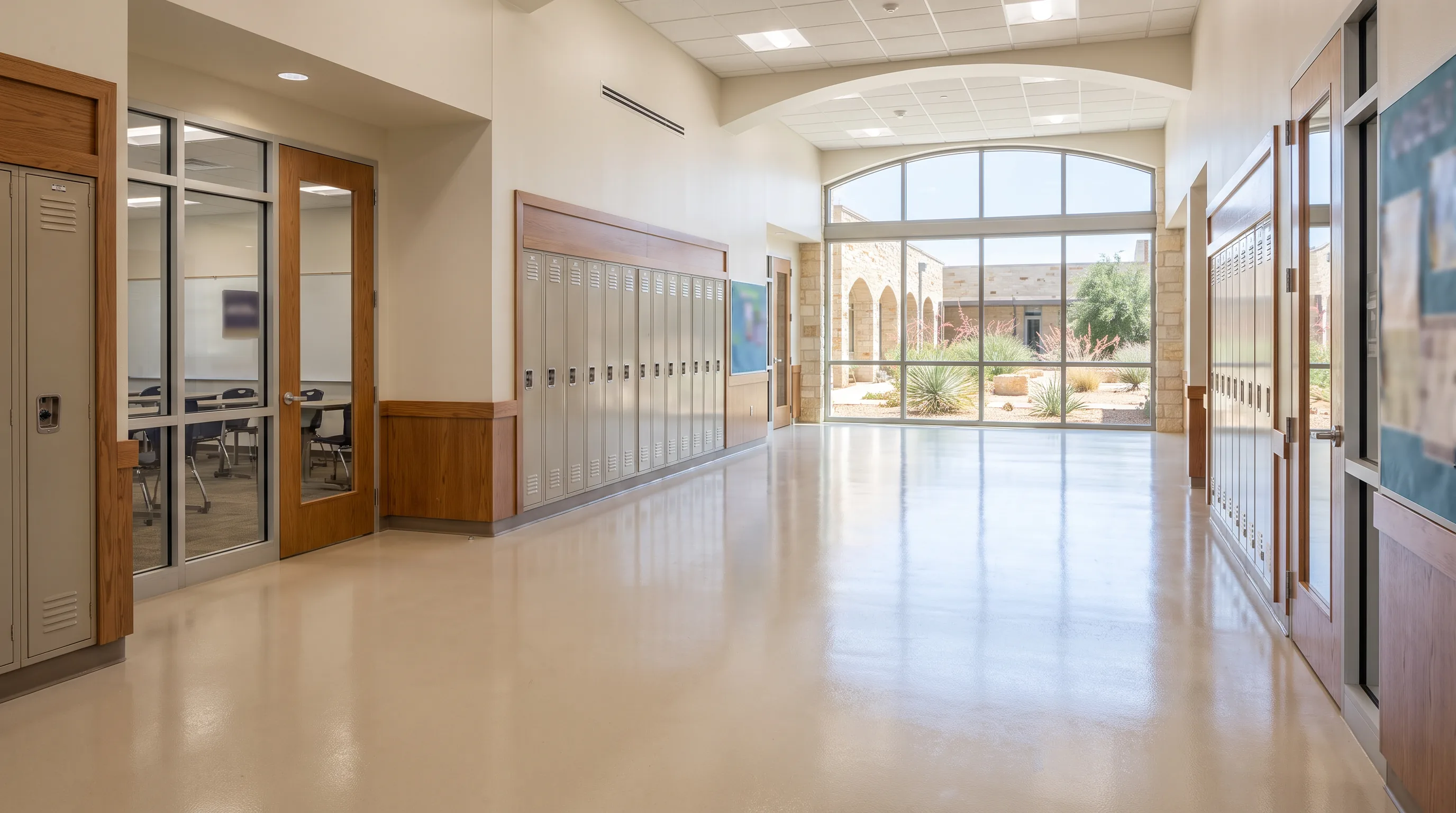
University buildings put a wider mix of flooring demands under one roof than almost any other facility type - labs with chemical exposure, hallways with constant foot traffic between classes, and cafeterias with the same spill-and-sanitation profile as a restaurant kitchen. San Antonio campus facilities teams have increasingly standardized on epoxy across these spaces because it's one of the few systems that performs across all three environments without switching materials room to room.
Why University Buildings Need a Different Approach Than Standard Commercial Flooring
A typical office building has one flooring problem to solve. A university academic building has three or four running simultaneously across different floors of the same structure, and the flooring spec has to account for all of them without creating a patchwork of incompatible materials and maintenance schedules.
Flooring Requirements by Space Type
| Space Type | Primary Requirement | Recommended Epoxy Spec |
|---|---|---|
| Chemistry & science labs | Chemical resistance | Chemical-resistant epoxy, coved base |
| Hallways & corridors | High foot traffic durability | Standard epoxy, abrasion-resistant topcoat |
| Cafeterias & dining halls | Sanitation, spill resistance | Slip-resistant epoxy, seamless to walls |
| Lecture halls | Moderate traffic, aesthetics | Standard epoxy, design-forward finish |
| Maintenance & mechanical rooms | Heavy equipment, chemical exposure | Industrial-grade epoxy |
Lab Floors: Chemical Resistance Comes First
Science and engineering labs on a university campus deal with acids, solvents, and reagents that degrade standard building materials over time. A properly specified lab-grade epoxy floor resists chemical spills without discoloring or breaking down, and a coved base eliminates the wall-floor seam where spilled chemicals can pool and seep into the substrate.
Hallways: Built for Constant Traffic Between Classes
University corridors take a beating that most commercial hallways never see - thousands of students moving between classes multiple times a day, rolling backpacks, and equipment carts for facilities and events. Standard epoxy with an abrasion-resistant topcoat holds up to this volume far longer than VCT or carpet, both of which show wear patterns within a few years under the same traffic.
Planning a Campus Flooring Project in San Antonio?
We spec epoxy systems by space type - labs, hallways, and cafeterias - so your building gets the right performance in every room, not a one-size-fits-all floor.
Get a Free QuoteCafeterias: Sanitation Meets High Volume
A university dining hall runs on the same sanitation logic as a commercial kitchen - constant spills, daily cleaning, and health code inspection standards - but with significantly higher foot traffic during meal rushes. Seamless, slip-resistant epoxy handles both demands: no grout lines to trap food debris, and a textured finish that stays safe when wet from spills or mopping.
Working Around an Academic Calendar
Campus flooring projects are almost always scheduled around breaks - summer, winter, or spring recess - to avoid disrupting classes and student life. Larger multi-building projects are frequently phased across several break periods rather than attempted in a single window, which requires coordinating install schedules well in advance with facilities management.