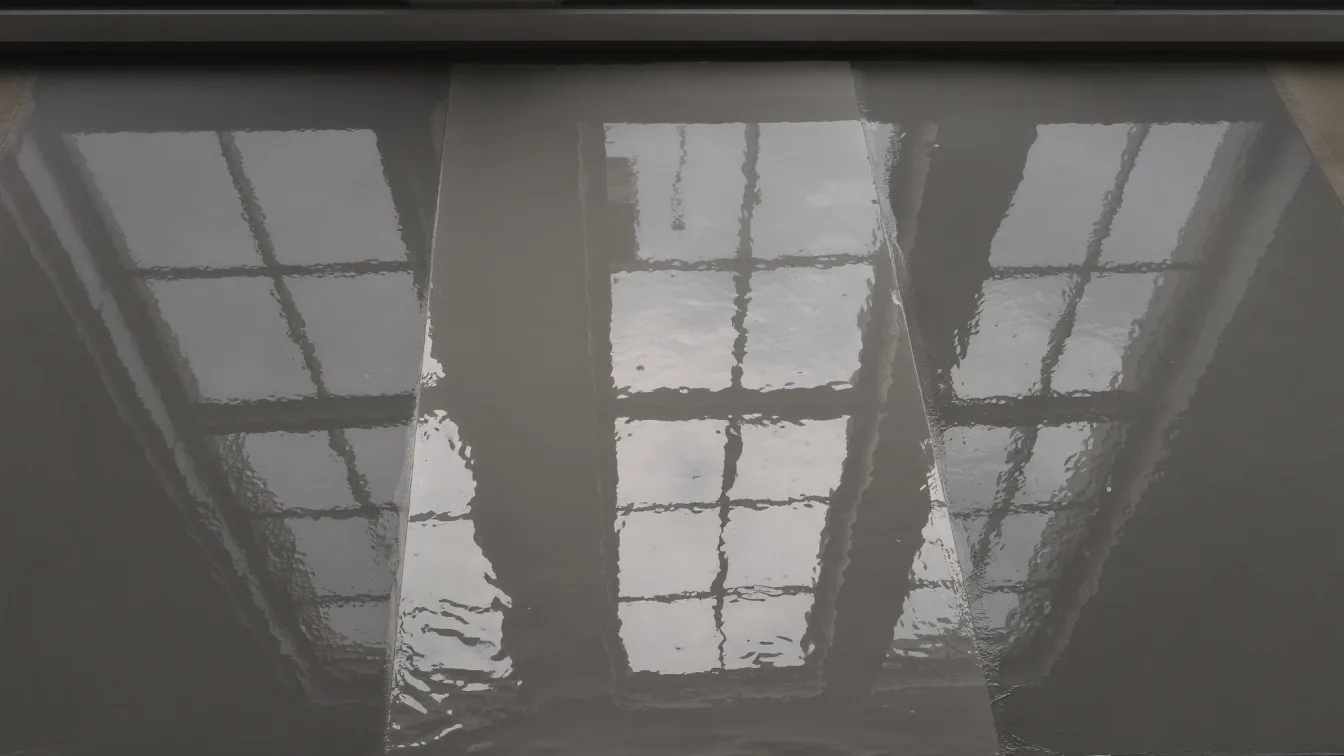
Gloss is a maintenance decision before it is a taste one. A high gloss floor reflects light and looks deep, but it shows scratches, dust and tire marks more readily. Satin and matte hide wear and stay looking consistent between cleanings. Whichever level you pick, it is set in the final layer of an epoxy floor coating in San Antonio, so it is one of the cheapest decisions to get right on the quote and one of the more reversible ones later.
Quick answer: gloss is a maintenance decision before it is a taste one
Most people choose a sheen by holding up a sample and asking which one looks better. That is a fair starting point, but it is the wrong place to finish, because a floor is looked at for five minutes in a showroom and lived on for fifteen years. The sheen you choose decides how often scratches, dust, tire marks and footprints catch your eye, and how much cleaning it takes to keep the floor looking the way it did on the day it was installed.
The short version of this guide is below. Each point is covered in its own section, with the numbers behind it.
- High gloss: the deepest color and the brightest room, with the least forgiving surface. Every mark reads clearly, and a wet high gloss floor is the most slippery of the three.
- Satin: a soft sheen that still looks finished. It hides most scratches and dust while remaining easy to clean, which is why it is the usual commercial choice.
- Matte: the most forgiving surface for scratches and dust, with some loss of color depth and a slightly harder clean in oily areas.
- Texture: anti-slip aggregate is a separate decision from sheen. You can add it to any of the three, and it changes how the floor looks and cleans.
- Glare: in a San Antonio room with big south or west facing glass, the sheen decides whether the floor is comfortable to look at for an afternoon.
This guide is about sheen as a performance choice. If you are still deciding on color, our guide to epoxy garage floor colors covers hue, and the comparison of epoxy top coats covers the chemistry of the layer that carries the sheen. Here we stay on what each level looks like and how it behaves in use.
How gloss is measured and what the numbers mean
Gloss is measured with a gloss meter, which shines a beam of light at the surface and reads how much comes straight back. The reading is reported in gloss units, or GU, and the angle of the beam matters. Coatings are most often read at 60 degrees, the geometry described in ASTM D523 for specular gloss. A surface that bounces nearly all of the beam back scores high, and a surface that scatters it scores low.
The ranges below are typical for coatings and are used here to compare levels, not as a guarantee. Manufacturers draw the lines in slightly different places, so always ask for the number on the data sheet for the exact product going on your floor.
- Matte or flat: usually below about 20 GU at 60 degrees. The surface scatters light so widely that you see color rather than reflection.
- Satin or low sheen: roughly 20 to 60 GU. You see a soft reflection of bright objects, but not a sharp image of them.
- Gloss: roughly 60 to 80 GU, with a clear reflection of windows and lights.
- High gloss: above about 80 GU, a mirror-like finish where overhead fixtures show as crisp shapes on the floor.
Two things make these numbers more useful than the words. First, a number lets you hold two quotes side by side. "Satin" from one installer may be 35 GU and from another 55 GU, which look different in person. Second, the number tells you how much of the room's light the floor is going to throw back at you, which is what the glare section later in this guide is about.
It also helps to know what a gloss reading does not tell you. It does not measure slip resistance, and it does not measure how well the film resists abrasion. A low gloss number can come from a matting agent mixed into the top coat, or from a texture added to the surface, and those two behave quite differently underfoot. A matte finish produced with a fine matting agent can still be smooth and slippery when wet, while a gritty texture will read as low gloss simply because it scatters light.
High gloss: the look, the glare and the upkeep
High gloss gives the deepest color and the most light, and it is also the finish that shows the most. The glassy surface makes a gray floor look wet and saturated, makes a garage look brighter and makes a showroom look expensive. The same optical behavior is the reason a thin scratch, a patch of dust or a hot tire mark stands out against it.
What high gloss shows
A scratch in a cured coating is a small trough that scatters light differently from the surrounding film. On a mirror-like surface the eye catches that difference immediately, because the area around it is reflecting so cleanly. Dust is similar. A fine layer of concrete or road dust breaks up the reflection, and a high gloss floor looks dirty within a day of sweeping in a way a matte floor does not.
In a San Antonio garage the most common complaint is hot tire pickup and the pale film left by water drying on the surface. Summer slab temperatures run high, and tires leave a visible smudge on a very smooth surface. A quality top coat resists the marking, but the smudge still shows against a deep gloss.
What high gloss does well
High gloss is the easiest of the three to wipe clean, because there is almost no surface texture holding soil. A mop or a microfiber pad lifts a spill from a high gloss floor in one pass. It also raises the apparent brightness of a room, which can allow fewer fixtures in a dim workshop, and it suits showrooms and display areas where the floor is meant to be part of the presentation.
The trade is that the floor needs more frequent cleaning to look right, and it needs a plan for slip resistance where it gets wet. Those two costs are the reason many owners start with a high gloss sample and end up choosing satin.
Satin: the middle ground most commercial spaces choose
Satin is the sheen that most commercial floors end up with, because it reads as finished without demanding constant attention. A satin top coat sits in the middle of the gloss range, so it still gives color depth and a gentle reflection of the room, while scattering enough light that scratches and dust lose most of their contrast.
Why satin earns its popularity
Think of a retail unit, a clinic corridor or a warehouse office. Floors like these are walked on constantly, cleaned on a schedule rather than continuously, and judged by customers and staff who notice a worn or dirty look. Satin gives the owner an extra margin. A day's foot traffic does not leave the floor looking tired, and a cleaning visit that runs a few days late is not obvious to anyone.
Satin also pairs well with decorative systems. A flake or quartz broadcast already has a lot of visual texture, and a satin top coat lets the flake show without throwing sharp reflections that compete with it. If you are weighing a broadcast system, our guide to flake chip size and color blends shows how the blend and the sheen work together.
What satin costs you
Satin gives up a little of the depth of high gloss, so a deep solid color looks slightly softer than it does on a glossy sample. It also holds a little more soil than gloss does, because the surface is not quite as smooth, though the difference in routine cleaning is small. For most owners those are acceptable trades for a floor that looks the same in month eighteen as it did in month one.
Matte: hiding scratches and dust, losing depth
Matte hides wear better than the other two. A matte surface scatters light in every direction, so a scratch, a scuff or a layer of dust barely changes how the surface looks. That makes matte the forgiving choice for floors that take hard use, such as a shop where tools are dropped and steel-toe boots drag, or a garage with a vehicle driven in daily on gritty tires.
The depth you give up
The cost of matte is color richness. Because the surface does not reflect, a dark gray looks flatter and a bright color looks chalkier than it does under a gloss top coat. Some owners like this, since it gives a calm, concrete-like look. Others feel a matte epoxy no longer looks like a coating at all, and that is a matter of taste you can test with a sample.
Cleaning a matte floor
Matte floors hide dust, but they do hold oil and rubber marks a little more than a glossy surface, because the micro-texture that scatters light also catches soil. In an oily workshop that means a degreasing cleaner and a soft brush instead of a quick mop. In a dry storage space it makes almost no difference. The practical rule is to match the sheen to the way the floor is cleaned: if the floor is cleaned rarely and by whoever has time, a lower sheen will look better between cleanings.
A word on how matte is achieved. A matting agent is added to the top coat, and it does not weaken the resin underneath. The abrasion resistance of the system comes from the film build and the top coat chemistry, not from the sheen. If you are comparing top coats for durability, the sheen is a separate choice, and the top coat comparison explains how the chemistries differ in abrasion, UV and chemical resistance.
Textured and anti-slip finishes as a separate axis
Texture is a separate decision from gloss, and it matters most where floors get wet. Sheen describes how the surface reflects light. Texture describes how the surface grips a shoe, and you can combine them in any way: a gloss floor with fine aggregate, a matte floor with none, or a satin floor with a heavy grit in a wash bay.
Slip resistance on interior floors is usually judged by dynamic coefficient of friction, tested to ANSI A326.3 and often reported as DCOF. A reading of 0.42 or higher is the figure commonly cited for level interior surfaces that may be walked on wet. Smooth gloss usually sits lower on that scale when wet, because the film is smooth and water sits on top of it, while a matte or textured surface gives the shoe something to bite into. ASTM C1028 is an older static coefficient method you will still see quoted on some data sheets, and it is worth asking which test a number came from.
- Fine aggregate in the top coat: a light grip for entries, ramps and bathrooms. It lowers the apparent gloss and gives a slightly sandy feel.
- Medium broadcast aggregate: for wash bays, loading areas and any floor that is wet during normal use.
- No aggregate: fine for dry interiors where the floor is kept clean and the owner accepts the lower wet traction of a smooth surface.
Aggregate has an appearance cost, and it also has a cleaning cost. A textured surface holds soil, and it is harder to mop than a smooth one. If you have ever wondered why a coated floor feels gritty, our explanation of rough and sandy epoxy textures separates intentional aggregate from a coating problem. As a rule of thumb, add texture where the floor will be wet and leave it off where it will not.
Comparison table: sheen against scratch visibility, dust visibility, slip, cleaning effort
The table below compares the three sheens across the four things owners ask about most. The gloss unit ranges are typical figures at 60 degrees. Treat the ratings as relative: they rank the three against each other, and the real behavior of a floor also depends on the color you choose, since a dark color shows marks more than a light one.
| Property | High gloss | Satin | Matte |
|---|---|---|---|
| Typical gloss at 60 degrees | Above about 80 GU | About 20 to 60 GU | Below about 20 GU |
| Scratch visibility | Highest | Moderate | Lowest |
| Dust and footprint visibility | Highest | Moderate | Lowest |
| Tire marks and scuffs | Show clearly | Partly hidden | Mostly hidden |
| Wet slip tendency (smooth film) | Highest | Moderate | Lower, but not slip-proof |
| Cleaning effort per wipe | Lowest | Low | Moderate in oily areas |
| Cleaning frequency to look good | Highest | Moderate | Lowest |
| Color depth | Deepest | Good | Flatter |
| Glare in strong sun | Highest | Moderate | Lowest |
Read the table from the row that worries you most. If it is how the floor looks on an ordinary Thursday, follow the dust and scratch rows toward satin or matte. If it is how fast a spill can be cleaned up in a busy kitchen, follow the cleaning row toward gloss, and handle the slip row with aggregate. If the floor is in a polished showroom and the owner wants the reflection, high gloss is a deliberate choice and the maintenance plan should account for it. For concrete that is polished rather than coated, the sheen scale works differently, and our guide to polished concrete levels explains how grind steps produce each reflectivity.
Glare in a south or west facing San Antonio space
In a room with large south or west facing glass, a high gloss floor can be uncomfortable to look at for hours at a time. San Antonio sits at roughly 29 degrees north, so the midday summer sun is nearly overhead, while the winter sun stays low and enters a south-facing window at a shallow angle. Low sun at a shallow angle is exactly the geometry that throws a bright, long reflection across a smooth floor. West-facing glass does the same in the late afternoon in every season.
The effect is easy to underestimate on a sample board, because a small sample does not show you the reflection of a whole window. Look at a larger test area in the actual room, at the time of day the glare is worst, before you decide.
Where glare matters most
- Garages with a west-facing door: an open door in the afternoon puts a bright reflection of the driveway and the sky onto a gloss floor, which makes it harder to see in the shadows beside it.
- Offices and clinics with a glass front: staff working at a desk near a window can find a gloss floor tiring, and a satin finish solves it without making the room dim.
- Showrooms and retail: glare can wash out products near the glass, so many retailers choose satin on the sunlit side and a higher sheen farther in.
- Warehouses with dock doors: forklift drivers moving from a bright dock into a shaded aisle benefit from a lower sheen, which keeps the floor visible across the change in light.
Sheen can also change across a building. Nothing stops you from using satin near the glass and a different level elsewhere, though a clean break between two sheens needs to land on a natural boundary such as a door line, not in the middle of a room.
Choosing a sheen and getting it on the quote
A reliable way to choose a sheen is to match it to the way the floor will be used and cleaned, then check it in the room itself. A short checklist makes the decision easier.
- Ask how often the floor is cleaned. A floor cleaned daily can carry gloss. A floor cleaned monthly will look better in satin or matte.
- Ask what lands on it. Gritty tires, dropped tools and dragged boots point to a lower sheen. Clean foot traffic and display use point higher.
- Ask whether it gets wet. Wet areas need aggregate whatever the sheen, and the quote should say which aggregate and how coarse.
- Ask where the light comes from. Large south or west glass favors satin or matte.
- Ask for a larger sample in your room. A palm-sized chip hides most of what a full floor will show.
On the quote itself, write down the sheen as a number rather than a word, name the product, and record any aggregate added. That removes the guesswork if two installers quote the same floor, and it gives you something to hold the installer to. Slab preparation and moisture testing sit under every sheen and are written up on the same document, using the standards our crews work to: ICRI 310.2R for surface profile, ASTM F1869 or F2170 for moisture, and ASTM D4541 where pull-off adhesion is specified. Sheen sits on top of all of that and does not replace any of it.
Because sheen lives in the final layer, it is also one of the more forgiving decisions in a floor specification. If you choose gloss and later wish it were satin, the top coat can be abraded and replaced without redoing the system underneath. That makes it a safer choice than color in a decorative system, where the color is broadcast into the body of the floor. A recoat is still a job with a cost, so the aim is to choose well the first time, but a wrong sheen is a smaller mistake than a wrong slab preparation.
If you are comparing sheens for a garage, workshop or commercial floor, call (830) 355-3303 for a free on-site measure and written quote. We bring physical samples in each sheen, put them down in your space at the time of day the light is strongest, and write the gloss level and any aggregate into the quote so you can see what you are buying.
Frequently asked questions
Should an epoxy floor be glossy or matte?
Gloss gives depth and reflects light, which makes a space feel brighter but shows scratches, dust and tire marks more readily. Matte and satin hide wear and are easier to keep looking consistent. Choose gloss when the floor is cleaned often and displayed, and choose satin or matte when it takes hard daily use.
Does a matte epoxy floor hide scratches better?
Yes. Scratches are visible largely because they scatter light differently from the surrounding surface, so a lower sheen reduces the contrast and the damage reads less obviously. A matte floor still scratches in the same way as a glossy one. It simply shows the damage far less to the eye.
Is a glossy epoxy floor more slippery?
When wet, generally yes, because gloss and smoothness usually go together. Anti-slip aggregate can be added to a gloss finish, though it changes the appearance. For wet areas, ask for a slip rating measured to ANSI A326.3 rather than relying on the sheen name alone.
Which sheen is easiest to clean?
Gloss wipes cleanest because there is less surface texture holding soil, but it also shows every mark between cleanings. Satin is the common compromise for spaces that cannot be cleaned constantly. Matte hides dust best, though oily areas need a degreasing cleaner and a soft brush to lift residue.
Can the gloss level be changed later?
Yes, by abrading and applying a different top coat. Sheen lives in the final layer, which makes it one of the more reversible decisions in a floor specification. The system underneath stays in place, so the work is a recoat rather than a full replacement, and it is best scheduled when the existing top coat is due for refresh.