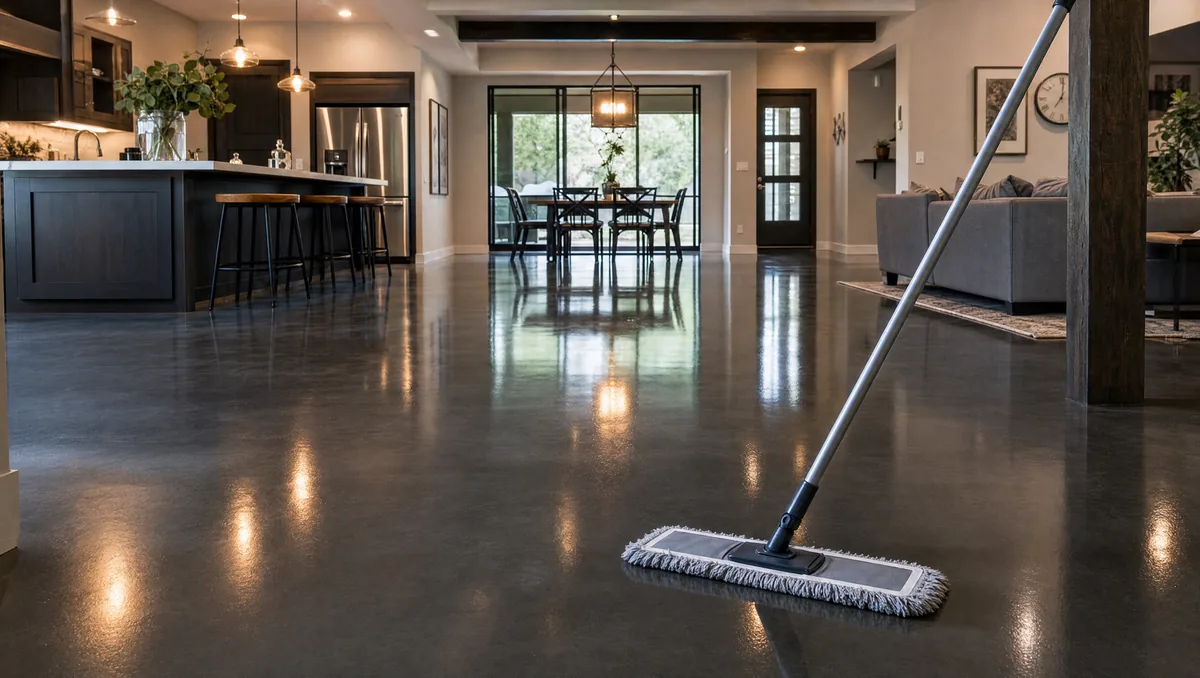
Good News: Epoxy Floors Are Easy to Maintain
One of the most common surprises for new epoxy floor owners in San Antonio is how simple the maintenance routine actually is. Unlike bare concrete - which absorbs oil, stains easily, and dusts constantly - a properly installed epoxy system with a polyaspartic topcoat is sealed, non-porous, and highly resistant to the things that typically destroy garage and commercial floors. The key is knowing what's safe to use and what quietly damages the topcoat over months and years.
This guide covers the full maintenance picture: daily care, product safety, Texas-specific seasonal concerns, and the resealing schedule that keeps your ProEpoxy floor performing for its full 15–20 year lifespan.
The Daily Routine: Keep It Simple
Dry Sweeping First
The most common source of surface scratching on epoxy floors isn't chemicals - it's grit. Sand, small gravel, and concrete dust tracked in from outside act like sandpaper underfoot. A quick dry sweep with a soft-bristle broom or microfiber dust mop every few days keeps abrasive particles from accumulating. In a garage, this matters even more after the Texas summer dust storms that roll through the Hill Country.
Damp Mopping for Deeper Cleaning
For regular cleaning beyond sweeping, a damp mop with warm water and a few drops of a pH-neutral floor cleaner is all you need. Diluted Simple Green (not the concentrated industrial version) works well. So does diluted dish soap at about one tablespoon per gallon of water. Wring the mop well so you're working damp, not wet - standing water isn't harmful on a well-sealed floor, but avoiding puddles is good practice near garage door seams where water can wick under.
Safe Cleaners vs. Harmful Ones
Not all cleaners are safe for epoxy topcoats. The wrong products won't cause immediate visible damage, but they'll degrade the topcoat chemistry over time, dulling the gloss and eventually breaking down the protective layer.
Cleaners to Avoid
- Bleach at full strength: Diluted bleach (1 part bleach to 10 parts water) is occasionally fine for disinfecting, but full-strength or frequent bleach use degrades polyaspartic topcoats over time and can cause uneven color changes in chip systems.
- Citrus-based degreasers: Products like Orange Glo or citrus-forward engine degreasers are acidic and can etch and dull the topcoat with repeated use. Use a purpose-formulated epoxy-safe degreaser for oil and grease instead.
- Vinegar or vinegar-based cleaners: Acetic acid is particularly harsh on polyaspartic topcoats. Despite being popular as a "natural" cleaner, vinegar will slowly strip the sheen from a polyaspartic finish - don't use it.
- Soap-based cleaners that leave residue: Some floor soaps create a soapy buildup that makes the floor look hazy and slippery. Rinse thoroughly if you use any soap-based product.
Safe Cleaning Products
- pH-neutral multi-surface cleaners (Simple Green diluted, Zep Neutral Floor Cleaner)
- Diluted dish soap (small amount in warm water, rinsed well)
- Manufacturer-recommended epoxy floor cleaners - ask ProEpoxy at installation for our current recommendation
Mat Placement at Garage Entry
Place a commercial-grade mat or thick rubber threshold mat just inside your garage door. This catches the heavy grit load that comes in on tires and shoes. In San Antonio, limestone gravel from driveways and caliche dust are particular culprits - both are abrasive enough to scratch topcoats under heavy foot or rolling traffic. A good mat doesn't have to be large; 24–36 inches deep just inside the door is usually enough to capture the worst of it.
Texas Heat, UV Exposure, and Why Topcoat Chemistry Matters
San Antonio averages 220+ sunny days per year. South- and west-facing garages see intense direct sun through the door during afternoon hours. Standard epoxy topcoats (aromatic chemistry) are not UV-stable - they yellow, chalk, and lose gloss within one to two seasons under direct Texas sun. This is why ProEpoxy specifies aliphatic polyaspartic topcoats on every residential and commercial installation. Polyaspartic topcoats are UV-stable: they maintain color and gloss even with years of direct sun exposure.
If your current floor has a yellowing or chalking topcoat, that's a sign the original installation used standard aromatic epoxy as the topcoat, not aliphatic polyaspartic. It can be addressed with a topcoat refresh - see the resealing section below.
Resealing Schedule
Even the best topcoat eventually wears from traffic, cleaning, and UV exposure. The good news is that resealing - applying a fresh topcoat layer - is far less expensive than a full reinstallation and can be done without disturbing the base system if the underlying coating is still well-bonded.
- Interior residential floors (garage, basement, shop): Plan for a topcoat refresh every 5–7 years under normal residential use. High-traffic interiors may need attention at 4–5 years.
- Exterior surfaces (patios, pool decks, driveways): Texas UV and freeze-thaw cycles on exterior slabs are harder on topcoats. Plan for resealing every 2–4 years depending on sun exposure and use.
- Commercial floors: Varies significantly by traffic volume. A light-use commercial office may go 5+ years; a busy warehouse or shop floor may need attention at 2–3 years.
Signs the Topcoat Needs Refreshing
You don't need to stick rigidly to a calendar - let the floor tell you when it's ready. Watch for: noticeably reduced gloss even after cleaning, fine surface scratches that don't buff out, a hazy or milky appearance in high-traffic zones, or water no longer beading on the surface. These are all signs the topcoat has worn through its protective depth and a reseal is due. Catching it at this stage costs far less than waiting until the base coat is exposed and damaged.
What Voids the Warranty
ProEpoxy's written warranty covers delamination, peeling, and topcoat failure under normal use. Three things void it:
- DIY re-coating: Applying a store-bought epoxy or coating product over your ProEpoxy floor without our involvement. Incompatible chemistries can cause adhesion failure between layers.
- Abrasive scrubbing: Using wire brushes, steel wool, or abrasive scrubbing pads - even to remove a stubborn stain. Always use soft pads and let cleaner dwell rather than scrubbing hard.
- Chemical spills left sitting: Battery acid, paint stripper, and strong solvents (acetone, MEK) can etch or dissolve epoxy if left on the surface. Clean spills immediately - don't let them sit overnight.
Seasonal San Antonio Tips
Summer: Hot Tire Pickup Risk
In July and August, San Antonio pavement temperatures regularly exceed 150°F. Car tires heat up on that pavement and carry that heat onto your garage floor when you park. On cheap or thin epoxy systems, this causes "hot tire pickup" - the topcoat softens slightly and bonds to the rubber, then tears when the car moves. ProEpoxy's polyaspartic topcoats are engineered to resist this, but it's still good practice to let very hot tires cool for a few minutes before parking on a new floor (especially in the first 30 days after installation while the system fully cures).
Winter: Freeze-Thaw on Patios and Exterior Slabs
San Antonio gets occasional hard freezes - several nights per year can drop into the 20s. For exterior coated surfaces, water that seeps under a compromised topcoat edge can freeze, expand, and cause delamination. Keep exterior floor edges sealed and address any edge chipping promptly. Interior garage floors are largely immune to this concern.
How to Report a Warranty Issue to ProEpoxy
If you notice delamination, peeling, or unusual topcoat failure within the warranty period, contact us at info@proepoxysanantonio.com or call (888) 275-7078. Take photos of the affected area including close-ups and wide shots showing location relative to the room. We'll schedule a site visit within five business days to assess and determine the appropriate remedy under the warranty terms.
Questions About Your ProEpoxy Floor?
Whether you need a topcoat refresh, have a warranty question, or are ready to coat a new space, our San Antonio crew is here. Call (888) 275-7078 or reach out online for a free assessment.
Get in Touch →