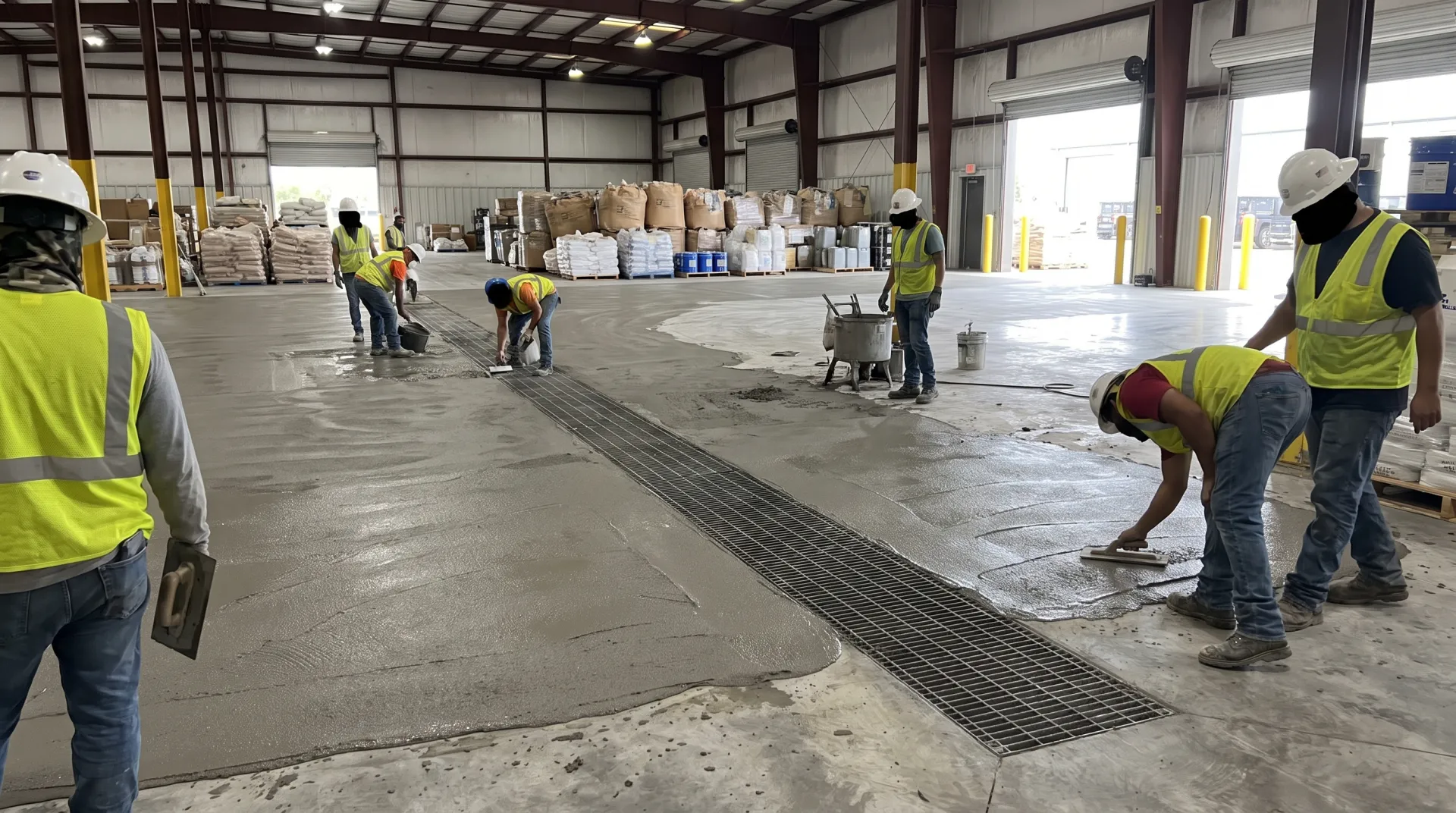
Urethane cement typically costs $8-$18 per square foot installed versus epoxy's $4-$12 - a meaningful upfront premium driven by greater material thickness and specialized installation labor. Despite that gap, urethane cement often wins on total cost of ownership in demanding environments, because its 15-20+ year lifespan under harsh conditions can outlast two or three epoxy recoats over the same period.
Upfront Cost Comparison
| System | Cost/sq ft Installed | Typical Lifespan (Demanding Use) |
|---|---|---|
| Standard epoxy | $4-$8 | 5-8 years |
| Heavy-duty epoxy | $7-$12 | 8-10 years |
| Urethane cement | $8-$18 | 15-20+ years |
Why urethane cement costs more: it's typically installed at 1/4 inch or greater thickness (versus epoxy's 10-30 mils), uses a different resin system built for thermal and chemical resistance, and requires more skilled trowel-applied installation - all of which add material and labor cost the epoxy process doesn't carry.
Total Cost of Ownership Over 15-20 Years
Upfront price only tells half the story for a facility planning to operate the same space for well over a decade. In environments with heavy thermal cycling, chemical exposure, or sustained heavy traffic, epoxy often needs a full recoat every 5-10 years, while a single urethane cement install can run the full 15-20 year horizon without needing replacement - just routine maintenance. Run the math over that time horizon and urethane cement frequently comes out ahead despite its higher day-one cost, particularly once the labor and production downtime of each epoxy recoat cycle is factored in.
When the Cost Premium Is Worth It
- Thermal cycling: facilities with regular hot water or steam wash-downs - food processing, breweries - see epoxy crack and delaminate faster than urethane cement in the same conditions
- Heavy chemical or acid exposure: manufacturing and processing facilities with sustained exposure benefit from urethane cement's superior chemical resistance
- Constant heavy traffic: forklift-heavy warehouses and manufacturing floors get more wear-resistant service life from urethane cement's greater thickness
When Epoxy Remains the Better Financial Choice
For general warehousing, retail, office space, and light-commercial applications without heavy thermal or chemical stress, epoxy's lower upfront cost usually wins outright - urethane cement's extra durability doesn't get meaningfully used in lighter-duty conditions, so the premium doesn't pay for itself. Our guide on urethane cement vs epoxy and which handles thermal shock goes deeper into the specific conditions that tip the decision toward urethane cement.
Not Sure Which System Pencils Out for Your Facility?
We'll walk your specific traffic, chemical exposure, and budget to recommend the system with the best total cost of ownership.
Request a Free QuoteGetting an Accurate Quote
Both systems' pricing varies significantly based on existing slab condition, square footage, and decorative or functional requirements like cove base or slip-resistant aggregate. For a broader look at overall epoxy pricing across different project types, see our epoxy flooring cost guide for San Antonio. Our urethane cement floor coating service page covers the specific systems and thicknesses we install for San Antonio facilities.