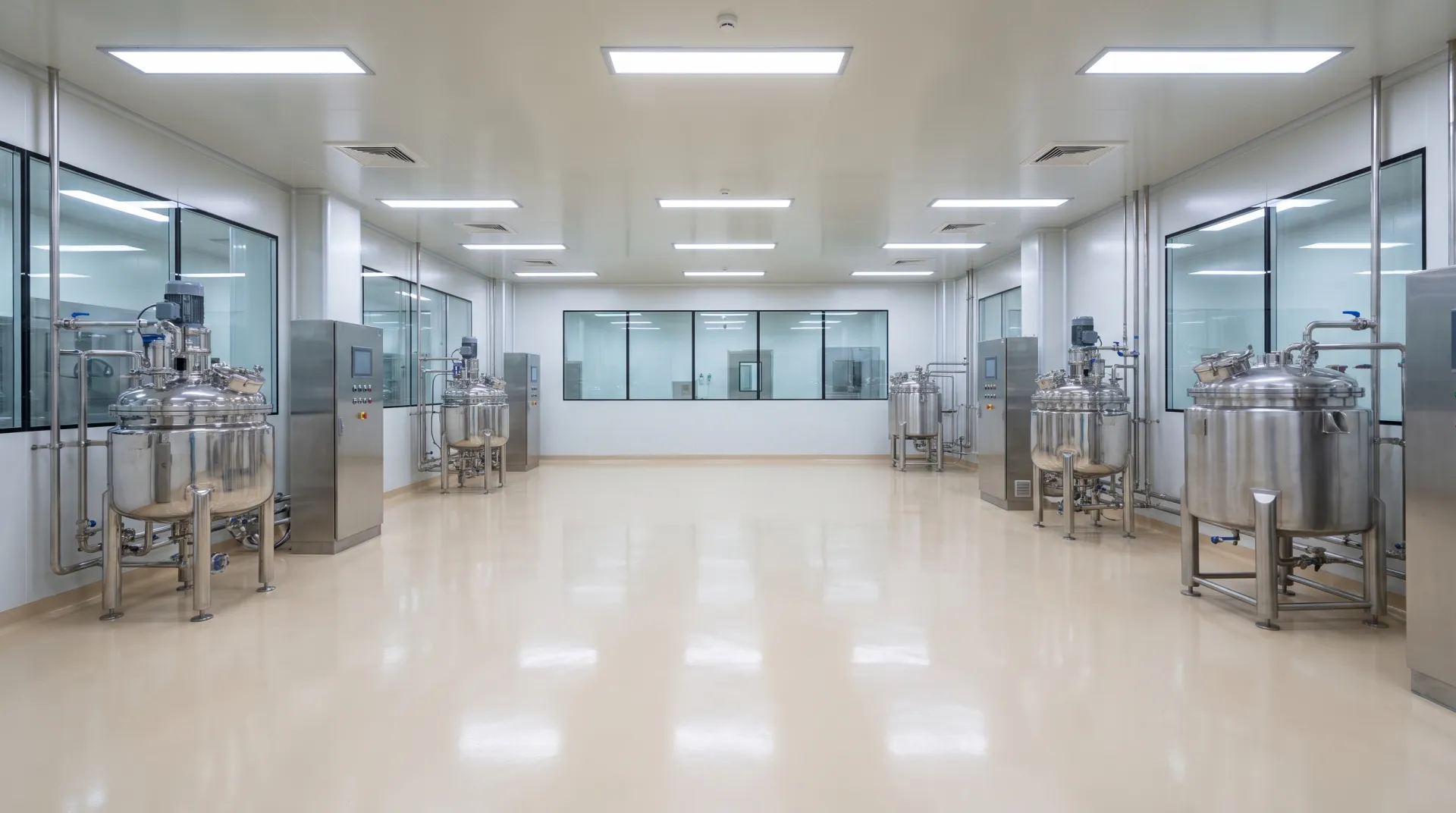
Pharmaceutical production floors need to handle hot water sanitation cycles, harsh cleaning chemicals, and strict hygiene standards all at once - conditions urethane cement is specifically engineered for and standard epoxy struggles with over time. For San Antonio pharmaceutical and biotech facilities weighing flooring options, urethane cement's combination of thermal resistance, chemical resistance, and hygienic seamless installation makes it the default recommendation for production and cleanroom-adjacent spaces.
Why Pharmaceutical Facilities Have Different Flooring Requirements
Unlike general commercial or light-industrial spaces, pharmaceutical production floors face a specific combination of stresses: frequent hot water or steam sanitation, exposure to acidic and alkaline cleaning agents, temperature-controlled environments, and hygiene standards that leave no room for cracks, seams, or porous surfaces where contamination could accumulate. A flooring system has to satisfy all of these simultaneously, which is where urethane cement's specific engineering advantages come into play.
Key Performance Factors
| Requirement | Standard Epoxy | Urethane Cement |
|---|---|---|
| Thermal cycling resistance | Prone to cracking over time | Flexes without cracking |
| Chemical/sanitizer resistance | Good | Excellent |
| Seamless, non-porous surface | Yes, when properly installed | Yes, with integral cove base option |
| Typical lifespan in production use | 5-10 years | 15-20+ years |
Hygiene detail that matters: urethane cement can be installed with integral cove base, curving the coating up the wall-floor junction in one continuous seamless piece. This eliminates the caulked or grouted corner joint where bacteria and contaminants typically concentrate - a detail regulatory inspectors specifically look for in pharmaceutical and biotech facilities.
Chemical and Sanitation Resistance
Pharmaceutical cleaning protocols routinely use strong acids, alkalis, and solvent-based sanitizers to meet regulatory hygiene standards - repeated exposure that degrades standard epoxy's resin over time, leading to surface breakdown and increased porosity. Urethane cement's resin chemistry resists this chemical attack far better, maintaining its seamless, cleanable surface across years of aggressive sanitation cycles.
Cleanroom-Adjacent Performance
While full cleanroom certification involves controls well beyond flooring, the spaces immediately surrounding a cleanroom - gowning areas, staging corridors, and production support rooms - still need to meet high hygiene standards without necessarily requiring cleanroom-grade materials. Urethane cement's seamless, non-porous, easy-to-sanitize surface makes it a practical choice for these cleanroom-adjacent spaces, matching the hygiene profile of the certified space next door without the cost premium of cleanroom-specific flooring systems.
Building or Upgrading a San Antonio Pharmaceutical Facility?
We install urethane cement systems specced for thermal cycling, chemical exposure, and hygiene compliance.
Request a Free QuoteCost Considerations for Pharmaceutical Projects
Urethane cement carries a higher upfront cost than epoxy, but for pharmaceutical facilities the total cost of ownership calculation usually favors it - fewer disruptive recoats over the facility's life, and a lower risk of a flooring-related hygiene finding during a regulatory inspection. Our broader guide on urethane cement vs epoxy cost comparison for San Antonio facilities covers this trade-off across a range of industrial and commercial applications, and our urethane cement floor coating service page has more detail on the systems we install for regulated production environments.
Understanding cGMP Flooring Expectations
Current Good Manufacturing Practice (cGMP) regulations don't specify an exact flooring material, but they do set expectations that directly influence which systems pass muster during an FDA or state regulatory inspection. Floors in production areas need to be smooth, durable, non-porous, and easily cleanable, with no cracks, open joints, or crevices that could harbor contamination or make validated cleaning procedures ineffective. Urethane cement satisfies these expectations natively - its seamless, monolithic surface and integral cove base option directly address the specific language inspectors look for when evaluating a facility's flooring during a cGMP audit.
Facility managers preparing for an inspection often find that flooring becomes a focal point precisely because it's one of the few surfaces that sees constant physical contact from equipment, foot traffic, and cleaning processes simultaneously. A urethane cement floor with documented installation records - including surface prep method, product data sheets, and cove base detailing - gives quality assurance teams concrete documentation to reference during an audit, rather than having to explain away visible wear or seam degradation on an aging epoxy floor.
Temperature-Controlled and Cold Storage Production Zones
Many pharmaceutical facilities operate a mix of ambient production areas and temperature-controlled or cold storage zones for temperature-sensitive compounds and biologics. Urethane cement performs well across this range specifically because of its flexibility relative to rigid epoxy - repeated transitions between a warm production floor and a refrigerated storage zone create thermal stress at the boundary that can crack a more brittle epoxy system over time. Urethane cement's more forgiving resin structure tolerates these repeated temperature swings without the same cracking pattern, which is one more reason it's frequently specified for facilities with mixed-temperature production layouts rather than installing two different flooring systems and managing a transition seam between them.
Comparing Urethane Cement to Other Specialty Systems
Urethane cement isn't the only specialty flooring option pharmaceutical facilities consider - epoxy novolac and MMA (methyl methacrylate) systems also appear in regulated environments, each with different trade-offs:
| System | Strength | Trade-Off |
|---|---|---|
| Urethane cement | Best thermal cycling and impact resistance | Higher installation cost and cure time |
| Epoxy novolac | Excellent resistance to strong acids and solvents | More brittle, less thermal shock tolerance |
| MMA (methyl methacrylate) | Extremely fast cure, usable within hours | Strong odor during install, generally higher material cost |
Facilities with especially aggressive chemical exposure - certain active pharmaceutical ingredient (API) manufacturing processes, for instance - sometimes specify epoxy novolac specifically for its acid resistance despite its thermal limitations, while facilities needing a fast turnaround on a single production line changeover sometimes look at MMA for its rapid cure. For most general pharmaceutical production, packaging, and cleanroom-adjacent spaces in San Antonio, urethane cement remains the balanced default that handles thermal cycling, chemical exposure, and hygiene requirements without needing to over-specify for a narrower edge case.
Working with a Contractor Experienced in Regulated Environments
Installing flooring in an active or soon-to-be-licensed pharmaceutical facility comes with scheduling and documentation demands beyond a typical commercial project - coordination around validated cleanroom adjacencies, adherence to change-control procedures if the facility is already operating, and providing the material documentation quality assurance teams need for their own regulatory files. Choosing a contractor who has installed urethane cement in pharmaceutical or food-grade facilities before, and who can provide that documentation as a matter of course, avoids delays that can arise when a contractor is learning regulated-environment requirements on the job.
Scheduling Installation Around Active Production
Few pharmaceutical facilities can afford to shut down an entire production line for an extended flooring project, which means installation is typically phased around production schedules rather than treated as a single continuous job. Common approaches include working during planned maintenance shutdowns, phasing the installation room by room or line by line so only a portion of the facility is offline at any time, or scheduling work during off-shift hours when a particular production suite sits idle. Because urethane cement is typically installed at a greater thickness than epoxy and needs adequate cure time before equipment and foot traffic resume, the installation timeline usually runs longer than a comparable epoxy job - planning for this upfront, rather than discovering it mid-project, keeps a facility's broader production schedule from being disrupted unexpectedly.
Facilities expanding into new space or converting a warehouse shell into licensed production area have more scheduling flexibility, since there's no existing production to work around. In these cases, urethane cement installation is usually sequenced early in the buildout - before equipment is set in place - since floor thickness and cure time are easier to manage in an empty room than around installed tanks, piping, and fixed equipment.
Documentation and Traceability for Regulatory Files
Beyond the physical installation, pharmaceutical facilities typically need a documentation package to support their own internal quality files and any future regulatory inquiry: product data sheets and safety data sheets for every material used, installer certifications where applicable, batch or lot numbers for the resin systems installed, and a record of surface preparation methods used before coating. A contractor experienced in regulated environments will have this documentation process built into their standard workflow rather than needing to assemble it after the fact - a detail worth confirming during the quoting process for any San Antonio pharmaceutical or biotech buildout.