Two Good Options - But They're Not the Same Thing
Stained concrete and epoxy flooring are both popular choices for San Antonio homeowners and business owners who want to upgrade a bare concrete slab. But they work completely differently, look completely different, and perform completely differently under Texas conditions. Choosing between them without understanding those differences can lead to a floor that doesn't fit the space - or doesn't hold up the way you expected.
This guide gives you a clear, honest comparison so you can make the right call for your specific situation.
What Stained Concrete Actually Is
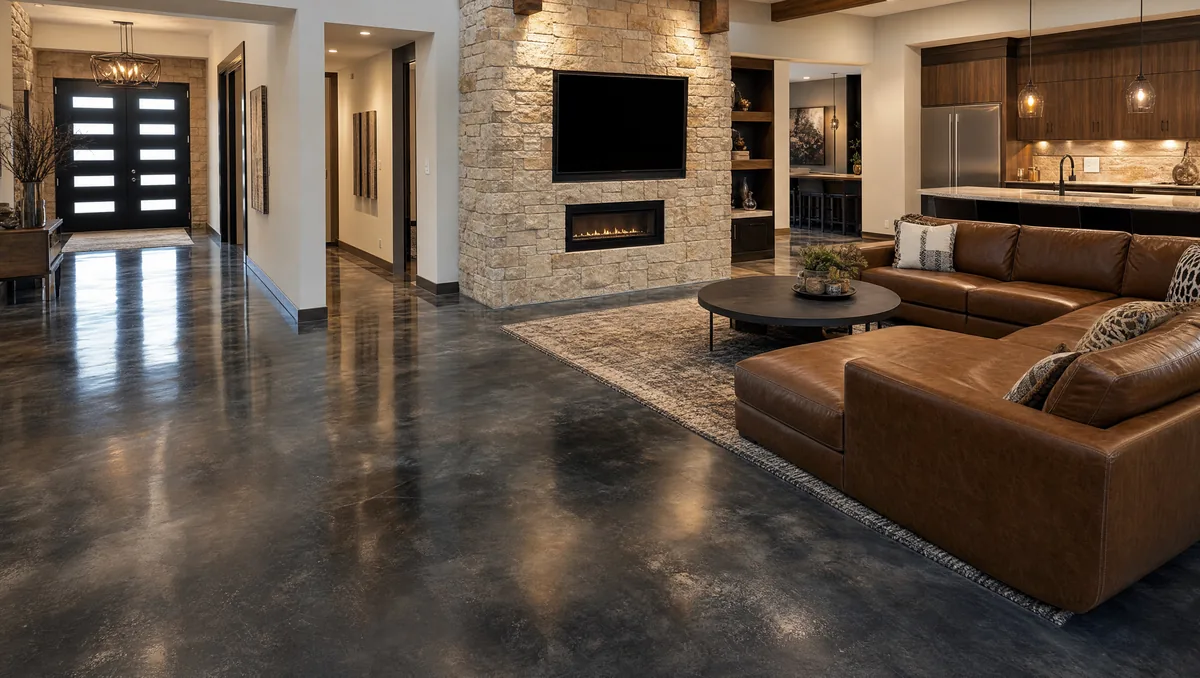
Acid staining is a chemical process, not a paint or coating. A diluted solution of hydrochloric acid and metallic salts is applied to bare concrete. The acid reacts with calcium hydroxide in the concrete to create metallic compounds that become permanently embedded in the slab surface - they can't peel off because they're chemically bonded to the concrete itself. The result is a variegated, translucent, organic color effect with natural variation in tone and pattern. No two stained concrete floors look exactly alike.
Water-based concrete stains work similarly but use a dye rather than an acid reaction. They offer more color options but don't penetrate as deeply or last as long without a sealer refresh schedule. After staining, the floor must be sealed with a concrete sealer, wax, or epoxy topcoat to protect the color and provide a cleanable surface.
What Epoxy Flooring Is
Epoxy flooring is a coating system - a series of liquid layers applied to the prepared concrete surface that cure into a hard, durable shell. A professional system includes a penetrating primer, one or more epoxy base coats, optional decorative elements (color chips, metallic pigments, quartz aggregate), and a topcoat (usually polyaspartic) for UV resistance and abrasion protection. Unlike stained concrete, epoxy covers the existing concrete rather than reacting with it. The result is a consistent, protective surface with precise color and texture control.
Side-by-Side Comparison
| Factor | Stained Concrete | Epoxy Flooring |
|---|---|---|
| Installed Cost (San Antonio) | $2–$5/sq ft | $4–$9/sq ft (system-dependent) |
| Durability | Moderate - color is permanent but surface needs periodic resealing | High - sealed protective layer resists impact, chemicals, and abrasion |
| Indoor Use | Excellent - living areas, retail, offices | Excellent - all interior spaces |
| Outdoor Use | Good with exterior-grade sealer; UV fades some dye colors | Good with aliphatic polyaspartic topcoat; avoid standard epoxy outdoors |
| Maintenance | Periodic resealing (1–3 yrs), gentle cleaners required | Low - damp mop, pH-neutral cleaner; topcoat refresh every 5–7 yrs interior |
| Aesthetics | Organic, warm, unique variation - looks like stone or leather | Consistent, modern, high-gloss or satin; customizable colors and patterns |
| Repairability | Difficult - stain reactions can't be precisely matched; spot repairs show | Easier - damaged sections can be recoated and blended |
| Slip Resistance | Moderate - depends on sealer type; wax finishes can be slippery when wet | Controllable - anti-slip aggregate or texture can be added to topcoat |
| Chemical Resistance | Low - solvents, oil, and acids can damage or bleach the color | High - sealed epoxy resists most automotive and household chemicals |
| Hides Slab Flaws? | No - stain amplifies existing cracks, patches, and variation | Partially - chip systems hide minor variation; cracks still need filling first |
When to Choose Stained Concrete
Stained concrete is the better choice when you want organic warmth and visual character that looks more like natural stone or leather than a modern coating. It's particularly well-suited to interior living spaces - great rooms, sunrooms, covered patios with consistent light exposure, and retail environments where the "handmade" aesthetic is part of the brand. It also tends to be less expensive than a full epoxy system, making it appealing for large interior areas with light traffic and no significant chemical exposure risk.
The key question to ask before choosing stained concrete is what your slab looks like. If it has existing patches, repairs, or heavy previous coatings, staining will highlight those inconsistencies rather than hide them. Clean, relatively uniform concrete stains beautifully. Heavily patched or contaminated slabs usually don't.
When to Choose Epoxy
Epoxy is the better choice whenever protection is the primary requirement. Garages and shops with vehicle traffic, chemical exposure (oil, battery acid, solvents), or heavy point-load impacts need the structural protection of a multi-layer epoxy system - stained concrete with a sealer won't hold up in those conditions. Commercial environments with fork trucks, food service with thermal cycling and aggressive cleaning chemicals, and healthcare spaces with infection control requirements all need epoxy or urethane cement, not stained concrete.
Epoxy is also the better choice when you want precise, consistent color control across a large area, or when you want the floor to look the same in ten years as it did at installation - with proper maintenance, a well-installed epoxy system is much more predictable long-term than stained concrete.
Can You Combine Them?
Yes - and it's an underutilized option. Acid-stained concrete sealed with a clear epoxy topcoat gives you the organic look of stained concrete with the protective performance of epoxy. The epoxy seals the stain, adds depth and gloss, and dramatically improves the floor's resistance to staining, chemical exposure, and abrasion. This combination is particularly popular for covered outdoor living areas, upscale residential interiors, and retail environments in San Antonio where aesthetics matter as much as performance.
ProEpoxy installs both stained concrete and epoxy coating systems, and can advise on the stain-plus-epoxy combination for spaces where both matter.
How to Decide: Schedule a Consultation
The best way to make this decision is to have a contractor look at your slab, understand your use case, and give you an honest recommendation - not just quote both options and let you guess. At ProEpoxy, our free site consultations include a slab assessment (condition, existing coatings, moisture), a conversation about your priorities (aesthetics vs. performance vs. budget), and a written proposal with our recommendation and the reasoning behind it.
Not Sure Which Is Right for Your San Antonio Space?
ProEpoxy installs both stained concrete and epoxy coating systems across the San Antonio metro. Our free site consultation includes an honest assessment of your slab and a recommendation based on your actual use case - not just what we can sell you. Call (888) 275-7078 or book online.
Book Free Consultation →