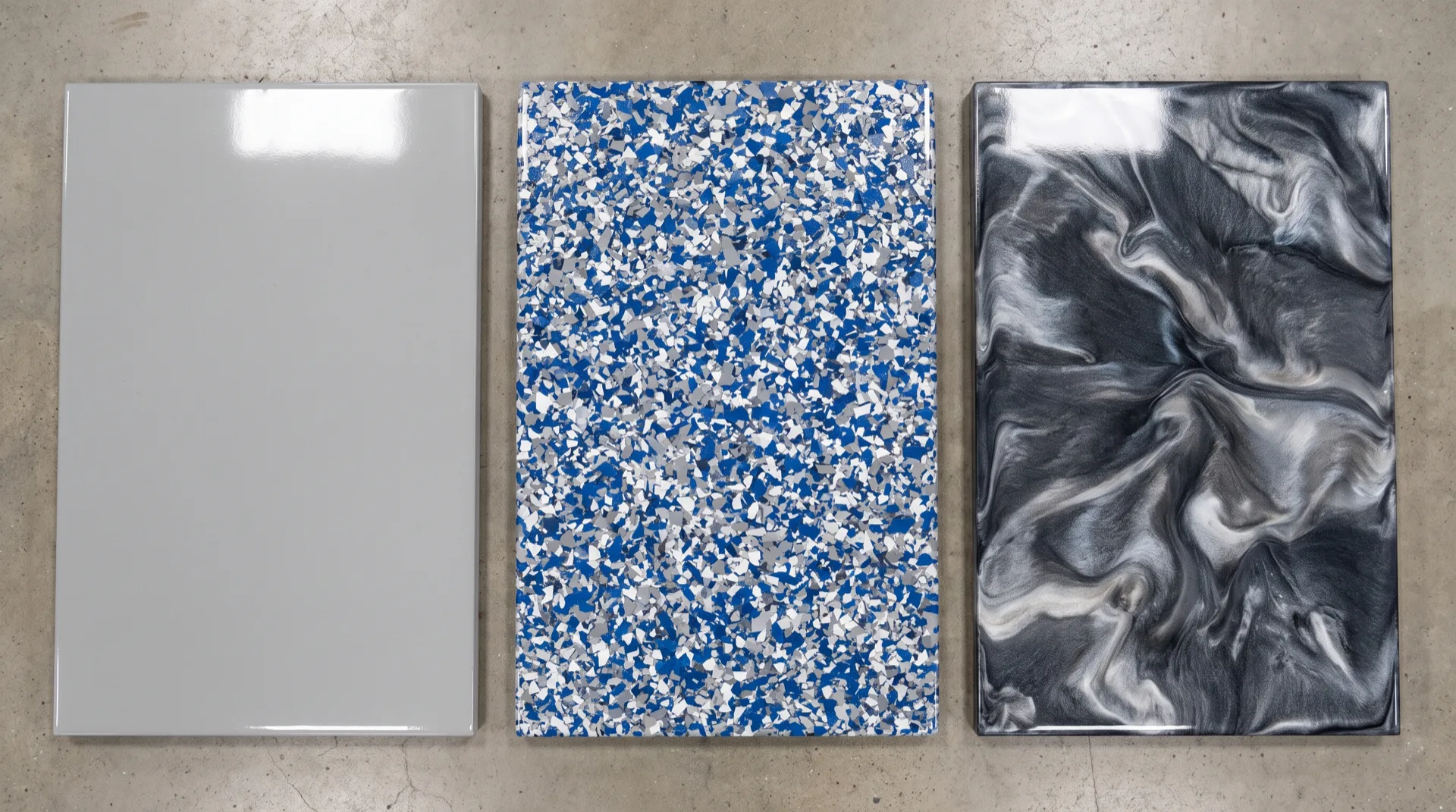
For an epoxy garage floor in San Antonio, solid color offers the cleanest, most affordable look, flake systems add texture and better hide dirt and daily wear, and metallic epoxy delivers the most dramatic, one-of-a-kind visual effect at the highest price point - the right choice depends mainly on budget and how much visual complexity you want underfoot.
Solid Color: Clean, Simple, and Budget-Friendly
A solid color epoxy finish applies a single, uniform color across the entire floor, giving a clean, contemporary look that works well in almost any garage. It's the most affordable of the three finish types since it uses the least material complexity and takes less installer time to apply evenly, making it a popular choice for homeowners who want a durable, good-looking upgrade without the added cost of decorative aggregate or metallic pigment. The tradeoff is that a solid color floor shows scuffs, tire marks, and dust more visibly than a textured finish, since there's no pattern to help camouflage everyday wear between cleanings.
Flake Systems: Texture That Hides Wear
Flake epoxy broadcasts colored vinyl or polymer chips into the wet epoxy base coat, creating a speckled, textured surface available in dozens of color-blend combinations. Beyond the aesthetic variety, the texture itself is functional: it does a noticeably better job of hiding dust, minor stains, and tire marks between cleanings than a solid color floor, and the slightly rougher surface also adds a degree of slip resistance. For homeowners comparing flake specifically against solid color side by side, our detailed breakdown of flake vs. solid color garage floors covers additional differences in maintenance and long-term appearance beyond what we can fit here.
Metallic Epoxy: The Premium Showpiece Option
Metallic epoxy uses specialty pigments that create a three-dimensional, swirled, almost liquid-marble appearance unlike anything solid color or flake can produce. It's the most visually striking of the three options and is popular for showcase garages, converted living spaces, or homeowners who want their floor to be a genuine design feature rather than just a durable surface. That dramatic look comes at a cost, though - metallic epoxy requires significantly more installer skill to execute well, since the swirl pattern is created through technique during application rather than a pre-mixed color, and the specialty pigments themselves are more expensive than standard color additives.
Comparing the Three Finish Types
| Factor | Solid Color | Flake | Metallic |
|---|---|---|---|
| Relative cost | Lowest | Moderate | Highest |
| Hides dirt/wear | Poor | Excellent | Moderate |
| Visual impact | Clean, simple | Textured, varied | Dramatic, unique |
| Installer skill required | Standard | Standard | High |
All three finish types share the same underlying epoxy base coat: durability and chemical resistance don't change based on which topcoat finish you choose - the differences are purely about appearance, cost, and how well the finish disguises everyday wear.
Matching Finish to How You Actually Use the Garage
A daily-driver garage that sees frequent vehicle traffic, tool use, and general clutter is generally better served by flake or a mid-tone solid color, since both hide the inevitable dust and minor marks better than a light solid color or a dark, glossy metallic finish that shows every footprint. A garage used mainly for a single well-cared-for vehicle, or one being converted into a home gym or hobby space with less daily mess, has more room to consider metallic epoxy purely for its visual impact, since it won't be subjected to the same volume of everyday wear as a working garage floor.
Getting the Right Look for Your Specific Space
Beyond finish type, color and pattern selection should also account for garage lighting and size - a metallic floor's swirl effect is most dramatic under good lighting, while a small, dimly lit garage may not show off a metallic finish's full visual potential the way it would in a larger, well-lit space. Homeowners who've settled on flake but want more color guidance can review our full epoxy garage floor service page for the complete range of available flake blends and solid color options side by side, which makes it easier to picture the finished result in a space similar to your own garage's size and lighting.
See Finish Samples for Your Garage
We bring solid color, flake, and metallic samples to every San Antonio consultation so you can compare them in your actual garage lighting.
Request a Free QuoteCombining Metallic With Other Design Elements
Homeowners drawn to metallic epoxy's premium look often pair it with additional design touches like a contrasting color border, a logo or design element embedded in the floor, or coordinated wall and trim colors that complement the swirl pattern's dominant tones. Our guide to metallic vs. flake epoxy goes further into how each finish type pairs with these kinds of additional customizations, which is worth reviewing for anyone planning a garage that doubles as a showcase space rather than pure utility.
Maintenance Differences Between the Three Finishes
Day-to-day cleaning is similar across all three finish types - regular sweeping and occasional mopping with a mild cleaner keeps any of them looking good - but the visual forgiveness differs meaningfully. A flake floor can go longer between deep cleanings before it starts looking dingy, since the multi-color texture masks buildup that would be immediately obvious on a solid color or metallic floor. Glossy metallic finishes in particular show water spots and dust more readily than a flake floor's more forgiving texture, so homeowners choosing metallic for its dramatic look should factor in a slightly more frequent cleaning routine to keep that glossy finish looking its best.
Making the Final Decision
There's no universally "best" choice among the three - the right finish depends on your budget, how the garage gets used day to day, and how much visual drama you want from the floor itself. Homeowners genuinely torn between options often benefit from seeing physical samples of each finish type in their actual garage lighting before committing, since photos and online examples can look meaningfully different from how a finish actually reads in a specific space's natural and artificial light.
Resale Value and Buyer Appeal Considerations
Homeowners planning to sell within a few years should also weigh how each finish reads to a prospective buyer walking through the garage. A neutral solid color or a moderate, widely appealing flake blend tends to read as a clean, well-maintained upgrade to most buyers without being polarizing, while a bold metallic swirl in a strong color combination is more of a personal style statement that won't appeal to everyone the same way. This doesn't mean metallic is a poor investment - buyers who do like it tend to like it a lot - but it's worth considering alongside personal preference if resale value within the next few years is part of the decision, versus a floor intended to be enjoyed for a decade or more regardless of buyer reaction.
How Existing Concrete Condition Affects the Decision
The condition of the existing concrete slab can also nudge the decision between finish types. A slab with minor cracks, patch repairs, or uneven coloring from age is often a better candidate for flake or metallic than for a light solid color, since both textured and swirled finishes are more forgiving of underlying surface imperfections than a flat, uniform color that can draw attention to subtle unevenness in the substrate. A contractor assessing the existing slab during a quote should flag any surface conditions that make one finish type meaningfully easier to achieve a clean result with than another, which is worth factoring into the final decision alongside budget and personal style preference.
Working Through the Decision With Your Contractor
The most useful part of a consultation for this specific decision is seeing physical sample boards of each finish type rather than relying on photos, since flake color blends and metallic swirl patterns both look meaningfully different in person under your garage's actual lighting than they do in a catalog image or a website gallery shot under studio lighting. A contractor who brings a range of samples and is willing to walk through the tradeoffs specific to your garage's use case - daily driver versus showcase space, existing slab condition, budget ceiling - rather than steering every customer toward the same default finish, is generally a good sign of genuine experience across all three options rather than a narrower specialty in just one.