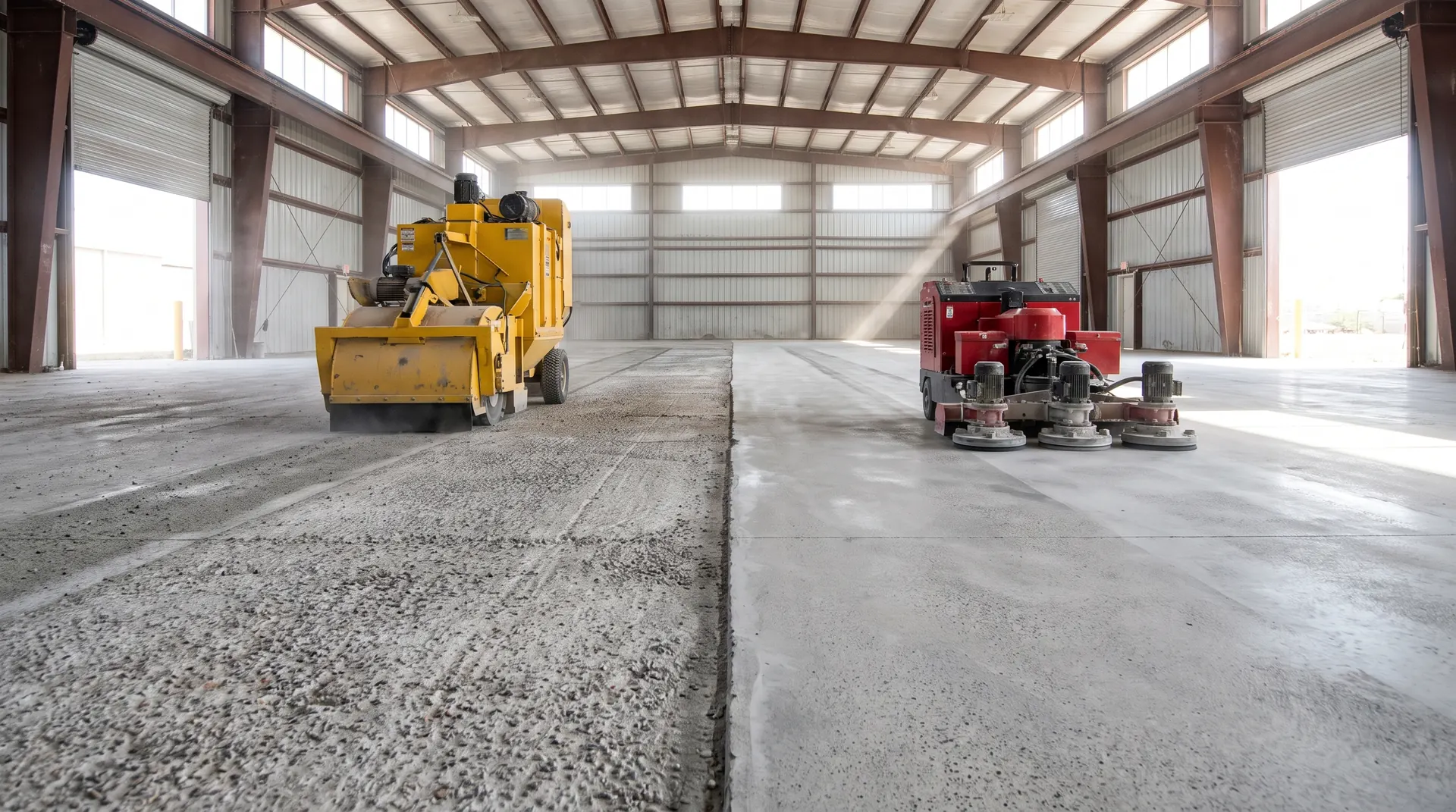
Surface prep determines whether a coating lasts 15 years or peels within one - more than the coating material itself. Shot blasting and diamond grinding are the two industry-standard methods for prepping concrete before epoxy, polyaspartic, or urethane cement, and picking the wrong one for the job leads to bond failure, uneven texture, or a profile that doesn't match the coating system's spec. Here's how the two actually compare for San Antonio concrete prep work.
What Each Method Does
Both processes remove the top layer of concrete and open the surface's pore structure so a coating can mechanically bond to it - but they work differently and leave a different surface profile.
- Shot blasting: Steel shot is propelled at the concrete surface at high velocity, fracturing the top layer and creating an aggressive, textured profile while a built-in vacuum system captures the spent shot and dust for immediate cleanup.
- Diamond grinding: Diamond-tipped abrasive discs mechanically grind the surface, producing a smoother, more controlled profile with less aggressive texture than shot blasting.
Side-by-Side Comparison
| Factor | Shot Blasting | Diamond Grinding |
|---|---|---|
| Surface profile | Aggressive, textured (CSP 3-5) | Smoother, controlled (CSP 1-3) |
| Dust and debris | Contained via built-in vacuum | Requires separate dust collection |
| Speed on large areas | Faster for open warehouse floors | Slower, more precise |
| Edge and corner work | Limited reach near walls | Better access to edges and tight spaces |
| Best for | Thick coating systems, industrial floors | Thin-mil coatings, polished concrete prep |
When to Use Shot Blasting
Shot blasting is the standard choice for large, open concrete areas getting a thicker coating system - warehouse floors, industrial facilities, and parking structures headed for epoxy or urethane cement. The aggressive profile it creates gives thicker coatings the mechanical bite they need to bond properly, and the speed advantage matters on large square footage jobs.
When to Use Diamond Grinding
Diamond grinding is the better fit when the job calls for a finer surface profile, tighter access around walls and columns, or prep work ahead of polished concrete rather than a coating system. It's also the go-to method for smaller spaces or rooms with obstacles where a shot blaster's footprint doesn't fit well.
Not Sure Which Prep Method Your Floor Needs?
We evaluate your existing slab, coating system, and space constraints before recommending shot blasting or diamond grinding - no guesswork.
Get a Free AssessmentWhy Surface Prep Matters More Than the Coating Choice
The single most common cause of epoxy failure isn't a bad coating product - it's inadequate surface prep. A coating applied over an under-profiled or contaminated surface will delaminate, bubble, or peel regardless of how good the material is. Proper mechanical prep, matched to the coating manufacturer's specified surface profile, is what actually determines whether a floor lasts a decade or fails in year one.
Can Both Methods Be Used on the Same Job?
Yes - many larger commercial projects use shot blasting across the open floor area and diamond grinding for edges, corners, and tight spaces the shot blaster can't reach. This combined approach gets a consistent surface profile across the entire floor without leaving unprepped strips along the perimeter.