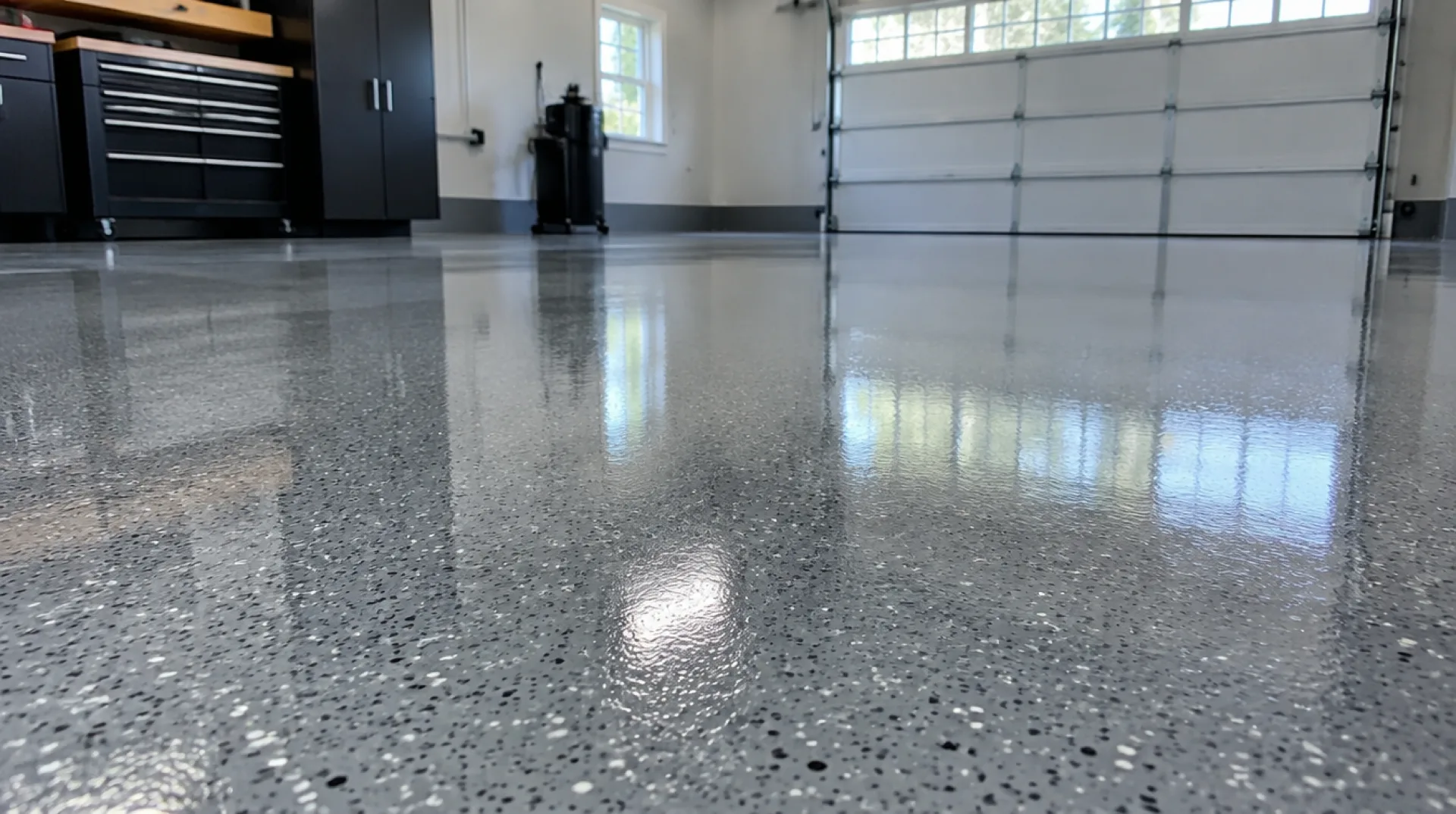
Polyaspartic floor coating in San Antonio typically costs more upfront than standard epoxy - both in material and labor - but that gap often narrows once faster cure time and reduced downtime are factored into the total project cost, particularly for a commercial space where every day of closure has a real revenue impact.
Material and Labor Cost Breakdown
Polyaspartic resin itself costs more per gallon than standard epoxy resin, and the installation also typically commands a higher labor rate since polyaspartic's faster cure time compresses the application window, requiring a more experienced, efficient crew to apply and level the product correctly before it begins setting. Epoxy's longer working time gives installers more flexibility during application, which is part of why it remains the more budget-friendly option for straightforward garage and light-commercial projects where install speed isn't the top priority.
Cure Time and the Cost of Downtime
This is where the cost comparison gets more nuanced than a simple per-square-foot number. Standard epoxy typically needs several days before a floor can handle foot traffic and up to a week before full vehicle or heavy equipment use, while polyaspartic can often be walked on within hours and handle full traffic within 24-48 hours. For a residential garage, that difference mostly affects convenience, but for a retail space, restaurant, or commercial facility losing revenue for every day it's closed, the downtime cost of a multi-day epoxy cure can outweigh the material cost premium of polyaspartic entirely. Our guide on polyaspartic vs. epoxy cure time for commercial spaces breaks down these downtime economics in more detail for business owners weighing the two systems.
Durability and Lifespan Comparison
Polyaspartic generally offers better UV stability and abrasion resistance than standard epoxy, which can translate into a longer usable lifespan before recoating becomes necessary - particularly for a floor exposed to direct sunlight through a garage door or storefront window, where epoxy is more prone to yellowing and surface wear over time. This longer lifespan is part of what can make polyaspartic's higher upfront cost pencil out favorably on a cost-per-year-of-service basis, even though the initial invoice is higher than an equivalent epoxy installation.
Cost Comparison at a Glance
| Factor | Epoxy | Polyaspartic |
|---|---|---|
| Material cost | Lower | Higher |
| Labor cost | Lower | Higher |
| Cure/downtime | 3-7 days | 24-48 hours |
| UV stability | Moderate | Excellent |
Downtime cost is business-specific: a residential garage owner has little reason to pay a premium for faster cure time, while a commercial space losing daily revenue during a closure may find polyaspartic's higher price more than justified by getting back open sooner.
When the Polyaspartic Premium Is Worth It
Polyaspartic's added cost makes the most sense for commercial and industrial applications where fast turnaround genuinely matters - a retail store that can't afford an extended closure, a warehouse that needs to phase installation around active operations, or any space with significant sun exposure where epoxy's UV limitations would show up as premature yellowing within just a few years. For a residential garage with flexible timing and no direct sun exposure through an open door for extended periods, standard epoxy often remains the more cost-effective choice without meaningfully sacrificing the floor's practical performance.
Get a Cost Comparison for Your Project
We quote both epoxy and polyaspartic side by side so you can compare real numbers for your San Antonio project.
Request a Free QuoteComparing Total Cost Over the Floor's Lifetime
Looking only at the upfront installation invoice misses part of the picture. A floor that needs recoating in 5-7 years costs more over a 15-year span than one that lasts 10-12 years before needing attention, even if the second option had a higher initial price tag. Our broader breakdown of what epoxy flooring costs in San Antonio covers the full range of price factors for epoxy specifically, which is useful context for weighing against polyaspartic's different cost-and-lifespan profile when making a final system decision for a specific project.
Getting an Accurate Cost Comparison for Your Project
The only reliable way to compare true costs is getting quotes for both systems on the same specific project, since square footage, existing slab condition, and any required repair or leveling work all affect the final number for both epoxy and polyaspartic differently. A contractor who can walk through both a straightforward epoxy quote and a polyaspartic quote side by side, explaining exactly where the cost difference comes from for your specific space, gives a far more useful basis for decision-making than relying on general national average pricing that doesn't reflect your project's actual scope, timeline pressure, or sun exposure conditions.
Financing and Budgeting Considerations
For larger commercial projects, the cost difference between polyaspartic and epoxy is often small relative to the overall project budget once other line items - surface prep, repair work, line striping, sealants - are factored in. Facility managers budgeting for a floor coating project should request an itemized quote breaking out material, labor, and any downtime-related costs separately for both systems, rather than comparing only bottom-line totals, since this makes it easier to identify exactly which cost factors are driving the difference and whether polyaspartic's premium is concentrated in material, labor, or both.
Reviewing Full System Options Before Deciding
Cost is just one factor in the overall decision, and reviewing our full polyaspartic floor coating service page alongside a straightforward epoxy quote gives a clearer picture of the complete tradeoff - color and finish options, warranty terms, and specific performance characteristics beyond just price and cure time. Homeowners and business owners who focus purely on the bottom-line number without reviewing these additional factors sometimes end up choosing based on incomplete information, when the right system for their specific space might justify a cost difference in either direction depending on priorities beyond price alone.
Regional Cost Factors Specific to San Antonio
Local market conditions also shape both epoxy and polyaspartic pricing in San Antonio specifically. Labor availability, the local cost of specialty coating materials, and seasonal demand - installers are typically busiest in spring and fall when weather conditions are most favorable for either system - can all shift quoted pricing compared to national average figures found online. Getting quotes from established local contractors rather than relying purely on generic online cost calculators gives a far more accurate picture of what a specific project will actually cost in the current San Antonio market, since national averages don't account for regional labor rates or material availability.
Hidden Costs to Watch For in Either System
Beyond the base material and labor cost, both systems can carry additional costs that aren't always itemized clearly in an initial quote. Surface preparation - grinding, crack repair, or moisture mitigation for a problematic slab - can add meaningfully to either project's total cost regardless of which coating system is ultimately chosen, since this prep work is largely independent of the topcoat decision. Homeowners and facility managers should ask specifically whether a quote includes full surface prep or whether that's a separate line item likely to be added once the crew actually assesses the existing slab condition on site, since an incomplete initial quote can lead to unexpected cost increases once work begins.
Getting Multiple Quotes for an Accurate Comparison
Because pricing for both epoxy and polyaspartic varies by contractor, project scope, and existing slab condition, getting at least two or three quotes for the same specific project is the most reliable way to understand real market pricing rather than relying on a single number. Requesting that each contractor quote both systems for the same space, using the same scope of work, makes the comparison much more apples-to-apples than trying to combine one contractor's epoxy quote with a different contractor's polyaspartic quote, since methodology and included scope can vary meaningfully between companies.
Making the Final Cost-Driven Decision
Ultimately, the right choice between polyaspartic and epoxy comes down to weighing your specific project's timeline pressure, sun exposure, and traffic level against each system's cost profile, rather than defaulting to whichever option has the lower sticker price. A clear-eyed comparison across all these factors, backed by real quotes for your specific space, consistently produces a better long-term outcome than choosing based on upfront cost alone.