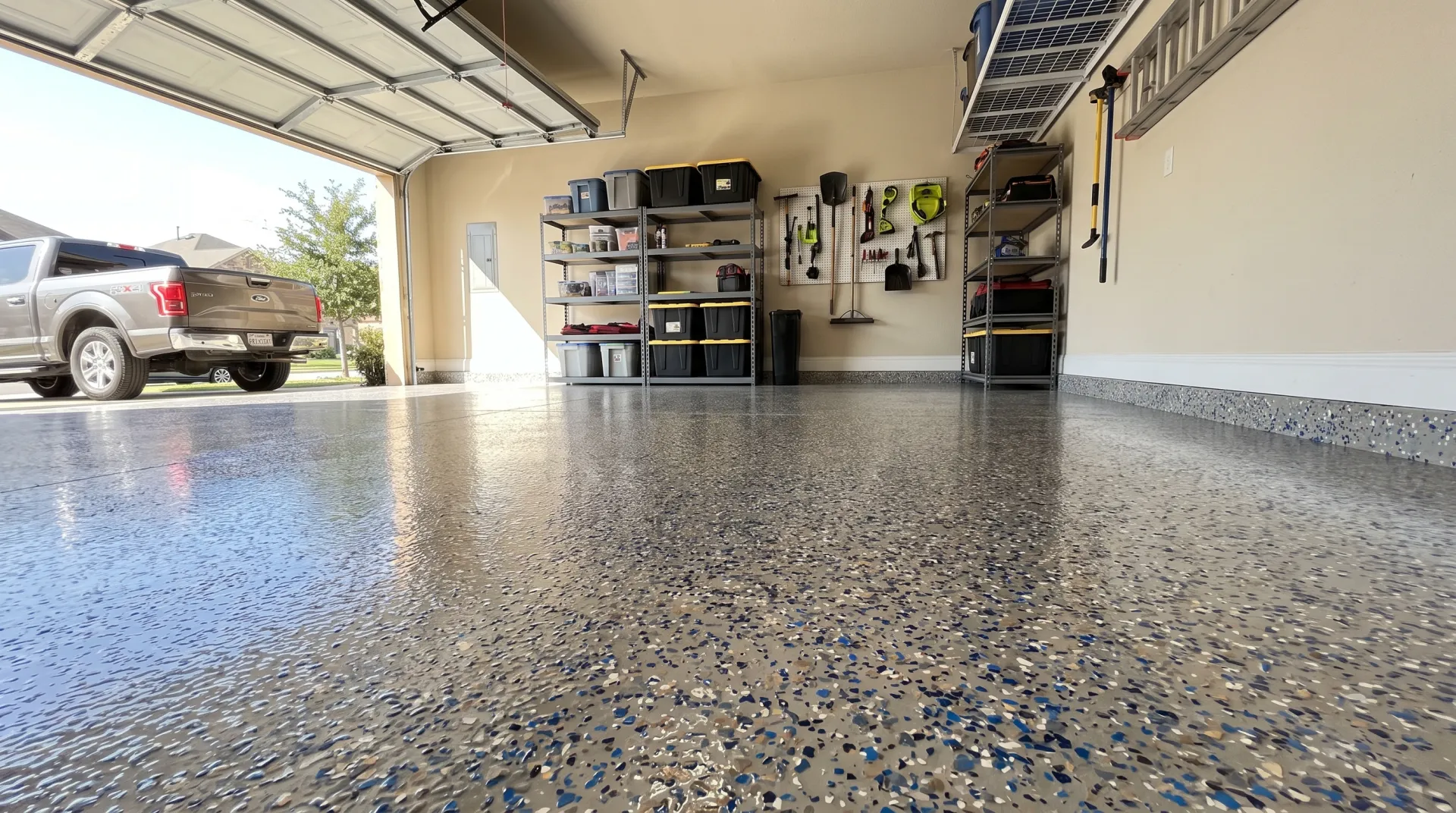
Polyaspartic floor coating's biggest advantages for a San Antonio garage are its fast cure time, strong UV stability, and reliable performance across a wide temperature range - its main drawback is cost, typically running 15-30% more than comparable epoxy. Whether that trade-off is worth it depends mostly on how quickly you need the garage back in use and how much direct sun the floor sees.
Pros of Polyaspartic for Garage Floors
Fast Cure, Often Same-Day
Polyaspartic's resin chemistry cures dramatically faster than epoxy - walkable in 1-2 hours and vehicle-ready in about 24 hours, compared to epoxy's 24-hour walk time and 3-7 day vehicle cure. Many garage installs complete base coat, flake, and topcoat in a single day.
UV Stability
Polyaspartic resists yellowing from sun exposure noticeably better than standard epoxy, which matters for garages with west-facing doors or large windows that catch direct afternoon sun for years of the floor's life.
Wide Temperature Tolerance
San Antonio's summer heat can shrink epoxy's workable application window to under 10 minutes on the hottest days. Polyaspartic tolerates a much broader temperature range without that same compressed working time, reducing the risk of lap lines or uneven texture from a rushed application.
Hot Tire Pickup Resistance
Vehicles parked immediately after highway driving in summer heat can soften some coatings enough to leave tire marks - "hot tire pickup." Polyaspartic's harder cured film resists this better than many standard epoxy formulations.
Cons of Polyaspartic for Garage Floors
Higher Material Cost
Polyaspartic typically costs 15-30% more per square foot than a comparable epoxy system, primarily due to material cost and the specialized application skill its fast cure window demands.
Requires an Experienced Installer
The same fast cure that makes polyaspartic convenient also shortens the installer's working window. An inexperienced crew can struggle to apply the coating evenly before it starts setting, which makes contractor experience more important than with slower-curing epoxy.
Pros vs Cons Summary
| Factor | Polyaspartic |
|---|---|
| Cure time | Pro - vehicle-ready in ~24 hrs |
| UV/yellowing resistance | Pro - holds color longer in direct sun |
| Temperature tolerance | Pro - reliable even in peak summer heat |
| Hot tire pickup resistance | Pro - harder cured film |
| Material cost | Con - 15-30% premium over epoxy |
| Installer skill required | Con - shorter working window demands experience |
Bottom line: if your garage sees daily use, direct sun exposure, or you simply can't spare a multi-day cure window, polyaspartic's advantages typically justify the cost premium. If the garage is low-use and shaded, standard epoxy often delivers comparable results for less.
Not Sure If Polyaspartic Is Right for Your Garage?
We install both epoxy and polyaspartic systems across San Antonio and can walk you through which fits your garage and budget.
Request a Free QuoteHow Polyaspartic Compares on Cure Time Specifically
Cure time is often the single deciding factor for homeowners choosing between the two systems. Our companion guide on garage floor epoxy vs polyaspartic cure time in San Antonio heat breaks down the hour-by-hour comparison in more detail, and our polyaspartic floor coating service page covers the full system specs we install for San Antonio garages.