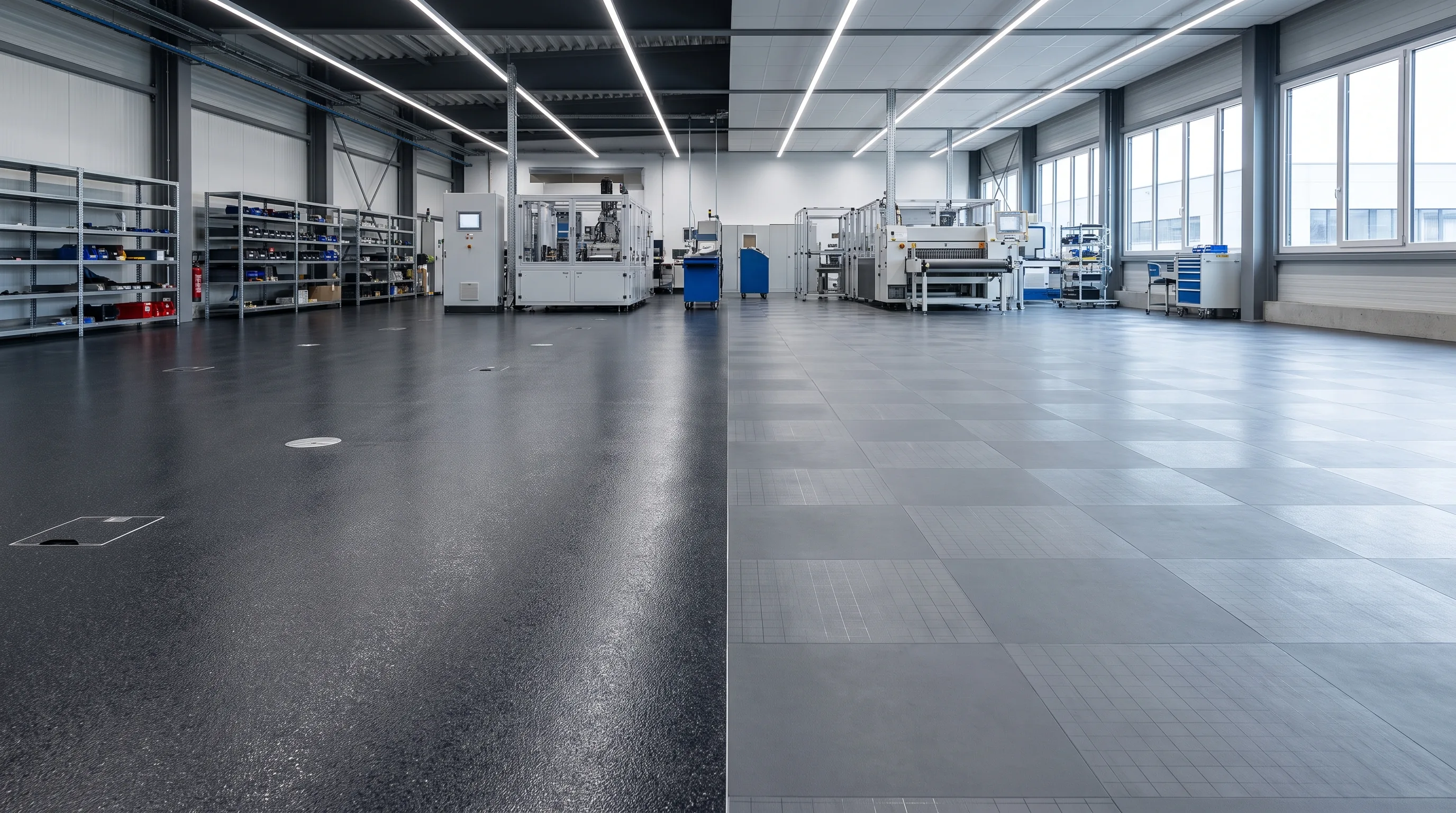
Facilities specifying static control flooring in San Antonio usually narrow the choice to two systems: ESD epoxy or conductive vinyl tile. Both dissipate static charge to protect sensitive equipment, but they get there differently, and the differences show up in cost, install time, durability, and long-term maintenance. Here's how the two actually compare for a real facility decision.
The Core Difference: Seamless vs Seamed
ESD epoxy is a fluid-applied, seamless system that cures into a monolithic surface bonded directly to the concrete slab. Conductive vinyl is manufactured tile, installed piece by piece with seams between each tile. That structural difference drives almost every other comparison point below.
Side-by-Side Comparison
| Factor | ESD Epoxy | Conductive Vinyl Tile |
|---|---|---|
| Surface | Seamless, monolithic | Tiled, with seams |
| Install time | Longer cure, but no tile-laying labor | Faster labor, but requires precise seam sealing |
| Durability under rolling/forklift traffic | High - bonded to slab | Moderate - seams can lift under heavy loads |
| Static dissipation consistency | Uniform across entire floor | Can vary at seams and tile edges |
| Replacement/repair | Full section recoat if damaged | Individual tiles can be swapped |
| Typical lifespan | 10-15 years | 7-10 years |
| Upfront cost | Higher | Lower |
| Maintenance | ESD-safe cleaners, periodic resistance testing | Seam maintenance plus resistance testing |
Where Conductive Vinyl Makes Sense
Vinyl tile has real advantages for the right project. It installs faster with less facility downtime, individual damaged tiles can be swapped without recoating an entire room, and the upfront material cost is typically lower. For a smaller office-adjacent electronics assembly area, or a facility that needs to be back in production within days rather than a week, conductive vinyl is a legitimate choice.
The tradeoff is at the seams. Every seam is a potential weak point for static dissipation consistency, and heavy rolling traffic over time can cause tile lifting that both compromises the ESD path and creates a trip hazard.
Where ESD Epoxy Makes Sense
For facilities running continuous production, heavy equipment traffic, or defense-contract compliance requirements, ESD epoxy is generally the stronger long-term spec. The seamless surface means static dissipation performance doesn't degrade at weak points, and the direct bond to the concrete slab holds up better under forklifts and heavy rolling carts over a 10+ year service life.
- Facilities under ANSI/ESD S20.20 compliance requirements, where consistent floor resistance across the entire space matters for audit
- High-traffic manufacturing floors with forklifts or heavy rolling equipment
- Cleanroom-adjacent spaces where seam-free surfaces reduce particulate and contamination risk
- Facilities planning to hold the same floor for a decade or longer, where lower long-term maintenance cost offsets higher upfront install cost
Not Sure Which System Fits Your Facility?
We walk through your traffic patterns, compliance requirements, and timeline before recommending ESD epoxy or conductive vinyl - no one-size-fits-all pitch.
Request a Free ConsultationCost Reality Check for San Antonio Facilities
Conductive vinyl typically runs lower per square foot on materials, but the total installed cost gap narrows once you factor in seam sealing labor and more frequent tile replacement over a facility's life. ESD epoxy costs more upfront but spreads that cost over a longer service life with fewer maintenance interruptions to production.