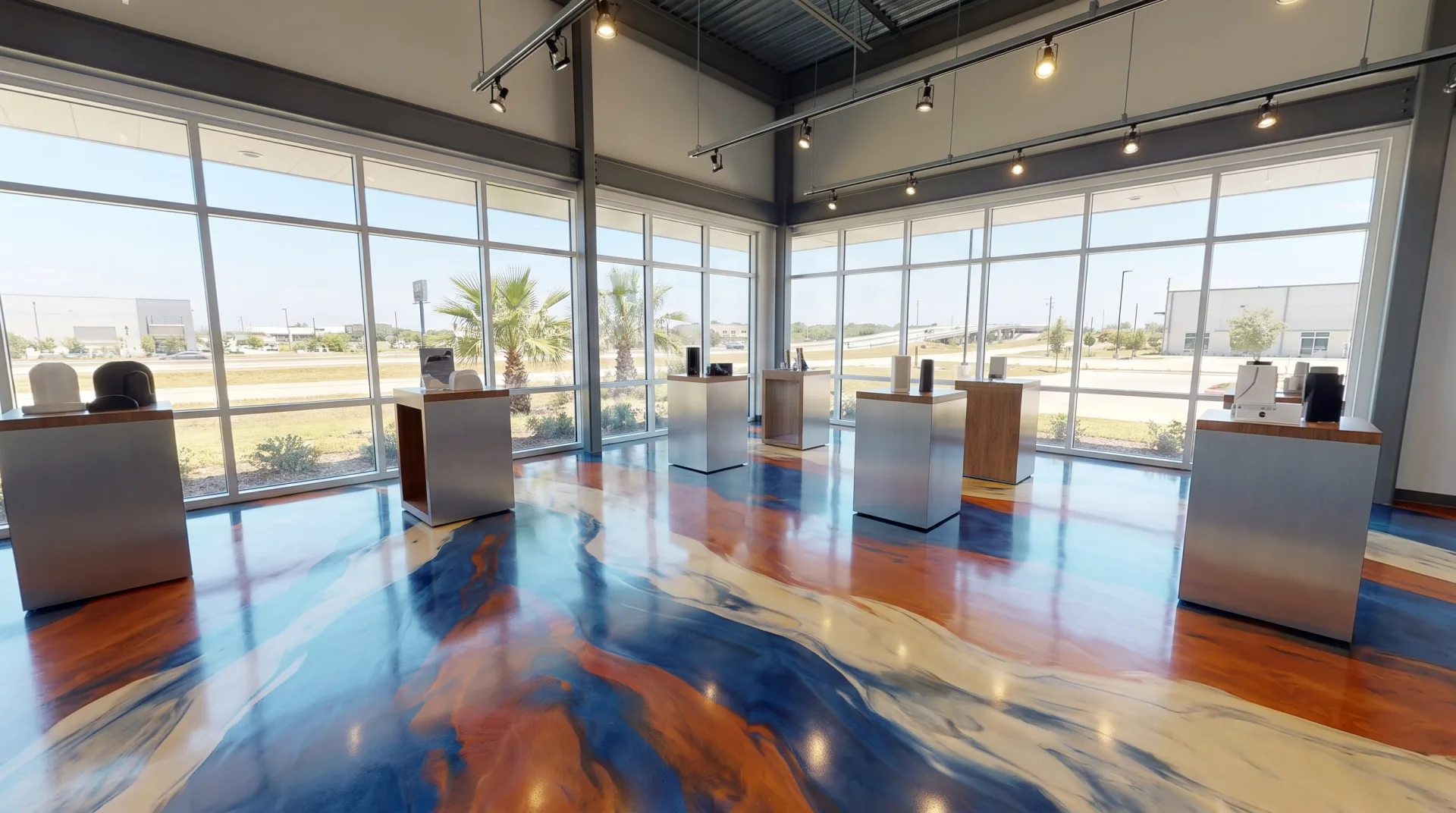
Epoxy floor coating in San Antonio can be custom-tinted to match your exact brand color, turning a functional floor into an extension of your business's visual identity - a detail customers and clients notice even if they can't articulate why a space feels cohesive. For retail stores, showrooms, and commercial offices, floor color is one of the most underused branding opportunities in the entire physical space.
Why Floor Color Matters for Brand Identity
Most businesses invest heavily in signage, wall colors, and furniture to reinforce their brand, but the floor - often 30% or more of a customer's visual field in a retail or showroom space - frequently gets treated as an afterthought, defaulted to plain gray or a generic neutral. A custom-matched epoxy floor color closes that gap, extending brand identity into a surface customers spend the entire visit standing on and looking at. This is particularly powerful for businesses with a distinctive brand color - a specific blue, a signature orange - that becomes instantly recognizable when it appears consistently across every touchpoint, floor included.
How Custom Color Matching Works
Pigmented epoxy base coats can be tinted using standard color-matching systems, the same fundamental approach used to color-match paint to a specific swatch or Pantone reference. A business provides their brand color specification - a hex code, a Pantone number, or a physical sample - and the installer works with their coating supplier to mix a custom-tinted base coat that matches as closely as the epoxy medium allows. It's worth understanding that epoxy's finish (matte, satin, gloss) affects how a color reads compared to a printed or painted reference, so a physical drawdown sample of the actual mixed color, viewed under the space's real lighting, is worth requesting before committing to a full floor.
Solid Color vs. Accent and Multi-Tone Approaches
| Approach | Best For | Considerations |
|---|---|---|
| Full solid brand color | Strong single-color brand identity | Shows wear/dust more visibly |
| Neutral base + brand accent striping | Subtler brand presence | More design flexibility |
| Color-blocked zones | Multi-department retail/showroom | Requires more complex layout planning |
| Logo medallion inlay | Entryways, reception areas | Higher cost, high visual impact |
Consider maintenance alongside aesthetics: a full-floor saturated brand color can look striking on install day but may show scuffing and dust more readily over time than a more textured or multi-tone approach - factor your cleaning routine into the color decision, not just the initial look.
Choosing Between Exact Match and Complementary Tones
While exact color matching is technically achievable, many brands opt for a complementary or slightly muted version of their primary logo color for full-floor applications, since a highly saturated color across hundreds of square feet reads very differently than the same color in a small logo or accent. A muted or deepened version of the brand color often achieves the intended association without feeling overwhelming at floor scale. Businesses with multiple brand colors sometimes use the primary color as a base and reserve a secondary brand color for accent striping, entry medallions, or department-dividing lines, keeping the overall floor cohesive while still incorporating the full palette somewhere in the space.
Combining Color With Decorative Techniques
Brand-matched color doesn't have to mean a single flat tone across the entire floor. Metallic epoxy techniques can incorporate a brand color into a dimensional, marbled effect for showrooms wanting a more premium, dynamic look than a flat solid color provides. Our guide on metallic epoxy floor designs in San Antonio covers how these techniques work and where they tend to suit a showroom or retail brand presentation particularly well. Flake broadcast systems offer another path - a base coat in the brand color with a coordinating flake blend can add texture and slip resistance while still keeping the overall palette on-brand. Our comparison of epoxy flake vs. solid color floors breaks down this tradeoff in more detail, useful context even for a commercial rather than residential application.
Ready to Bring Your Brand Colors to the Floor?
We'll work with your brand guidelines to color-match a floor that reflects your business identity.
Request a Free QuotePractical Considerations Before Committing to a Custom Color
A few practical factors are worth confirming before finalizing a custom brand color for a commercial floor. Custom-tinted batches sometimes carry a minimum order quantity or slightly longer lead time than stock colors, so factor that into your project timeline, particularly if you're working toward a grand opening or event date. It's also worth discussing touch-up and future recoat planning with your installer at the outset - a custom color needs to be documented (the exact formula or batch reference) so that any future repair or recoat can match seamlessly rather than requiring a full re-color of the entire floor to avoid a visible seam between old and new tinting.
Our Service Page for San Antonio Businesses
Our epoxy floor coating service page covers the full range of systems and color-matching capabilities we offer to San Antonio businesses, from single-color retail installs to more elaborate multi-tone commercial branding projects. Whatever your brand palette, our installers can walk you through what's achievable within your budget and timeline.
Industries That Benefit Most From Brand-Matched Flooring
While any business can benefit from a more intentional floor color, certain industries see an outsized return on the investment. Auto dealerships and showrooms use floor color extensively to reinforce brand identity across multiple locations, since a consistent floor treatment helps a customer recognize the brand experience regardless of which physical location they visit. Fitness studios and boutique gyms increasingly use bold, brand-colored flooring as a signature design element that photographs well for social media and helps differentiate a studio in a competitive local market. Restaurants and hospitality businesses use floor color to reinforce mood and brand positioning - a fine-dining space might choose a deep, sophisticated tone while a fast-casual concept leans into a brighter, more energetic palette. Medical and professional offices, meanwhile, often use a more restrained brand-adjacent tone that reinforces cleanliness and professionalism without overwhelming the space.
Coordinating Floor Color With the Rest of Your Space
A brand-matched floor works best when planned alongside, not after, the rest of a space's interior design. Wall color, lighting temperature, signage, and furniture all interact visually with floor color in ways that are hard to fully judge from samples alone. A brand color that looks perfect under warm retail lighting can shift noticeably under cooler LED task lighting in an office setting, which is why viewing an actual epoxy sample under the specific lighting conditions planned for the finished space is worth the extra step before committing to a full installation. Businesses undertaking a full renovation or new build have a natural opportunity to sequence this properly, bringing the epoxy installer into design conversations alongside the architect or interior designer rather than treating flooring as a final, disconnected decision made after everything else is locked in.
Cost Considerations for Custom Color Matching
Custom color matching typically carries a modest premium over a business's choice among an installer's standard stock colors, since the process involves additional formulation work and sometimes a minimum batch quantity from the coating manufacturer. That said, the premium is usually a small percentage of the total project cost for most commercial spaces, and many businesses find the branding value well worth the incremental expense compared to settling for a close-but-not-quite stock color. Getting a firm quote that specifies whether custom matching is included or billed separately avoids surprises once the project is underway, and confirming the lead time for a custom-mixed batch matters especially for projects tied to a specific opening date or event.
Multi-Location Businesses and Color Consistency
Businesses operating multiple San Antonio locations, or planning to expand, benefit from documenting their exact epoxy color formulation as part of their broader brand standards guide, alongside logo usage and approved color codes for signage and print materials. Having this on file ensures every new location installs a floor that matches existing locations precisely, rather than relying on a new installer's best guess at matching photos of an existing store. Businesses that skip this documentation step sometimes discover, a year or two later, that different locations have subtly different floor tones from batch-to-batch variation in an undocumented color-match process - a detail customers may not consciously notice but that erodes the consistency a strong multi-location brand depends on.