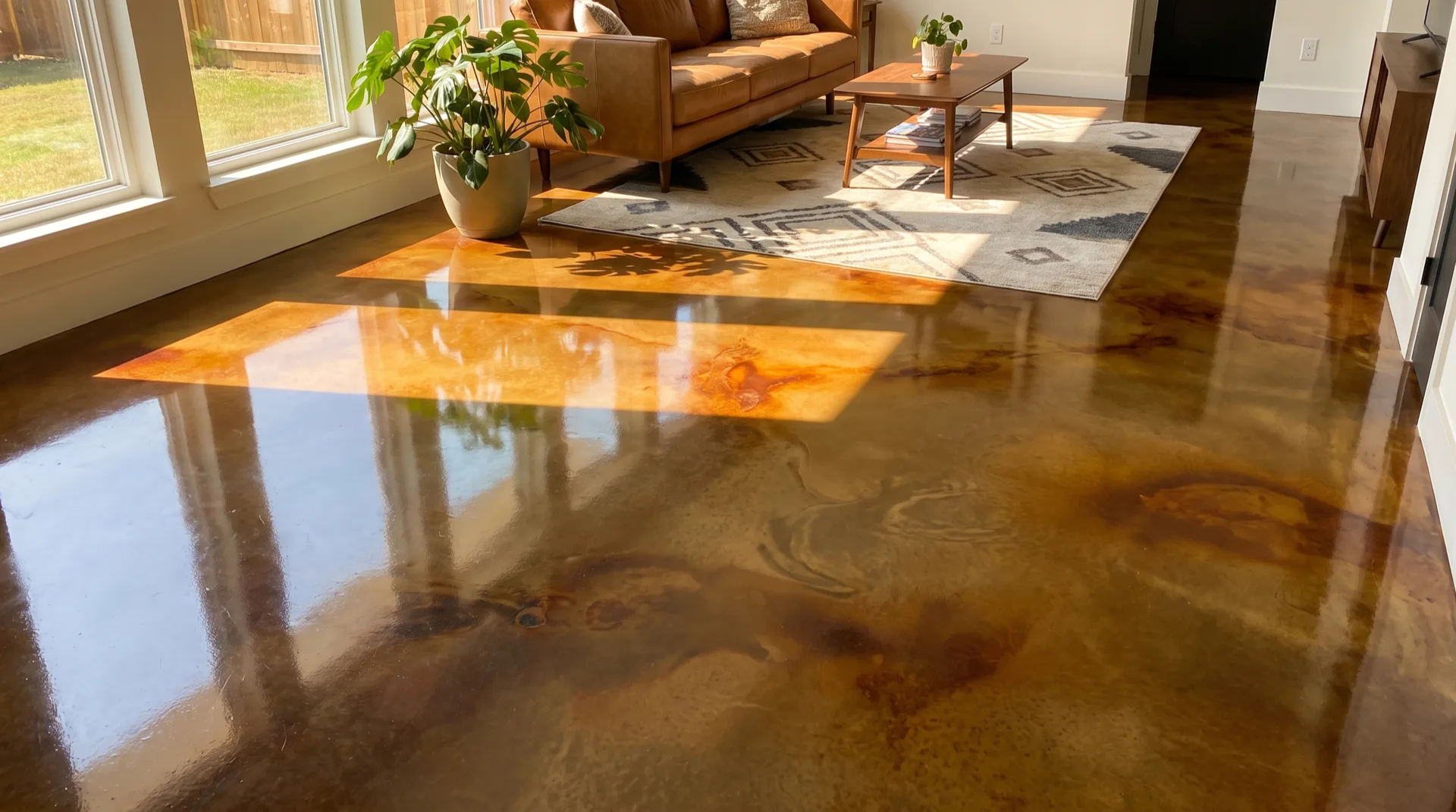
Polished concrete in San Antonio can be colored with acid stain for mottled, translucent earth tones, water-based dye for uniform and more vibrant color, or integral color mixed in at the time of the pour - and choosing between them comes down to whether a homeowner wants a variegated, one-of-a-kind look or a consistent, predictable shade across the floor.
Why Add Color to Polished Concrete at All
Polished concrete's natural gray finish already has a clean, contemporary appeal, but dye and stain open up a much wider design range - from warm terracotta and amber tones that complement a Texas hill-country aesthetic to deep charcoal, rich browns, or even bold custom colors for a more distinctive interior. Color also helps disguise minor surface variations or patch repairs on an existing slab, since a uniform or intentionally variegated color treatment draws the eye away from small imperfections that would otherwise stand out on plain polished gray concrete. For homeowners specifically choosing concrete polishing for its low-maintenance, durable qualities, adding color is a way to get a genuinely custom look without sacrificing any of that practicality.
Acid Stain: Mottled, Translucent Earth Tones
Acid stain works through a chemical reaction with the minerals in the concrete itself, producing a translucent, mottled coloring that varies naturally across the floor - no two acid-stained floors ever look quite identical, even using the same product and application technique, because the reaction depends on each slab's unique mineral composition and porosity. This unpredictability is actually the main appeal for many homeowners, since it produces an organic, marbled look reminiscent of natural stone or leather, typically in earth-tone colors like amber, terracotta, brown, and soft green, since the chemistry limits the achievable color palette compared to dye.
Water-Based Dye: Uniform, Vibrant Color
Water-based dye works differently, penetrating into the surface of the concrete and coloring it more uniformly and predictably than acid stain, without the chemical reaction or the resulting mottled variation. This makes dye the better choice when a homeowner wants a consistent, even color across the entire floor, and it also opens up a much broader color range, including brighter, more saturated tones that acid stain's chemistry simply can't produce. Dye is also frequently used to create decorative patterns, borders, or multi-tone designs, since its more predictable, controllable application lends itself well to this kind of detailed decorative work in a way that acid stain's inherent randomness does not.
Comparing Dye, Stain, and Integral Color
| Factor | Acid Stain | Water-Based Dye | Integral Color |
|---|---|---|---|
| Color uniformity | Mottled, variegated | Uniform, predictable | Uniform through slab depth |
| Color range | Earth tones only | Wide, including bright tones | Wide range available |
| Works on existing floors | Yes | Yes | No - new pour only |
| Design/pattern flexibility | Limited | High | None (uniform only) |
Choosing between them comes down to look, not durability: once properly sealed and polished, acid stain, dye, and integral color all perform equally well in terms of long-term wear - the decision is purely about which visual effect a homeowner wants.
Combining Dye and Stain for Custom Effects
Many of the most distinctive polished concrete floors actually use a combination of acid stain and dye rather than relying on just one product. A common approach layers acid stain as a mottled base coat, then adds water-based dye accents or a secondary tone on top to introduce additional depth and visual interest that neither product achieves entirely on its own. Another approach uses dye as a uniform base color across the whole floor, then applies acid stain selectively in specific zones to create variegated accent areas or a border effect. This kind of layered, custom approach requires more skill and experience to execute well than a single-product application, so it's worth confirming a contractor's specific experience with combination techniques before committing to a more elaborate custom design.
Ready to Add Color to Your Polished Concrete Floor?
We install acid stain, dye, and combination color treatments for polished concrete throughout San Antonio.
Request a Free QuoteIntegral Color for New Construction
Integral color, mixed directly into the concrete during batching before it's poured, offers a different approach entirely - consistent color through the full depth of the slab rather than just the surface, which means the color doesn't wear away even if the floor is later ground down further for repair or refinishing. This makes integral color a strong option for new construction or a full slab replacement, but it isn't retrofittable to an existing floor, since the color needs to be present in the concrete before it's poured. Homeowners planning new construction who want guaranteed long-term color consistency, particularly in a high-traffic commercial application, should discuss integral color with their contractor and architect during the design phase, well before the concrete pour is scheduled.
Sealing to Protect and Enhance Color
Whichever coloring method is chosen, proper sealing after the polishing and coloring process is what actually protects and often enhances the finished color. A quality densifying sealer combined with a topical or penetrating sealer appropriate to the specific stain or dye product not only protects against staining and wear but also frequently deepens and enriches the color's appearance, similar to how wetting natural stone intensifies its color. Homeowners should ask specifically what sealer system a contractor plans to use with their chosen color product, since not every sealer performs identically across acid stain versus water-based dye applications, and using the wrong sealer type can dull or unevenly affect the finished color.
Fade Resistance and Long-Term Color Stability
A properly sealed, polished, and colored concrete floor holds its color well over time in an interior setting, since it isn't subjected to the direct UV exposure that fades exterior surfaces or fabrics. Rooms with large west- or south-facing windows that receive substantial direct sunlight for extended periods each day are the main exception worth planning around, and a UV-stable sealer formulation is recommended in these specific rooms to minimize any gradual color shift over years of sun exposure. For homeowners comparing polished concrete against other flooring choices for a sunroom or similarly bright space, our guide on polished concrete for San Antonio home interiors covers additional considerations specific to bright, sun-exposed rooms.
Cost Considerations for Color Options
Acid stain and water-based dye add a moderate cost premium to a standard polishing project, generally less than the cost difference between polishing levels, and the exact cost depends on the complexity of the design - a single uniform dye color costs less than a multi-tone combination treatment with custom borders or patterns. Integral color, since it's added during the concrete mix design for new construction, is typically priced as part of the overall concrete package rather than as a separate line item, though more elaborate custom color blends can still add cost. Homeowners weighing color options against a tighter budget should discuss which techniques deliver the most visual impact per dollar with their contractor, since a well-executed single-tone dye job often looks just as striking as a more expensive multi-product combination treatment, depending on the room and lighting.
Comparing Colored Polished Concrete to Other Decorative Options
Homeowners drawn to decorative colored concrete are sometimes also considering acid-stained concrete without the polish step, or a fully different flooring material altogether. Our guide on stained concrete floors in San Antonio covers the stain-only approach for homeowners who prefer a more matte, traditional stained-concrete look rather than the reflective sheen of a fully polished and colored floor, which is a genuinely different aesthetic worth comparing before committing to either direction. Polished concrete with color generally offers better long-term durability and easier maintenance than stain applied without polishing, since the polishing process itself densifies and hardens the surface beyond what staining alone achieves.
Preparing an Existing Floor for Color
Adding dye or stain to an existing concrete floor requires more preparation than applying it to fresh, bare concrete, since any existing sealer, coating, glue residue from old flooring, or surface contamination needs to be fully removed before the color product can penetrate and react properly. This typically means mechanical grinding as the first step of the polishing process regardless of whether color is being added, but a floor that previously had carpet, tile, or another flooring material glued directly to it may need additional prep work to remove adhesive residue that would otherwise cause blotchy, uneven color absorption. A contractor should always test the color product on a small, inconspicuous area of the actual floor before committing to full-floor application, since every slab's age, porosity, and prior treatment history affects how a given stain or dye color will ultimately look once applied and sealed.
Working With a Contractor Who Specializes in Decorative Color
Not every concrete polishing contractor has equal experience with decorative color work, since achieving a specific, predictable result with acid stain or dye - especially in a combination or custom design - takes meaningfully more skill than a standard uniform gray polish. When evaluating contractors for a color project, ask to see photos of completed decorative work specifically, rather than only general polished concrete photos, and ask how they handle sample testing before committing to full-floor application. A contractor with genuine decorative color experience will typically walk a homeowner through several sample options on an inconspicuous section of the actual floor, since color swatches or photos of other projects can only approximate how a specific product will look on a specific slab's unique concrete composition.