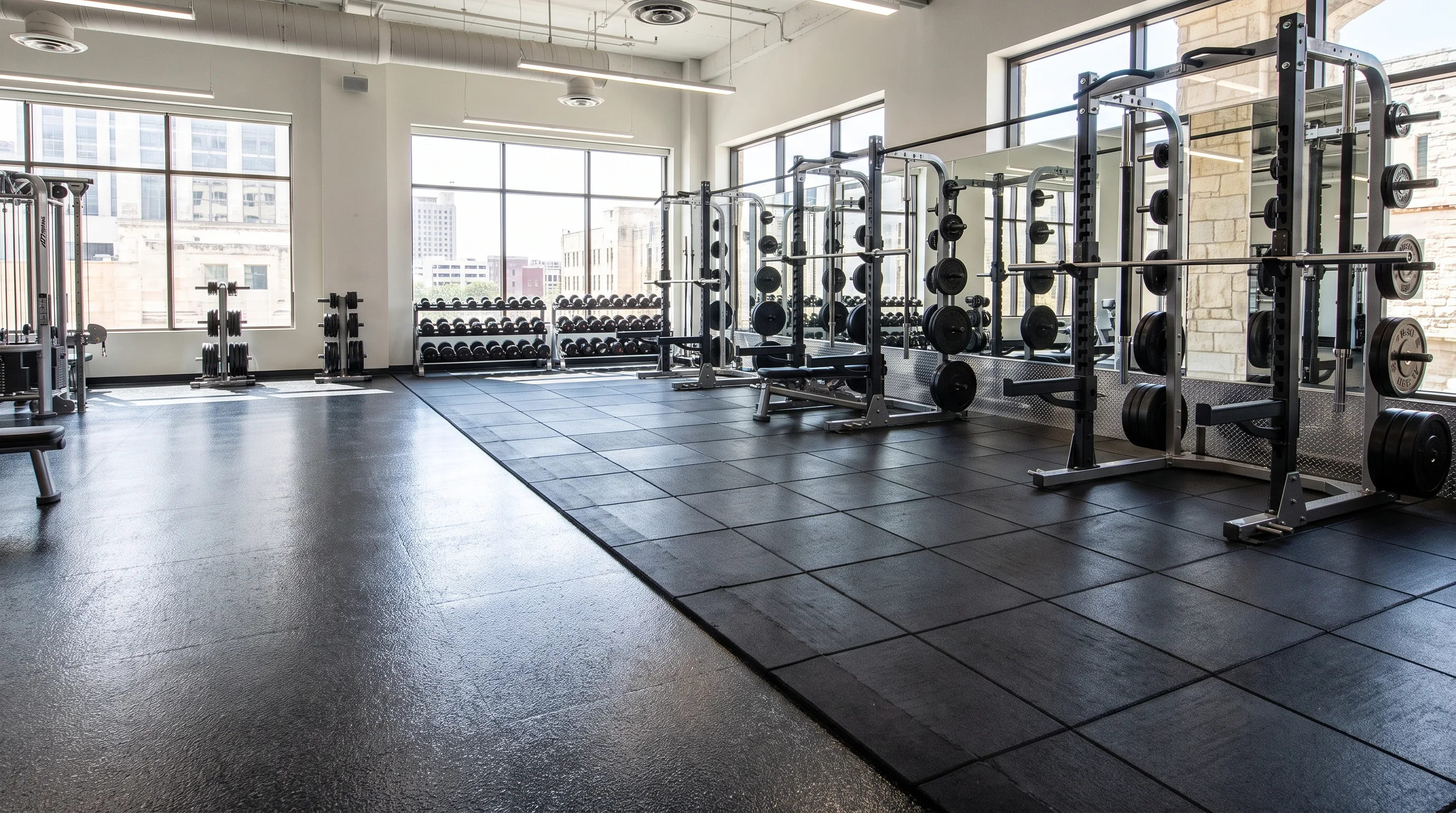
Gym owners in San Antonio opening or renovating a fitness center almost always land on the same question: epoxy or rubber? Both show up across the industry, but they're built for different zones of a gym floor, and picking the wrong one in the wrong area creates either a safety problem or a maintenance headache within the first year. Here's how the two actually compare on cost and safety for a real fitness center build.
What Each System Is Built For
Epoxy flooring is a hard, seamless, poured system that bonds to the concrete slab. Rubber flooring is a resilient, cushioned material installed as tiles or rolled sheets. That core difference - rigid versus cushioned - is what drives every other comparison point below.
Cost Comparison
| Factor | Epoxy Flooring | Rubber Flooring |
|---|---|---|
| Upfront material cost | Moderate | Higher, especially thick weight-drop rated rubber |
| Install labor | Multi-day cure required | Faster install, less downtime |
| Long-term durability | 10-15+ years in low-impact zones | 7-10 years under heavy weight-drop use |
| Repair cost | Section recoat if damaged | Individual tiles replaceable |
| Best fit | Cardio, studio, lobby, locker room floors | Free weight and weight-drop zones |
Safety Considerations
This is where the two systems really diverge. Rubber flooring absorbs impact - it's designed to protect both the floor and the equipment when a loaded barbell gets dropped from overhead. Epoxy has no give at all. A dropped weight on epoxy transfers the full impact straight into the slab, the plate, and potentially the floor coating itself, which can crack or chip under repeated heavy weight-drop use.
- Free weight and Olympic lifting zones: Rubber flooring, and usually thicker weight-drop rated rubber specifically - not standard gym mats.
- Cardio and machine areas: Epoxy performs well here since there's no weight-drop impact, and its seamless surface is easier to keep clean under heavy foot traffic.
- Group fitness studios: Depends on the class type - epoxy for low-impact studios, rubber or a sprung floor for high-impact classes.
- Slip resistance: Both systems can be specified with textured, slip-resistant finishes, so this isn't a deciding factor on its own.
Planning a San Antonio Fitness Center Floor?
We help gym owners zone their space correctly - epoxy where it performs best, rubber where safety demands it - instead of a one-size-fits-all floor.
Get a Free Facility QuoteThe Zoned Approach Most San Antonio Gyms Actually Use
Very few fitness centers install a single flooring type throughout the entire facility. The standard approach is zoning: rubber flooring in free weight and lifting platform areas, epoxy in cardio zones, studios, entryways, and locker rooms. This gets the safety benefit where it's actually needed while keeping install and maintenance costs down in the areas that don't need cushioning.
Maintenance Differences
Epoxy cleans faster and holds up better against sweat, cleaning chemicals, and daily mopping - it's essentially maintenance-free beyond routine cleaning. Rubber flooring requires more attention: seams can trap moisture and odor if not properly sealed, and rubber tiles need periodic deep cleaning to prevent buildup that standard mopping won't remove.