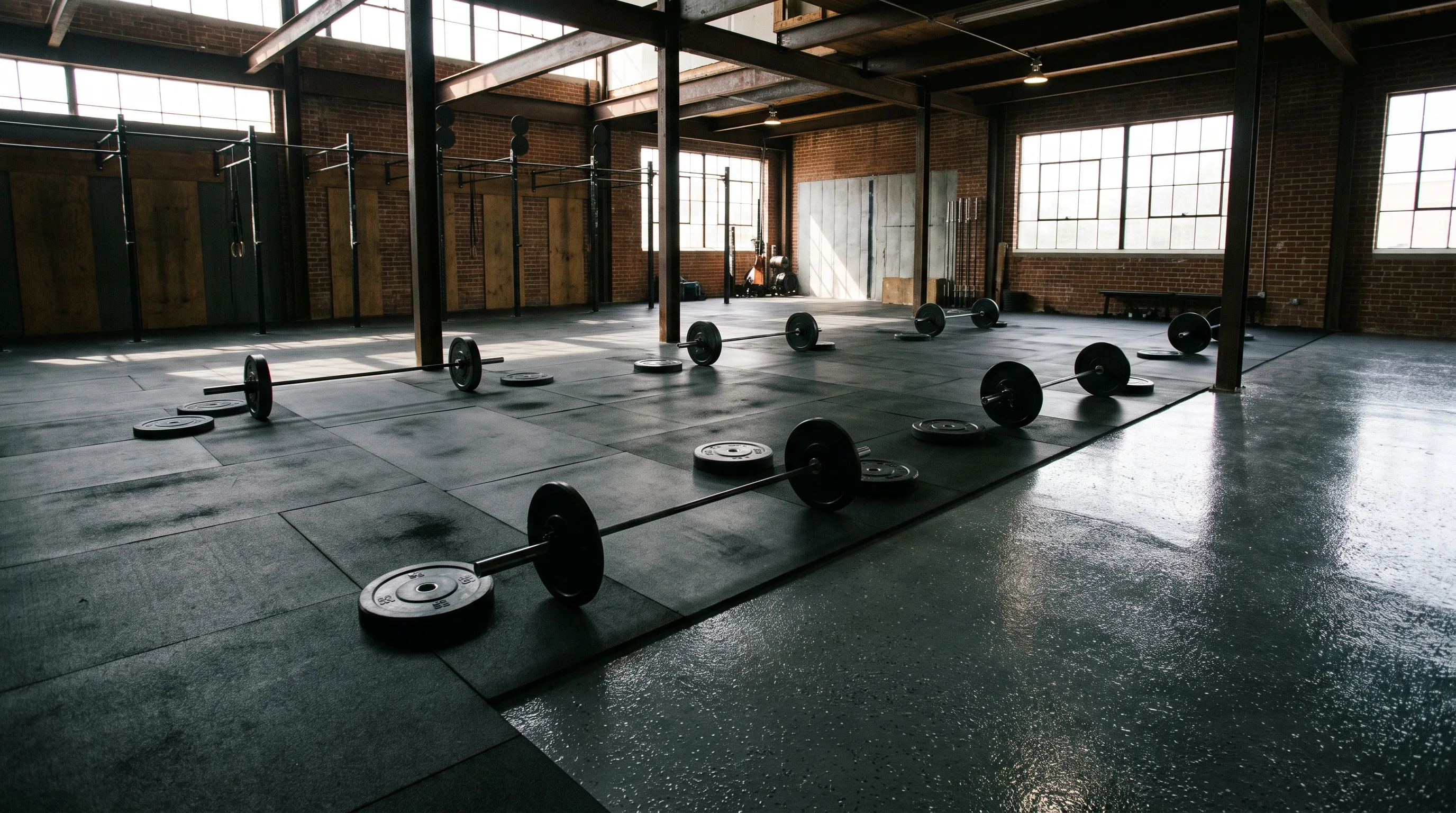
CrossFit boxes take more floor abuse than almost any other type of gym. Barbells loaded to max, dropped from overhead repeatedly, all day, every day - that's not an edge case for a CrossFit floor, it's the baseline expectation. San Antonio box owners who cut corners on flooring end up either replacing it within a year or dealing with a cracked slab underneath. Here's what actually withstands dropped weights and how to spec it correctly.
Why Standard Gym Flooring Fails in a CrossFit Box
Most commercial gym flooring is rated for foot traffic and light equipment weight - not repeated high-impact drops from overhead. In a CrossFit setting, that gap shows up fast:
- Standard rubber gym mats (typically 3/8" to 1/2") compress and degrade quickly under Olympic lifting drops.
- Epoxy and other rigid coatings crack or chip directly under repeated weight-drop impact zones.
- Thin flooring transfers impact straight to the concrete slab, which can develop stress fractures over time - an expensive problem to fix once it starts.
- Seams in undersized or improperly installed rubber systems separate under the vibration and shifting caused by daily drops.
What Actually Holds Up: Flooring Specs for a CrossFit Box
- Thickness: 3/4 inch is the practical minimum for a serious CrossFit lifting platform; many boxes go with 1 inch or a layered system for their heaviest-use zones.
- Density: High-density rubber compound matters more than raw thickness - a dense 3/4" rubber floor often outperforms a low-density 1" floor under repeated impact.
- Interlocking vs glue-down: Interlocking rubber tiles allow individual section replacement when a specific area wears out from concentrated drop zones, without redoing the whole floor.
- Underlayment: A shock-absorbing underlayment beneath the rubber adds an extra layer of slab protection in the heaviest platform areas.
Zoning a CrossFit Box Floor
Not every square foot of a CrossFit facility takes the same abuse, and specifying the same flooring throughout wastes budget in low-impact zones while under-protecting high-impact ones.
| Zone | Recommended Flooring |
|---|---|
| Olympic lifting platforms | 1" high-density rubber, dedicated platform zone |
| General weightlifting / dumbbell area | 3/4" interlocking rubber tile |
| Cardio / rower / bike zone | Standard rubber mat or epoxy |
| Open functional training floor | 3/4" rubber, slip-resistant texture |
| Reception / locker room | Epoxy - no impact exposure, easier to clean |
Building or Renovating a CrossFit Box in San Antonio?
We spec and install flooring zoned to your actual training use - dedicated lifting platforms, functional training areas, and low-impact zones done right the first time.
Get a Free Facility QuoteProtecting the Slab Underneath
Rubber flooring protects equipment and reduces noise, but the concrete slab underneath still needs to be sound before installation. A pre-install inspection for existing cracks or settling issues is worth the time - flooring installed over a compromised slab will show the underlying problem again eventually, no matter how good the rubber is.
Budget Reality for San Antonio Box Owners
Heavy-duty CrossFit-grade rubber costs more upfront than standard gym flooring, but the calculation that matters is cost per year of service life, not cost per square foot at install. A properly specified floor that lasts 10+ years in heavy use beats a cheaper floor that needs partial replacement within 18 months.